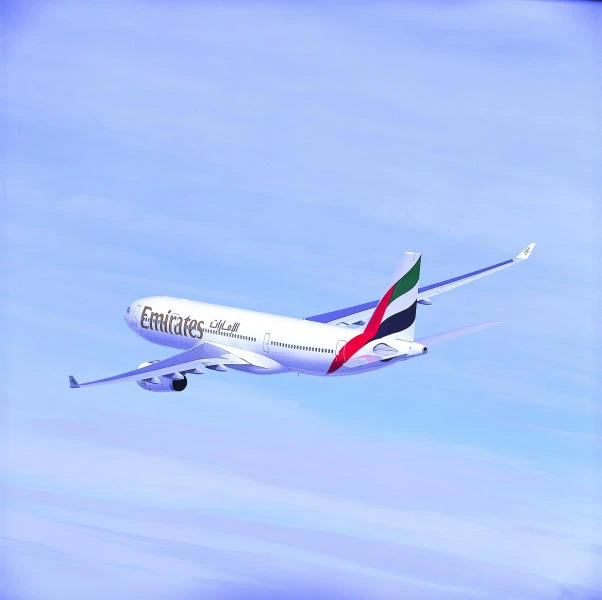
Emirates, a global connector and facilitator of vital trade links, marked its first year of operations in Sialkot, Pakistan. Over the past 12 months, Sialkot has emerged as an important passenger and cargo destination for the airline in the region.
Since the start of operations in 2013, Emirates carried over 79,000 passengers representing nearly 80 percent load factor on the route and moved more than 2,400-ton cargo to and from Sialkot.
“When we commenced flight services to Sialkot, one of our primary objectives was to become instrumental in boosting the regional economy by providing convenient cargo services,” said Jassim Saif, VP cargo commercial for North Africa & West Asia. “The route has performed well, with increasing volumes of high-density cargo carried out of Sialkot to important markets in Europe, the Americas and Africa via our hub in Dubai.”
Emirates operates four weekly flights to Sialkot with an Airbus A330-200 aircraft in a two-class configuration, offering 54 seats in Business Class and 183 in Economy Class. The aircraft operating the Sialkot service can carry up to 17 ton cargo per flight, boosting trade opportunities for the region.
Popular commodities shipped out of Sialkot in the past year include perishables like meat, fruits and vegetables, scientific and hospital instruments, musical instruments, sportswear, leather goods, textile, apparel, and handicrafts. While top imports include personal effects, household goods, textile, apparel, electronics, auto spare parts, and chemical products.
Sialkot is the capital of Sialkot district located in the northeast of the Punjab province in Pakistan. Situated approximately 125 km north of Lahore, it provides Emirates’ customers with an alternative gateway to the export triangle of Pakistan – the area encompassing Gujrat, Sialkot and Gujranwala. The city is renowned as a key manufacturing base particularly for sporting goods and clothing, surgical instruments, cutlery, ceramics and leather garments.
sponsored
Emirates marks first year of Sialkot operations