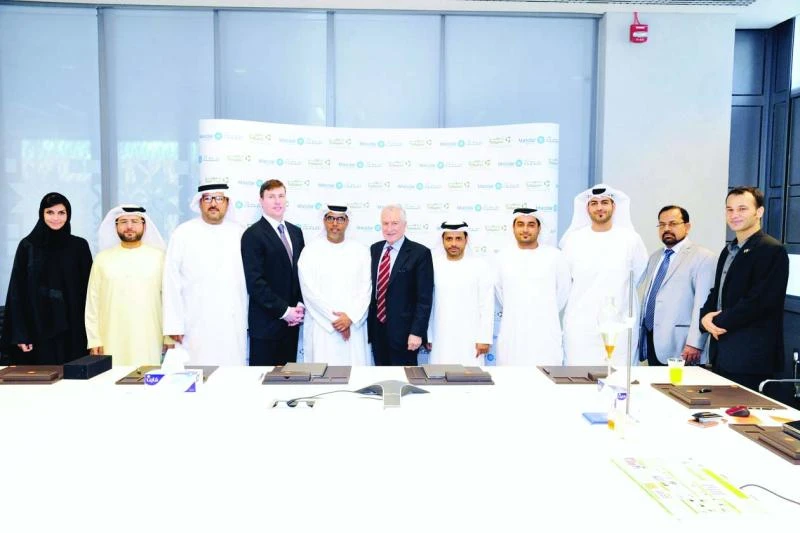
Masdar Institute of Science and Technology, an independent, research-driven graduate-level university focused on advanced energy and sustainable technologies, and Tadweer, the Center of Waste Management (CWM) — Abu Dhabi, have signed a two-year research agreement focused on improving the process for the production of biodiesel from waste cooking oil.
The research agreement was signed by Fred Moavenzadeh, President, Masdar Institute, and Eisa Saif Al-Qubaisi, GM, Tadweer (CWM) in the presence of officials from both the institutions.
The research will focus on achieving fundamental improvement of the process of converting waste cooking oil to biodiesel through further experimentation and sensitivity studies. Processing and reusing waste cooking oil as fuel is an environmentally friendly sustainable energy solution that can contribute to targets for renewable energy uptake within the UAE and abroad. Biodiesel is bio-renewable, carbon-neutral and rapidly biodegradable.
Isam Janajreh, associate professor of mechanical engineering and head of the waste to energy (W2E) laboratory at Masdar Institute, will be the principal investigator (PI) of the project, while Ahmed Aljabri will be the co-principal investigator.
As per the research project agreement, the principal investigator and the co-principal investigator will design, plan, and formulate the modelling and experimental investigations.
Moavenzadeh said: “The research agreement with CWM illustrates the UAE’s commitment to facilitating the production of clean energy and minimization of waste.”
Al-Qubaisi stated that Tadweer is mandated to provide, among other things, ‘state-of-the-art’ facilities to promote resource conservation, enhance carbon footprint reduction, and maximize net positive social and environmental benefits to the people. The agreement with Masdar Institute will achieve this objective.
Faris Fahed Al-Munaiei, projects and facilities department director at Tadweer, said: "Abu Dhabi produces an estimated 20 kg per capita WCO annually. Processing and reusing WCO as fuel is an environmentally friendly and efficient energy solution that can contribute up to 5 percent of sustainable energy needs by 2020.”
sponsored
Masdar Institute, Tadweer sign research agreement