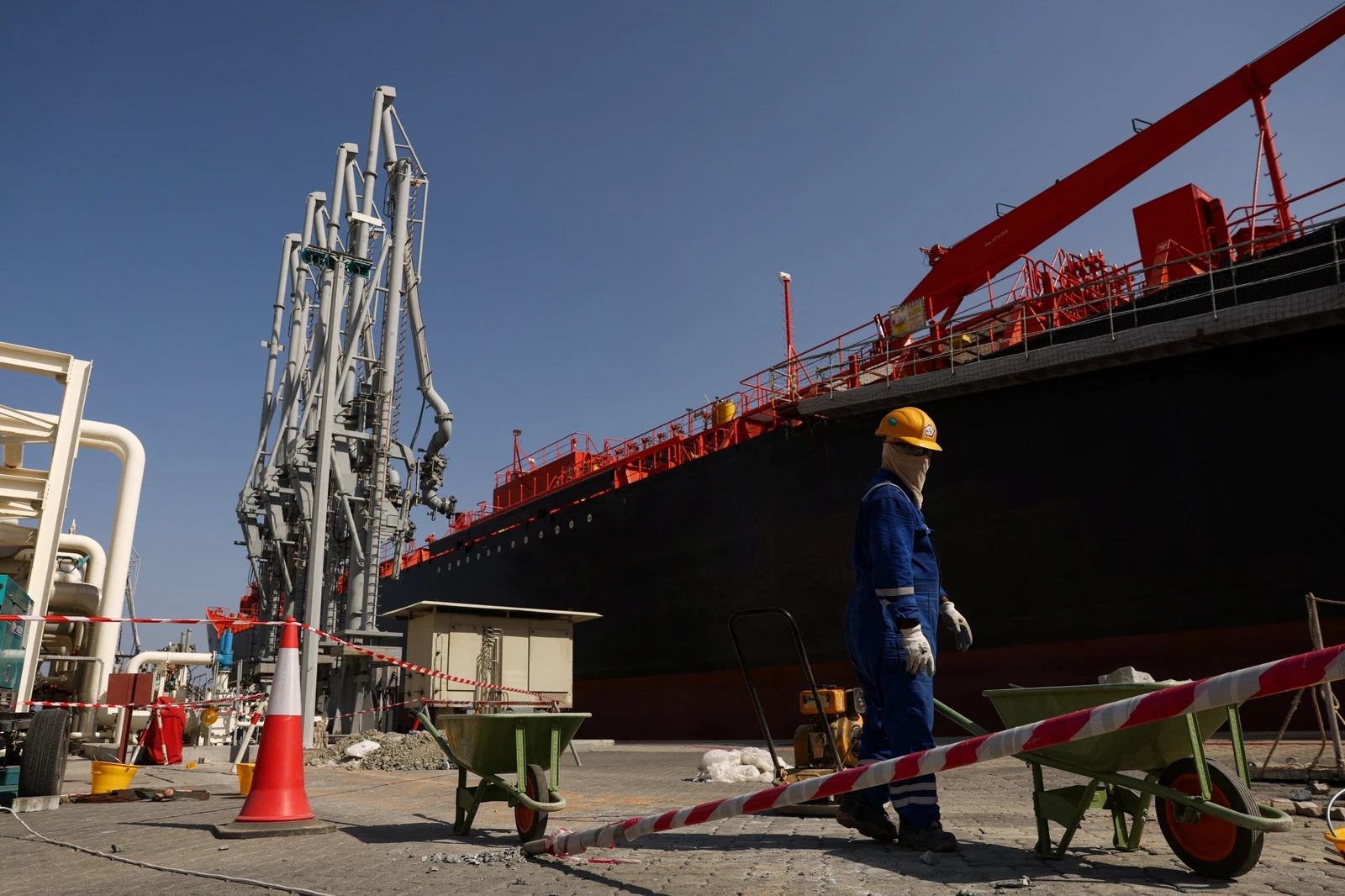
- Oil prices remained stable as geopolitical tensions from ongoing Middle Eastern conflicts sustain a risk premium.
- Brent crude rose 10 cents to $92.67 a barrel, while US West Texas Intermediate increased by 16 cents to $83.57 a barrel during morning trading in Asia.
- Last week saw a decline in oil prices, with Brent dropping 4% and WTI falling by 5%.
NEW DELHI: Oil prices were little changed in Asian trade on Monday as investors priced in a risk premium emerging from persisting shipping and refinery attacks in the Middle East even amid diplomatic efforts to end the war.
Brent crude futures rose 10 cents, or 0.11 percent, to $92.67 a barrel by 07:23 a.m. Saudi time. US West Texas Intermediate futures gained 16 cents, or 0.19 percent, to $83.57 a barrel. Brent crude fell $1 to $91.57 a barrel earlier in the session, while US WTI hit a session low of $82.63.
Brent declined 4 percent last week and WTI 5 percent.
However, the fighting from the unresolved US-Israeli war against Iran continues to support oil prices. On Sunday, the Iran-aligned Houthi movement claimed it attacked a Saudi Arabian oil refinery, while the UK Maritime Trade Operations reported multiple attacks on shipping in the Gulf and near the Strait of Hormuz over the weekend.
“A tense US-Iran stalemate increasingly looks like the base case through year-end, but Trump can still flip-flop over the prospect of renewed military action,” said Vandana Hari, founder of oil market analysis provider Vanda Insights.
“The ebb and flow of threats and harsher rhetoric from Washington and Tehran will likely continue to drive the marginal geopolitical risk premium in crude, while keeping prices broadly rangebound unless either side takes more concrete steps towards escalation,” Hari added.
Bahrain said an Iranian attack hit a civilian industrial facility on Saturday, while Iran’s Revolutionary Guards said they had launched a missile-and-drone assault on US military positions in the kingdom, home to the US Navy’s 5th Fleet.
In Turkiye, talks on Sunday at the global climate conference COP31 collapsed for the first time since 2009 after nations could not come to an agreement over including a statement on the phase-out of fossil fuels in a final text.
Saudi Arabia and other big oil-producing countries have said fossil fuels will play a role in the economy for the foreseeable future and they lobbied to keep any mention of fossil fuels out of the text, observers at the conference said.
OPEC had earlier defended fossil fuel use at the conference.
OPEC+ ministers will hold a series of meetings on Nov. 29 to decide their 2027 output policy. The group comprises the Organization of the Petroleum Exporting Countries and allies such as Russia.