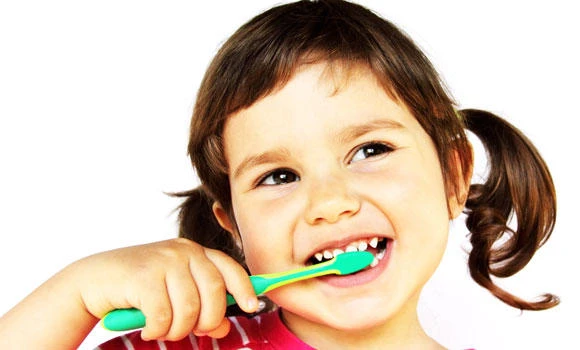
Accidents involving temporary teeth (milk teeth) are more frequent than those affecting permanent teeth. One out of two children below the age of six falls on his\her milk teeth. This misadventure is to be taken seriously in order to maintain their approaching dentition. They are sometimes difficult to to deal with, especially because less than half of the parents consult the pediatric dentist within the week following the accident.
Babies aged between one and two are definitely the most common victims, since they start to learn how to walk and are discovering their own environment. However, their balance is often imperfect. They still don’t have the reflex of protecting their face with their hands when they fall down, in most cases at home.
Watch out for accidents!
In the kitchen — When falling from a high chair.
In the bathroom — When trying to stand up in the bathtub.
In the living room — When passing around coffee tables with sharp edges.
Children aged between three and four are also at risk!
Going to school (kindergarten) is synonymous to learning all about autonomy. The young student discovers how to live within a group as well as the risks of the school courtyard.
Front teeth (incisors) are the most exposed and prone to breakage. They are the most damaged upon a fall. The teeth may become wobbly because their roots are shorter and the bone surrounding them is still frail. Teeth may also become intruded: Milk teeth may go up to the bone, sometimes even up to the nasal fossae. Teeth may even be expulsed. Such traumas often leave sequels on the final teeth bud. However, these complications are not predictable. They may go from a simple spot on the adult tooth to total destruction of the tooth bud.
Treatments differ according to the level of teeth damage. The dentist reconstitutes the tooth if it is broken. He practices a devitalization of the effected tooth. In case of intrusion, several solutions can be considered. If it is totally intruded, he may extract it. These treatments are often done under local anesthesia, but never under full anesthesia.
The process may be done in a 45-minute session. Therefore, the young patient should be involved in his treatment to bear all its consequences. He will be more tolerant if his parents or the dentist explains to him what the dentist will do.
The dentist might install braces with a false tooth so that it looks aesthetically good. However, when several teeth are missing, it is not an aesthetic problem, but a functional one.
A prosthetic dental device is necessary at this stage to avoid problems of phonation (how we produce sounds), to facilitate chewing as well as for maintenance of tooth space. This is because teeth have a natural tendency to move forward into open spaces which necessitates that any space that is present naturally or due to missing teeth must be closed by either an orthodontic or a prosthetic dental appliance, which ever is indicated. Advancements in dental techniques has made it possible to replace missing teeth for children as little as 2 years of age without any significant effects on the growth of the jaws.
Consequences of a dental trauma may appear two to three months later. On the spot, the tooth may look intact, but its color may change with time. The tooth should then be devitalized or extracted. Therefore, children should be followed closely by a dentist upon serious fall affecting the milk teeth.
—
Email: [email protected]
Help! My toddler’s tooth has broken