When Santa arrived at a school hosting children who fled Japan’s nuclear disaster, he brought the usual presents, but he also bore something a little less ordinary — a gourmet Christmas dinner.
The “Caravan Bon Appetite” is an initiative of French chefs in Japan who originally rushed to help provide basic food to survivors of the huge earthquake and tsunami that killed more than 18,000 and wrecked whole towns.
“The idea came very quickly after the tragedy, and we started in April 2011,” said Frederic Madelaine, a pastry chef who works in Tokyo.
“The first week we traveled every day with a different chef to provide hot meals to hundreds of evacuees. The conditions were tough, but we had to do something,” he said.
Now, 12,000 meals later, the Caravan Bon Appetite continues to make monthly journeys from Tokyo, last week delivering an extra-special menu to the schoolchildren in Koriyama.
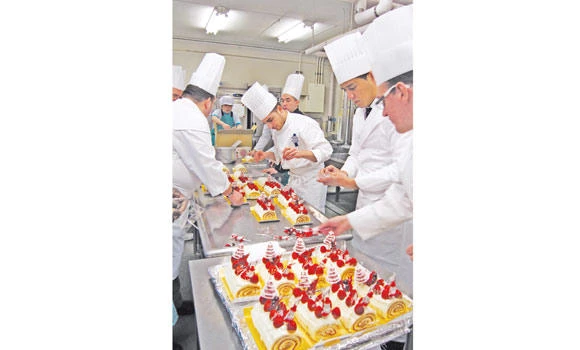
There was also a clown, some jugglers and a group of singers, all helping to dish out scalloped potatoes, buttered vegetables and roast meat, followed by a log dessert topped with a strawberry.
Around 360 full meals and 200 snacks were prepared in the kitchens of the French embassy in Tokyo, before being loaded up and driven a few hours north, to be reheated and served.
“In this school, we were lucky to have ovens and other quasi-professional equipment, but this is not always the case, for example when we serve in barracks or gymnasiums,” said Madelaine. More than just providing hot meals — facilities and supplies have long been back to normal in places like Koriyama that were largely untouched by the earthquake and tsunami — the Caravan also helps to introduce a little something of the exotic.
“It’s a different flavour for their palates,” said chef Christophe Paucod. “For many it is the first time they have tasted French cuisine.”
Tens of thousands of people were made homeless by the natural disaster and the nuclear catastrophe that it spawned.
A large tract around Fukushima remains either off-limits or somewhere people are only permitted to make brief day visits. Scientists say some areas may have to be abandoned, but politicians are reluctant to formalize that step.
Santa takes gourmet dinner to Japan nuclear evacuees