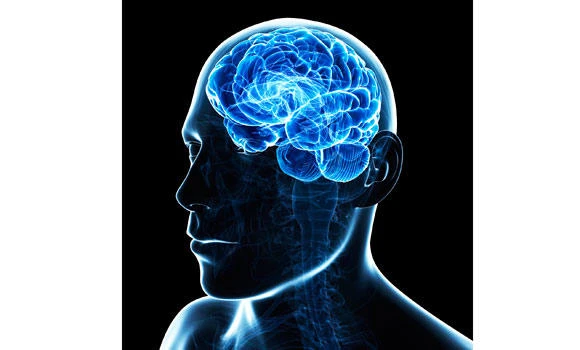
This week, I intended to start a series of articles on the effects of the brain on the body and obesity.
Coincidentally, “The Brain Forum” took place in Jeddah Dec. 3-4, providing the appropriate platform to launch an introduction to my next articles.
The huge hall was humming with low voices of leading brain scientists, professors and researchers from world-class universities and research labs. The vibrations felt like brain waves. There was a special aura in the air. Listening to each and every one of these scientists speak about their endeavors to reverse brain disorders was a jolt to the brain. Surgery, laser, drugs, genetic engineering, and electric currents were some of the mentioned treatments.
What caught my attention is how some of the scientists smoothly integrated healthy nutrition, lifestyles, and mental stimulation to their scientific work and research to help correct certain mental dysfunctions.
Professor Patrick Aebischer, director of the Surgical Research Division Gene Therapy Center at the Center Hospitalier Universitaire Vaudois (CHUV) in Lausanne, who is working on genetic engineering to help Alzheimer’s patients, explained how certain phytocompounds like polyphenols and resveratrol supplements coming from fruits, vegetables, and herbs as well as calorie restriction improved the memory and learning abilities, while reversing the aging of brain cells, neurons.
Neuroscientist Professor Pierre Magestretti, dean of Biological and Environmental Sciences and engineering at King Abdullah University of Technology, Saudi Arabia (KAUST), explained that because the brain is densely vascularized (kilometers of tiny blood vessels), it requires adequate blood flow to supply oxygen and ions (sodium, calcium, potassium) as well as glucose and metabolites to make energy in order to produce signals in the synapses (gaps between neurons), which consume energy.
Other chemicals such as glutamate and lactate along with oxygen are also required to make energy. He also found that when lactate is blocked, the memory gets impaired, indicating the importance of nutrients to make chemicals and neurotransmitters.
One by one, the scientists presented to the audience their findings, giving us hope for future cures to certain incapacitating and untreatable brain-related diseases (Alzheimer’s, epilepsy, Parkinson’s…). But, one presentation stood out for me as it addressed the very health issue I shall discuss in my next series of articles.
Listening to Professor Sir Stephen Bloom, head of the division for Diabetes, Endocrinology and Metabolism and Lead Clinical Chemistry at Imperial College Healthcare NHS Trust, was an enriching experience for me.
Bloom pioneered the discovery of several gut hormones and established their endocrine physiology, including their influence on appetite regulation and their simultaneous role as neurotransmitters.” By establishing the bowel/brain connection, he unraveled a part of the obesity puzzle.
Professor Bloom spoke about two important hormones that regulate appetite. While leptin controls insatiable appetites, ghrelin stimulates appetite. When well balanced, the two maintain healthy weight. Our neurons are fitted with receptors for both hormones. When leptin is insufficient, the brain does not receive signals from the gut to stop eating and ghrelin takes over, leading to weight gain. Obesity alters the equilibrium of the gut hormones and cancels the feeling of satiety. The gut of the obese automatically loses its ability to send signals to the brain to indicate full stomach and satisfaction, resulting in overconsumption, weight gain, obesity, imbalances, and disease.
Bloom found a chemical, oxyntomodulin, along with saline (sodium and water) and peptides, which is required to jumpstart the metabolism, contributing to weight loss. Acetylcholine was also shown to be a co-helper. Such hormones act synergistically to curb appetite and stimulate the metabolic rate.
Bloom noticed that individuals suffering from obesity have far less of the ‘healthy” gut bacteria, the protective microflora, than their slimmer counterparts, indicating that unhealthy eating habits reduce the colonization of the microflora. A decreased number of “good” bacteria weakens immunity and leads to disease.
Obesity, once, served well during famine. Those who were overweight or obese outlived the slim and the skinny. They did better at survival by using body fat for survival. But in our modern age, in which food is available, excess fat contributes to early death.
I asked Professor Bloom of the factors (genes, environment, hormonal imbalance) that correlate with obesity. He replied that in a Swedish study, a skinny child was placed in an obese family and an obese child in a slim family. Both children retained their initial status, suggesting that genes have a strong correlation, as high as 85 percent. Other factors also play important roles.
To stave off hunger, Bloom suggested snacking on raw or roasted nuts. They seem to satisfy the appetite and give satiety. He was also in favor of the Mediterranean diet, which emphasizes fish, whole fruits, vegetables (tomatoes…), herbs, nuts, and olive oil. In other studies, the diet was found to protect against cardiovascular disease and stokes, resulting in good health and longevity.
Professor Bloom reminded the audience that appetite-suppressing drugs are not safe yet. Bariatric surgery (gastric bypass surgery) is effective in recovering healthy weights, but it can come with serious complications.
We have just seen the bowel/brain connection and how the bowels control the brain and vice-versa. We certainly have to address the issue of obesity since the Arabian Peninsula follows the US, the leader in obesity, as Professor Bloom pointed out on the obesity map. Sadly, we have become an overinflated nation.
The Ministries of Health and Education as well as all health-related organizations should cooperate to create awareness and stop the spread of the obesity epidemic, which is responsible for the change of our appearances and the prevalence of metabolic syndromes, cancer, and disease. Excess abdominal fat secretes inflammatory compounds, leading to a variety of disorders. Hospitals are thriving on such conditions. Healthcare is costing citizens and the government billions.
Just 30 years ago, adults and children were much slimmer and less afflicted by disease, which is caused by overeating fast fatty foods, ice-cream pastries, desserts, and soda and soft drinks. Small portions and nutrient-dense foods are good enough to give us sufficient energy and keep us healthy. The previous generation adopted healthier lifestyles, living well into their nineties, but today, a very few can enjoy their grandchildren disease-free. This is why the medical community should take action to fight obesity, prescribing healthy habits instead of drugs.
Society, families, and individuals should do their share by changing their perspective on food, drinks, and portions. Obese individuals should strive to acquire healthier lifestyle behaviors and make healthy food choices, leading physically active lives and exercising self-control in order to prevent diabetes, hypertension, cardiovascular and heart diseases, strokes, cancer, and premature death.
Good health is not measured by the amount of fat in our bodies. It is evaluated by the state of the immune system, blood works, bones, physical and mental wellness, and energy, which lead to happy and healthy longevity.
Next week inshallah, I will discuss how a well-balanced brain can control weight gain and how healthy lifestyles influence the brain. Meanwhile, I would like to thank W Science and the prominent scientists as well as the organizers of The Brain Forum who gave us a glimpse of the scientific world. I look forward to next year’s event.
• For more details: www.thebrainforum.org
N.B.:
Individuals with medical conditions or on medication should consult their physicians when they decide to introduce anything new in their diet even if it is natural.
The previous Health Solutions articles are located at www.arabnews.com
Email: [email protected]