Prince Sultan bin Salman, chairman of the Saudi Commission for Tourism and Antiquity (SCTA), said the Souk Okaz has rapidly been developing since its restoration six years ago.
The prince commended the cultural contributions and economic development achieved at the souk in a statement to the Saudi Press Agency yesterday.
“The souk is a hub for dignified and commendable dissemination of culture and civilization. We also strive to design delightful events for visitors,” the prince said promising a new phase in the development of the Souk next year.
The souk should be viewed as a product of human development in the entire history of the Kingdom apart from its role as a heritage and cultural landmark, the prince added.
The prince also expressed his pride at the hard work of the workers who organize and conduct the fair.
“The SCTA has received the area of the souk as an archeological location. Now we are striving to prepare an investment plan for the location so that crowding will be avoided besides preserving its antiquity and natural environment and at the same time providing for essential developmental programs,” the prince said.
He added that Makkah Gov. Prince Khaled Al-Faisal with his comprehensive vision has instructed to build a stree running parallel to the Okaz thoroughfare because the Okaz Souk is both a sanctuary of history and a window to the future.
“I suggested to the prince to name the new thoroughfare as the Future Street on which we will see the strides of scientific and developmental achievements in the Kingdom under Custodian of the Two Holy Mosques King Abdullah and Vice Custodian Prince Salman,” he said.
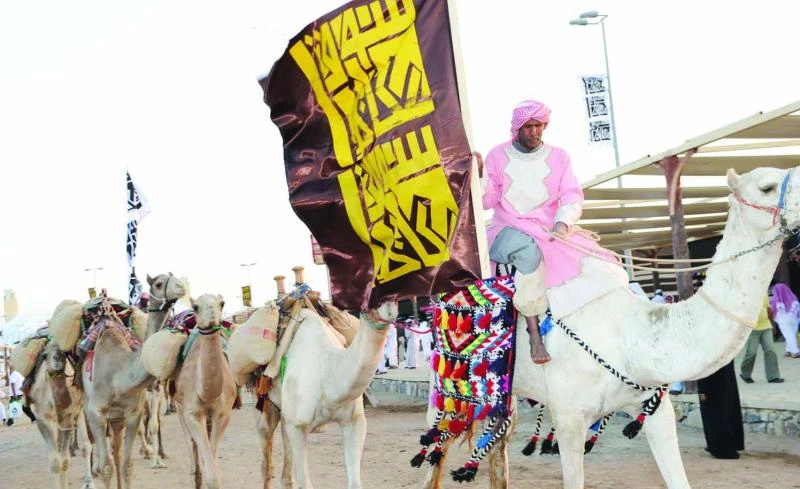
Prince Khaled Al-Faisal inaugurated this year’s festival on Wednesday. The souk is the modern version of a ancient annual Arabian festival which provided a venue for cultural and literary competitions for all Arab tribes from Yemen to the borders of Iraq. The literary and poetic events also served as a point of linguistic unity and purity because the works to be presented at the souk were in literary Arabic that could be understood people in the entire Arab world of that time, according to historians. The souk also had served as an economic hub for the ancient Arabian Peninsula because traders from distant places brought their products and sold them in the souk at profitable rates. The souk started declining after the first quarter of the eight century AD.
SCTA chief commends cultural and economic contributions of Souk Okaz