
- Lebanese authorities put olive production losses at about $307 million across two rounds of fighting
- Food security assessment projects that 1.15 million people could face acute food insecurity by mid-2027
BEIRUT: Lebanon marked World Olive Tree Day on Thursday as Israeli attacks and restrictions on access to farmland disrupted a fourth harvest season for growers in the south. A national assessment warned that more than a million people across the country were facing acute food insecurity.
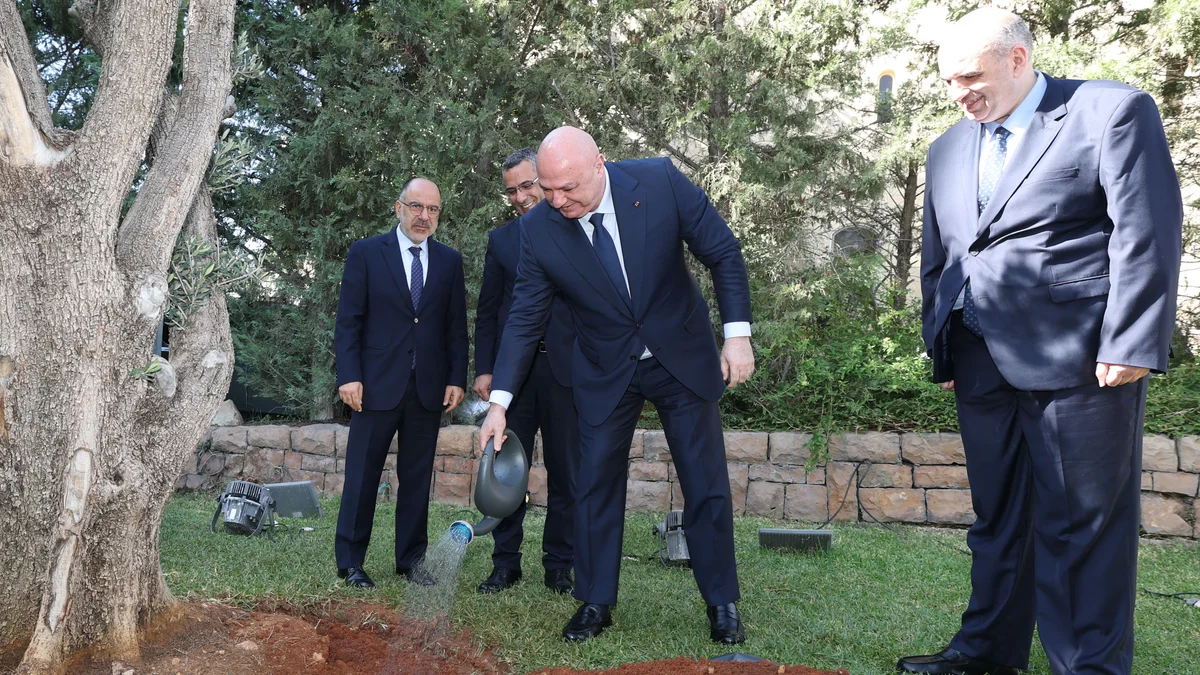
Lebanon’s Agriculture Minister Nizar Hani planted an olive tree in the garden of the presidential palace to mark the occasion, which UNESCO established in 2019.
“The olive tree is a cornerstone of our national identity and a source of income for families, farmers and artisans from northern Lebanon and the Bekaa Valley to the south and the mountains,” Lebanon’s President Joseph Aoun said. “It is a symbol of peace and hope.”
Parliament Speaker Nabih Berri planted an olive tree at his official residence in Ain Al-Tineh. He accused Israeli forces of uprooting thousands of centuries-old olive trees in occupied border areas, calling it a violation of international humanitarian law that amounted to “a war crime.”
The UN Food and Agriculture Organization estimated that 814 hectares of olive groves burned in the South and Nabatieh governorates between October 2023 and November 2024. It put olive production losses linked to that period at about $236 million.
A separate Lebanese Agriculture Ministry assessment covering both rounds of fighting put production losses at about $307 million, equivalent to roughly 30,700 tonnes of olives. It estimated direct damage to trees at a further $21.5 million. The ministry said about 53 percent of farmland in the South and Nabatieh governorates had been inaccessible to farmers at various points because of security conditions.
The loss of harvests has cut into rural incomes as rising prices put food and other essentials further out of reach. The Agriculture Ministry’s latest food security assessment, conducted with technical support from the FAO, the World Food Programme and other partners, estimates that 1.05 million people will face crisis levels of acute food insecurity or worse through February 2027. That is 21 percent of the population covered by the analysis, including 52,000 people facing emergency conditions.
From March to July 2027, the number is projected to rise to 1.15 million, or 24 percent of the population assessed. The number facing emergency conditions could nearly double to 97,000.
With few job opportunities and the cost of food, fuel and other essentials still high, many vulnerable households are running through their savings and taking on more debt. Food remains available in markets, but falling incomes and inflation have made it harder for families to afford it.
Speaking on Wednesday at the launch of the Arab Thought Foundation’s report on food and water security, Hani said that the Agriculture Ministry was “working with the ministries of social affairs and economy, as well as UN agencies, to get assistance to families who need it.”
The foundation said Israeli military action and economic pressures at home and abroad had put Lebanon’s food and water security at risk. It said the country’s reliance on external aid had left it exposed as funding declined, programs tied to Syrian displacement wound down and donors redirected resources toward Ukraine and Gaza. The shortfall, it said, was limiting support for farmers and efforts to secure safe water for drinking and irrigation.
The World Bank projects that Lebanon’s economy will shrink by 6.4 percent in 2026. In January, before fighting resumed, it had forecast growth of 4 percent.
An International Labour Organization survey of 2,485 private-sector workers who were employed before fighting resumed in March found that one in three was no longer working by May. The share reached 76.5 percent among respondents in Nabatieh and 43.2 percent in the South governorate. Average earnings fell 14.8 percent among those who stayed employed. Including workers who lost their jobs, the decline was 40.4 percent.
Lebanon’s travel industry is hoping for a brief boost over the year-end holidays. Jean Abboud, head of the association representing travel and tourism agencies, said that flights were fully booked for a short period. How much the holiday rush helped the economy, he said, would depend on what visitors spent locally.