Turks see Germany as the most reliable partner: Survey

Turks see Germany as the most reliable partner: Survey
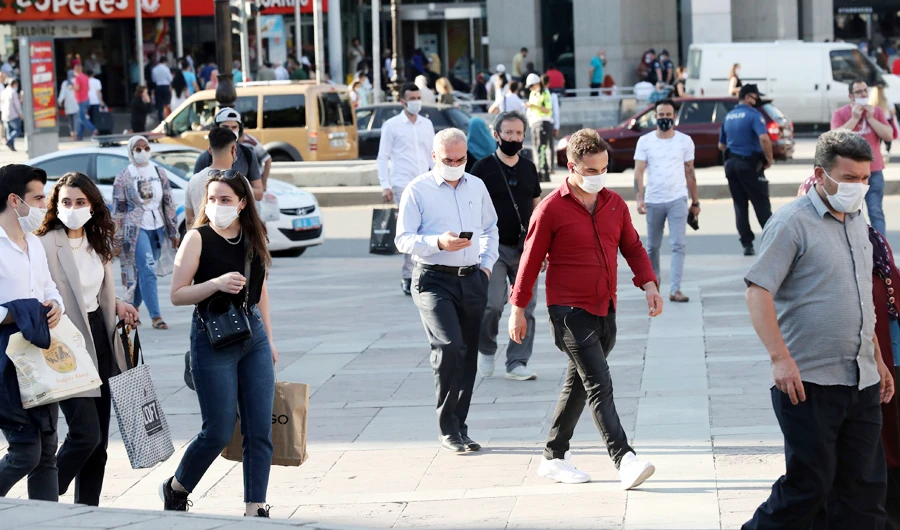
People wear protective face masks against to curb the spread of the novel coronavirus (COVID-19) in Kizilay Square, in Ankara on June 24, 2020. (AFP)
Short Url
Updated 08 June 2021

Turks see Germany as the most reliable partner: Survey

Turks see Germany as the most reliable partner: Survey
  • “Germany and Turkey are connected by millions of personal and cultural ties that have formed with the generation of Turkish immigrants and their descendants,” Walter Glos, KAS director in Turkey, told Arab News

ANKARA: Turks are very concerned about the state of their democracy, according to a new survey released on Monday, with 63 percent of respondents saying they thought it was bad and 39 percent saying it was in danger.
The findings are part of the Transatlantic Trends 2021 survey, by the German Marshall Fund of the US (GMF) and sponsored by Konrad-Adenauer-Stiftung (KAS) in Turkey, with the results revealing Turks’ opinions about security challenges, transatlantic cooperation and domestic politics.
It comes ahead of a critical meeting between President Recep Tayyip Erdogan and President Joe Biden on June 14 during the NATO Summit in Brussels.
The Biden administration, which inherited an unsteady bilateral relationship, is expected to mostly focus on Turkey’s democratic record.
According to the survey, Turks thought the most important security challenges facing their country were pandemics, terrorism and migration. A third of respondents wanted a decrease in Turkey’s military involvement in the Middle East.
The survey also said that 40 percent considered Germany the most influential actor in Europe, followed by the UK at 25 percent. Respondents said global health (22 percent), trade (15 percent), and human rights (15 percent) were the priorities for transatlantic cooperation.
“Germany and Turkey are connected by millions of personal and cultural ties that have formed with the generation of Turkish immigrants and their descendants,” Walter Glos, KAS director in Turkey, told Arab News. “Also, Germany is still Turkey’s largest trading partner and foreign investor. Both countries have a fundamental interest in good, close relations based on shared convictions and values.”
Half of respondents saw Chinese influence in global affairs as generally negative, and China was also seen as a rival rather than a partner.
Almost half expected their government to be tougher with China concerning its human rights violations.

While public opinion is not the main driver of foreign policy, it is still consequential and increasingly so given the influence of social media on politics.

Ozgur Unluhisarcikli

Despite Turkey’s recent charm offensive toward Europe, the country was perceived as the least trustworthy partner by people of other nationalities participating in the survey. Turks were found to be the most skeptical respondents about the reliability of the other countries.
“While public opinion is not the main driver of foreign policy, it is still consequential and increasingly so given the influence of social media on politics,” Ozgur Unluhisarcikli, Ankara office director of the GMF, told Arab News.
“Cooperation becomes politically costly when there is lack of public support. While there are cultural and historical reasons for this mutual distrust, rising Islamophobia in the West and nationalism in Turkey, recent tensions between Turkey and its Western allies and public discourses of politicians also play important roles in this outcome.” But he said there was no shortcut to rebuilding trust.
“While responsible political leadership on both sides can reverse the situation in the longer term, public support will not be one of the strong aspects of Turkey’s cooperation with Western allies in the foreseeable future.”
More than a third of Turkish respondents believed that NATO played an important role in the security of their country and most (66 percent) supported closer economic ties between Washington, DC and Ankara.
Half of the respondents found Germany, Sweden and Canada as the most reliable partners, while only 23 percent of Turks saw the US as trustworthy.
Glos said that, despite the increase in tensions in the bilateral relationship in recent years, Germany remained the most important point of reference for Turkey in the EU and was seen as the most reliable partner.
“The EU-Turkey migration agreement would not have come about without the mediation of the German government. Likewise, Turkey is open to mediation efforts by the German government in the dispute in the Aegean with Greece,” he added. “This allows Germany to keep the channels of communication with Turkey open and to demand concessions without having to make concrete offers of cooperation on the part of the EU. Credit has to be given to Chancellor Merkel’s sound problem-oriented diplomacy.”
Germany ranks first in Turkey’s exports at $16 billion and second in imports at almost $22 billion. Nearly 7,000 German firms are active in Turkey.
Glos thought that, despite all odds, Germany was able to criticize Turkey in a constructive way while simultaneously recognizing that Turkey had legitimate interests and must bear particular burdens as a result of the crises and conflicts in the region.
“At the same time, Germany expects the political leadership in Turkey, but also civil society and institutions, to stick to the social, economic and security policy course that is aligned with the values, interests and consultation mechanisms of NATO, the Council of Europe and the EU acquis to which Turkey has been committed for decades,” he said.
Egypt displays recently discovered ancient tombs in Saqqara

Egypt displays recently discovered ancient tombs in Saqqara
Updated 19 March 2022

Egypt displays recently discovered ancient tombs in Saqqara

Egypt displays recently discovered ancient tombs in Saqqara

CAIRO: Egypt on Saturday displayed recently discovered, well-decorated ancient tombs at a Pharaonic necropolis just outside the capital Cairo.
The five tombs, unearthed earlier this month, date back to the Old Kingdom (1570 B.C. and 1069 B.C.) and the First Intermediate Period that spanned more than a century after the collapse of the Old Kingdom, according to the Ministry of Tourism and Antiquities.
Mostafa Waziri, secretary-general of the Supreme Council of Antiquities, said Egyptian archaeologists started excavating the site in September. The tombs, he said, were for senior officials including regional rulers and supervisors of the palace in ancient Egypt.
“All of those five tombs are well-painted, well-decorated. Excavations did not stop. We are planning to continue our excavations. We believe that we can find more tombs in this area,” he told reporters at the site.
The tombs were found near the Step Pyramid of Djoser, in the Saqqara Necropolis, 24 kilometers (15 miles) southwest of Cairo.
Footage shared on the ministry’s social media pages showed burial shafts leading to the tombs. Walls were seen decorated with hieroglyphic inscriptions and images of sacred animals and after-life items used by ancient Egyptians.
The Saqqara site is part of a a sprawling necropolis at Egypt’s ancient capital of Memphis that includes the famed Giza Pyramids as well as smaller pyramids at Abu Sir, Dahshur and Abu Ruwaysh. The ruins of Memphis were designated a UNESCO World Heritage site in 1970s.
In recent years, Egypt has heavily promoted new archaeological finds to international media and diplomats in the hope of attracting more tourists to the country.
The vital tourism sector, a major source of foreign currency for Egypt, suffered from years of political turmoil and violence that followed a 2011 uprising that toppled autocrat Hosni Mubarak.
The sector has recently started to recover from the coronavirus pandemic, but was hit again by the effects of the Russian invasion of Ukraine. Along with Russia, Ukraine is a major source of tourists visiting the Middle Eastern nation.


INTERVIEW: Japanese FM leaves Tokyo for the UAE and Turkey

INTERVIEW: Japanese FM leaves Tokyo for the UAE and Turkey
Updated 19 March 2022

INTERVIEW: Japanese FM leaves Tokyo for the UAE and Turkey

INTERVIEW: Japanese FM leaves Tokyo for the UAE and Turkey

TOKYO: Japanese Foreign Minister Yoshimasa Hayashi left Tokyo on March 18 for a three-day visit to the UAE and Turkey, where he will hold meetings with other foreign ministers and participate in different events.

In an interview Arab News Japan conducted with Hayashi before he departed from Tokyo, the Japanese foreign minister said he would discuss a wide range of issues, including the stability of energy resources and the situation in Ukraine.

Hayashi said that Saudi Arabia is a key country in terms of stability in the Middle East, as a leader of Islamic Arab states and a member of the G20. “Japan will further strengthen the strategic partnership with Saudi Arabia in many areas,” Hayashi said.

He is scheduled to arrive in Turkey on March 19, where a meeting with Foreign Minister Mevlüt Çavuşoğlu will be held, followed by a joint press announcement.

Hayashi will arrive in Abu Dhabi on March 20 and meet Dr. Sultan Al-Jaber, the UAE’s minister of industry and advanced technology. Later in the day, he will meet UAE Foreign Minister Sheikh Abdullah bin Zayed Al-Nahyan and attend a working dinner hosted by the minister.

A high-ranking official of the foreign ministry in Tokyo told Arab News Japan that Hayashi’s visit to the UAE might include a trip to Expo 2020 Dubai.

In the interview, Hayashi said the main program of the visit will include holding meetings with other foreign ministers and participating in different events. “Turkey is situated in a geopolitically important location and is a strategic partner of Japan.”

“On this visit, I seek to confirm our cooperation in a wide range of areas, including the economy, education, space and climate change. Regarding the situation in Ukraine, in particular, Turkey has been engaged in active diplomatic efforts based on its close relations with both Ukraine and Russia,” Hayashi said. “I, therefore, intend to have an in-depth exchange of views with the Turkish side and confirm our close cooperation.”

He added: “In the UAE, I will use the occasion of the 50th anniversary of the establishment of diplomatic relations to promote cooperation on a number of issues that go beyond our existing cooperation in the energy field. This year, the UAE began serving as a nonpermanent member of the UN Security Council and holds its presidency this month. I will confirm our cooperation on the situations in Ukraine, Yemen and North Korea, among other issues.”

Regarding Japan’s bilateral relations with the UAE and Saudi Arabia respectively, the Foreign Minister explained that the Middle East was an important region for Japan, especially when it comes to energy security.

“The UAE and Saudi Arabia account for approximately 30 and 40 percent of Japanese crude oil imports respectively, and both countries are important partners for our energy security,” he said.

Hayashi told Arab News Japan that cooperation with the two countries was of greater importance now given the spike in crude oil prices as a result of the situation in Ukraine.

“I intend to engage in a thorough discussion on this matter when I visit the UAE. At the same time, Japan has built friendly relations with these countries not only through our longstanding cooperation in the field of energy but through cooperation on a variety of other matters as well,” Hayashi said.

With the UAE, Japan has also made progress in recent years in a number of areas, including renewable energy, hydrogen and ammonia, science and technology, education, infrastructure and space, the Japanese Foreign Minister said.

“We intend to continue to strengthen our bilateral relationship, including through the early signing of the framework document for the Comprehensive Strategic Partnership Initiative. This is a matter on which Prime Minister Fumio Kishida and Crown Prince Mohammed bin Salman also agreed in their phone call on March 15.,” he added.

Hayashi continued: “Saudi Arabia is a key country in terms of stability in the Middle East, as both the leader of Islamic Arab states and a member of the G20. The leaders of Japan and Saudi Arabia have built close relations. In his phone call with the crown prince, Kishida expressed that, through the Saudi-Japan Vision 2030 cooperation framework and other means, Japan has provided public and private sector support for Saudi Arabia’s decarbonization and the diversification of its industry, as well as its domestic economic and social reforms. We will further strengthen the strategic partnership between our two countries.”

Saudi Arabia and the UAE called for a peaceful settlement of the situation between Russia and Ukraine. In his interview, Hayashi said: “Russia’s invasion of Ukraine infringes upon Ukraine’s sovereignty and territorial integrity, constitutes a serious violation of international law prohibiting the use of force, shakes the foundation of the international order, which does not allow unilateral changes to the status quo by force, and is completely unacceptable. Japan strongly condemns it.”

“The “Aggression against Ukraine” resolution adopted by the UN General Assembly’s 11th Emergency Special Session on March 2 was adopted with the overwhelming support of the international community, with 141 countries voting in favor, including the UAE and Saudi Arabia,” he added. “This indicates the reaffirmation of the strong intention widely shared in the international community, and Japan welcomes it. The international community needs to remain united in issuing a strong message to Russia.”

Hayashi said that the stabilisation of the oil market “would benefit both oil-consuming and oil-producing countries, and Japan hopes that the UAE and Saudi Arabia, as members of OPEC+, will contribute to the stabilisation of the global market by securing additional oil supply and production capacity.

“Japan aims to continue to cooperate with the international community, including the G7, to improve the situation. We intend to respond in close cooperation with the UAE, Saudi Arabia and other Middle Eastern countries.”

With Saudi Arabia’s concern regarding Iran’s nuclear program, Hayashi said Japan has the capacity to utilize its traditionally friendly relations with Iran to conduct candid talks.

“We have urged the parties over which Iran has influence to refrain from taking actions that are contrary to the peace and stability of the region and to act constructively toward achieving a ceasefire and peace in Yemen. We will support the international community’s efforts toward ending the conflict in Yemen, including the activities by UN Special Envoy for Yemen Hans Grundberg,” he explained.

Hayashi continued: “I have also been working toward a ceasefire and peace in Yemen through phone calls with my counterparts in relevant countries. I will continue to work persistently toward realizing peace and stability in Yemen and the Middle East, including through the implementation of humanitarian aid and political engagement, in cooperation with countries inside and outside the region.”

This article originally appeared on Arab News Japan


Magnitude 5.5 earthquake hits northern Algeria – EMSC

Magnitude 5.5 earthquake hits northern Algeria – EMSC
Updated 19 March 2022

Magnitude 5.5 earthquake hits northern Algeria – EMSC

Magnitude 5.5 earthquake hits northern Algeria – EMSC

An earthquake of magnitude 5.5 struck northern Algeria on Saturday, the European Mediterranean Seismological Centre said.
The quake was at a depth of 10 km (6.2 miles), it said. 


Palestinian stabs Israeli in Jerusalem, shot by police

Palestinian stabs Israeli in Jerusalem, shot by police
Updated 19 March 2022

Palestinian stabs Israeli in Jerusalem, shot by police

Palestinian stabs Israeli in Jerusalem, shot by police
  • The attack took place in west Jerusalem, near the boundary with the city’s eastern sector.
  • Palestinians claim the area as the capital of their future state

Jerusalem:A Palestinian assailant stabbed an Israeli passer-by in Jerusalem on Saturday before being shot and wounded by Israeli police, the police said.
The attack took place in west Jerusalem, near the boundary with the city’s eastern sector.
“Jerusalem police officers... opened fire to neutralize the suspect,” the police said in a statement.
The Magen David Adom emergency services said the Israeli, in his mid-30s, was lightly injured.
Its spokesman Zaki Heller said the assailant was a Palestinian man who was about 20 years old and was evacuated “in serious condition.”
Police were seen collecting bloodied clothing from the assailant.
Clashes erupt frequently in Jerusalem, a city at the heart of the conflict between Israelis and Palestinians.
Earlier this month, Israeli police shot dead two Palestinian assailants who stabbed officers in two separate incidents in Jerusalem’s Old City.
Israel captured east Jerusalem in the 1967 Six-Day War and later annexed it, in a move not recognized by the most of the international community.
Palestinians claim the area as the capital of their future state.


Fears grow over possible removal of Iran’s Revolutionary Guard from US terror list

Fears grow over possible removal of Iran’s Revolutionary Guard from US terror list
Updated 19 March 2022

Fears grow over possible removal of Iran’s Revolutionary Guard from US terror list

Fears grow over possible removal of Iran’s Revolutionary Guard from US terror list

JEDDAH: Concerns grew on Friday that the US planned to remove the Islamic Revolutionary Guard Corps from its blacklist of terrorist organizations as part of a revived nuclear deal with Iran.
The IRGC has been subject to US sanctions since 2007 as part of the US Specially Designated Global Terrorist list, and in 2017 it became the first national military to be designated by the US as a Foreign Terrorist Organization.
“The IRGC is the Iranian government’s primary means of directing and implementing its global terrorist campaign,” President Donald Trump said at the time.
The Revolutionary Guards control a business empire in Iran, as well as military and intelligence forces responsible for terrorist attacks throughout the world.
Analysts now believe the US plans to remove the terrorist designation in return for Iranian assurances about reining in the IRGC. It is thought to be the last and most troublesome issue in wider indirect talks on reviving the 2015 nuclear deal.
Such a move would be fiercely opposed by the Gulf states, and Israel made its concern known in a joint statement on Friday by Prime Minister Naftali Bennett and Foreign Minister Yair Lapid. “The attempt to delist the IRGC as a terrorist organization is an insult to their victims and would ignore documented reality supported by unequivocal evidence,” they said.
“We find it hard to believe that the IRGC’s designation as a terrorist organization will be removed in exchange for a promise not to harm Americans. The US will not abandon its closest allies in exchange for empty promises from terrorists.”