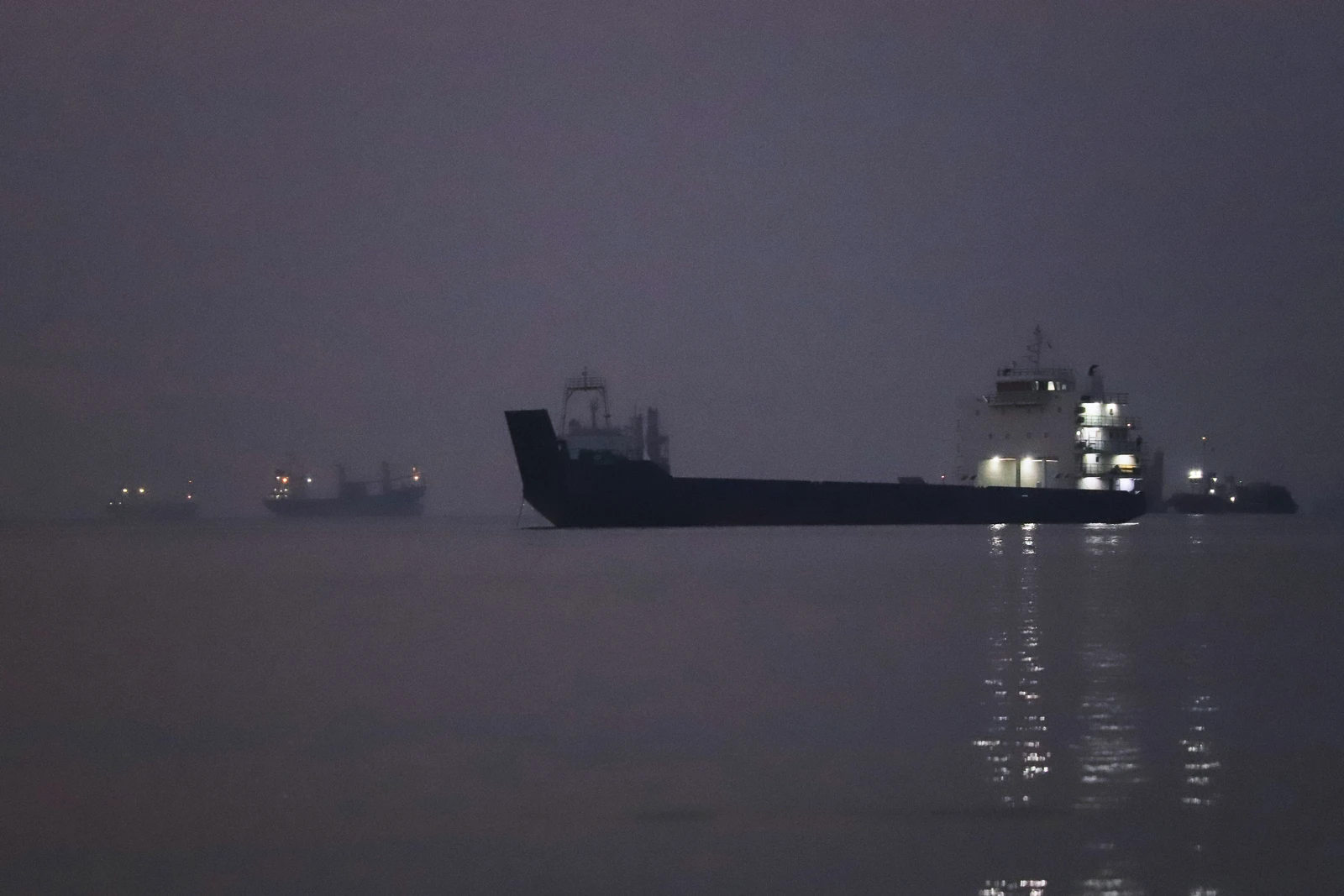
- Yemeni leader Rashad Al-Alimi condemns attack as part of a “systemic war” against government-controlled areas
- Thick plumes of black smoke seen rising from the port following the attack
AL-MUKALLA: Seven people were killed and 15 wounded on Sunday when the Iran-backed Houthi militia launched missile and drone attacks on the government-controlled Red Sea port city of Mocha, including its seaport, in the latest escalation of fighting across Yemen.
The National Resistance Forces, which are based along Yemen’s government-controlled western coast, said that four soldiers and three civilians were killed in the attacks on Mocha seaport in Taiz province.
The force said that its air defenses shot down 11 Houthi drones during the assault.
Abdul Malik Al-Shara’bi, director of Mocha seaport, initially told Arab News that Houthi drones had struck accommodation housing port workers, wounding several people and damaging infrastructure.
“We are still evacuating the remaining workers,” Al-Shara’bi said by telephone shortly after the attack.
The National Resistance Forces later confirmed the death toll of seven and said that 15 people had been wounded. It also released footage showing air defenses firing at drones over Mocha.
Images circulating on social media showed thick plumes of black smoke rising from the seaport following the attack.
Residents said that Houthi missiles also landed near the headquarters of a local television station and a government building in Mocha.
The strikes came as residents in Houthi-controlled areas, including Ibb and parts of Taiz, reported hearing large explosions at military sites following the militia’s launch of missiles and drones.
Yemen’s Ministry of Transportation, which oversees Mocha seaport, held an emergency virtual meeting chaired by Minister Mohsen Ali Haidarah and strongly condemned the attacks.
The ministry urged authorities at all entry points to prepare emergency plans to deal with possible service disruptions and ensure the continued movement of traffic and supplies.
“The terrorist Houthi militias do not respect the sanctity of civilian and service facilities, which requires the continuation of emergency measures and raising the level of preparedness and readiness in all institutions and bodies affiliated with the ministry,” Haidarah was quoted as saying by the ministry’s media office.
Meanwhile, Houthi military spokesman Yahya Saree claimed responsibility for what he described as a “large-scale” attack involving multiple missiles and drones targeting government-controlled Mocha.
He said that the strikes targeted weapons depots and Yemeni and Saudi personnel whom the Houthis accused of preparing attacks against their forces.
The latest round of violence began on Thursday when the Houthis attacked several Yemeni army positions in Marib and Hadramout, killing 17 soldiers and wounding others.
It was one of the deadliest Houthi missile and drone assaults since April 2022, when a UN-brokered truce between the Yemeni government and the Houthis came into effect.
The Yemeni army responded by striking Houthi military positions, mainly in Hodeidah.
Footage released by the army showed drones targeting Houthi gatherings along front lines, while military vehicles fired missiles toward Houthi-controlled areas in Hodeidah.
According to the official SABA news agency, members of the Presidential Leadership Council, along with senior army and security commanders, ordered military and security forces to remain on high alert amid fears of further Houthi escalation.
During a meeting on Sunday with Neil Hop, the new charge d’affaires at the US Embassy to Yemen, Rashad Al-Alimi, chairman of the Presidential Leadership Council, accused the Houthis of waging a “systemic war” against government-controlled areas by attacking Mocha seaport, other ports, airports and camps for internally displaced people.
Military officials said that the latest attacks amounted to an effective resumption of war against the internationally recognized government.
Abdul Basit Al-Baher, a Yemeni military officer in Taiz, told Arab News that government forces were now better prepared and equipped to confront a renewed conflict with the Houthis.
“This is a formal declaration of war against Yemen, its neighbors and the international community,” Al-Baher said, referring to Sunday’s attacks.
“Government forces are ready and fully prepared, having carried out their duties under far more difficult circumstances. In the past, we drove the Houthis back with limited resources. Today, the army is more capable, more experienced and better equipped to defeat these militias.”
Analysts said that the Houthi escalation in Taiz appeared intended to demonstrate that the group retains significant military capabilities and can threaten government-held areas with missiles and drones.
Ali Al-Fakih, editor of Al-Masdar Online, told Arab News that the Houthis had suffered heavy losses in retaliatory attacks by government forces, prompting them to strike Mocha both in response and as a demonstration of their firepower.
“The Houthis seek to demonstrate their superiority in missile and drone capabilities to protect their ground forces from attacks,” Al-Fakih said.
“They understand they cannot confront multiple fronts simultaneously, and are therefore attempting to create a preemptive show of force to deter a full-scale military confrontation.”
Yemen’s war began in late 2014 when the Houthis seized Sanaa and large parts of the country.
The conflict has killed thousands of people, displaced millions and created one of the world’s worst humanitarian crises.