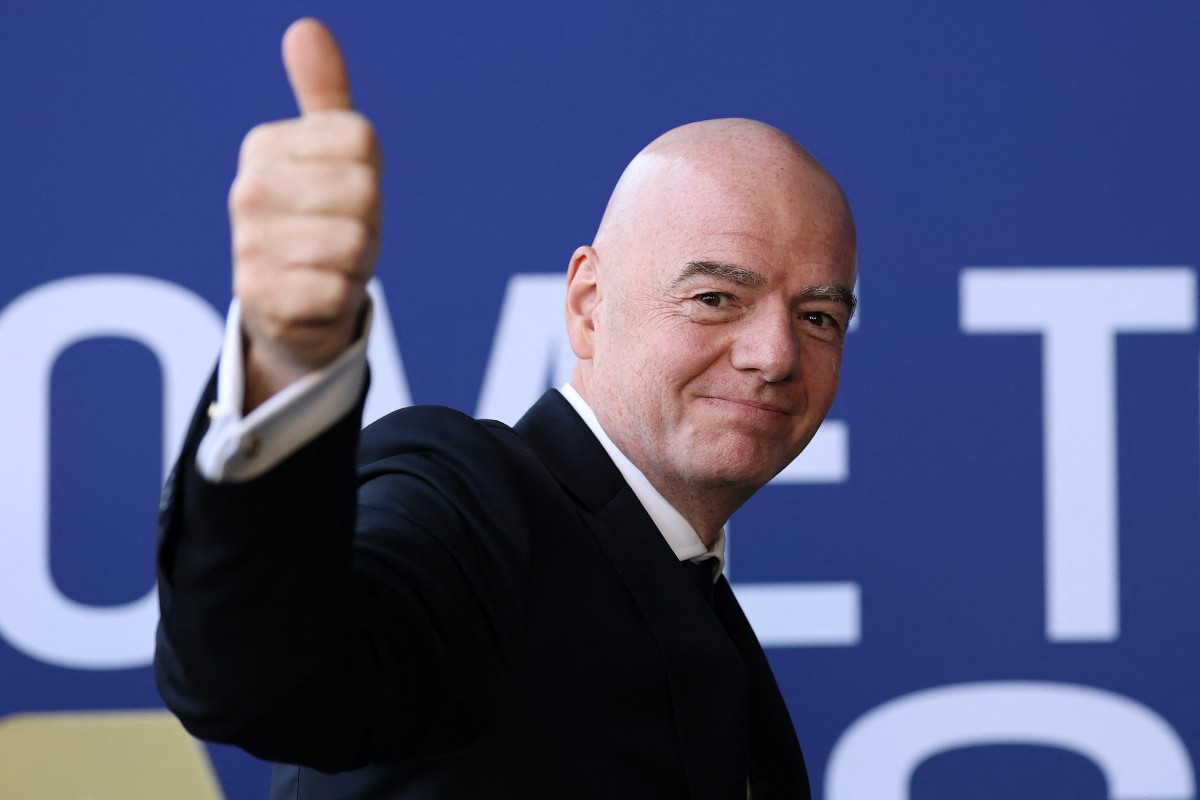
- On Monday, UEFA, the AFC and Concacaf issued an unprecedented statement accusing FIFA’s leadership of breaking trust ‘through deception’
- While position of FIFA president looks increasingly untenable, he still retains backing of the majority of the organization’s 211 members
LONDON: There is usually a lull after a World Cup, as the global football family takes a deep breath before the club season begins, but not this summer.
FIFA’s turmoil has dominated headlines and, as the Saudi Pro League kicks off on Thursday, the politics off the pitch is attracting almost as much attention as the football. Nobody knows what will happen next, but the consequences could be seismic.
Gianni Infantino’s proposal to sell a stake in the World Cup’s commercial rights to private American investors, first reported by The Times on July 28, provoked a furious backlash.
On Monday, UEFA, the AFC and Concacaf issued an unprecedented joint statement accusing FIFA’s leadership of breaking trust “through deception” and calling for an independent review of the abandoned plan. UEFA has also threatened to boycott FIFA tournaments.
The past month has been a whirlwind. Earlier in July, more than 200 of FIFA’s 211 member associations endorsed the Swiss-Italian official, who has been president since 2016, for another term.
March’s election appeared destined to be a coronation rather than a contest. Now, however, Infantino is not just fighting to win an election, but to remain in office until the vote.
The reason is simple. Three major confederations may have turned against him — although the leader of the Confederation of African Football has backed his leadership and Oceania has called for time to examine the situation.
But any election will be decided by individual associations, each of which has one vote. Infantino retains support among a number of them.
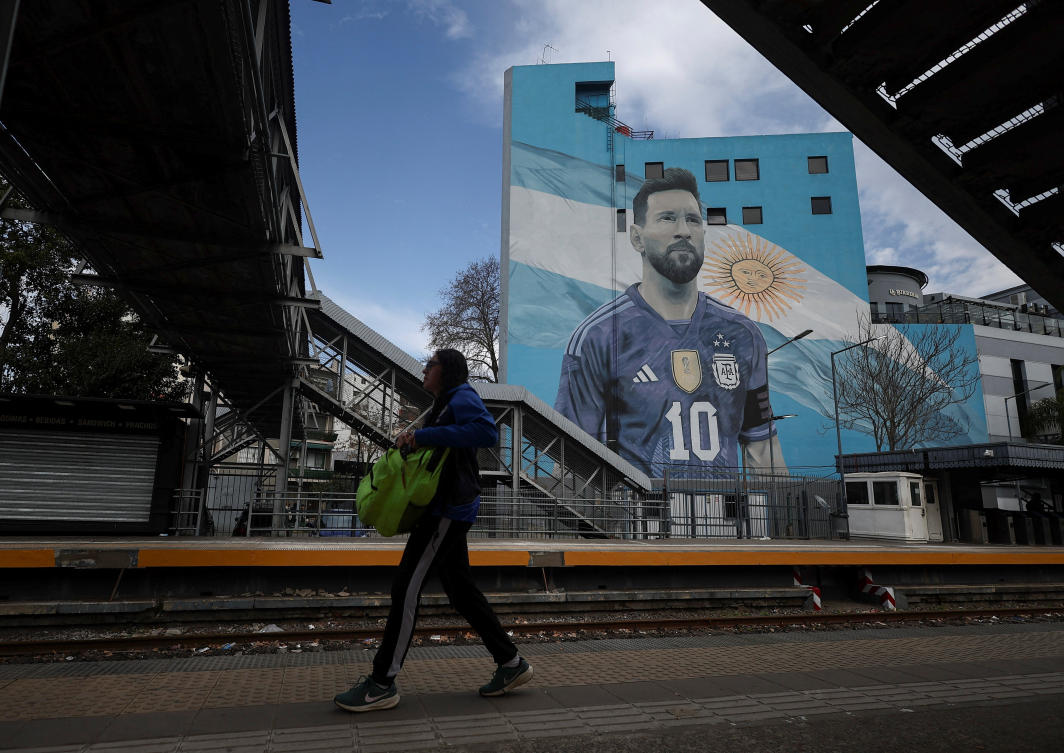
Argentina, Mexico, Lebanon, Sri Lanka and Qatar are among those to have expressed support for the incumbent. Bhutan’s president, Ugen Tsechup, has also praised him.
“In my experience, he has always looked out for the smaller nations,” Tsechup told Arab News.
Infantino’s proposal would have given each association $40 million to spend. For wealthy federations such as England, Germany, France and Brazil, that might cover the salaries of national-team coaching staff for a few years. For Bhutan, which operates on little more than $2 million annually, the prospect was transformative.
“Our country is not rich and sports is not a priority,” Tsechup said. “We get little assistance and help from the government. We depend entirely on FIFA and, to a lesser extent, the AFC.”
“The amount mentioned was fantastic,” he added. “We could have done so much with it. In my head, I was already spending the money.”
Infantino had courted countries well outside Europe and South America, FIFA’s traditional heartlands, even before the proposal and its promise of big money. He travels extensively, works hard at personal diplomacy and has helped bring major tournaments to countries that had never previously hosted them.
That means Infantino could win an election in March. If he has more than six months to work behind the scenes, visit federations and remind their leaders what he has done for them — while outlining what he could do in the future — he could secure more.
From a political perspective, the confederations’ efforts to force or persuade Infantino to step aside are therefore understandable. Any election would be unpredictable, particularly if he remains in office long enough to campaign.
Take the AFC. Its leadership has made clear that it wants change, while its president, Sheikh Salman bin Ebrahim Al-Khalifa, has previously proved adept at preserving unity within the confederation.
There are those, such as Jordan, which will oppose Infantino regardless, and others who will fall in line with the wishes of the AFC leadership but seven months before a vote, it is impossible to know how many.
The uncertainty is compounded by the fact that two of Asia’s most important federations, Saudi Arabia and South Korea, are currently without presidents.
Speak to people at the AFC and within its member associations and there is only one point on which they agree: nobody knows what will happen.
If the election becomes a genuine contest, much will depend on the opposition candidate. For Asian unity, an Asian challenger would help but other confederations will have their own opinions.
The three confederations are likely to intensify their pressure. If threats to boycott FIFA tournaments are upheld, the consequences will be chaotic.
The first test will be the Women’s U-20 World Cup, which is due to begin in Poland in early September. Six of the 24 teams are European, including the hosts. The stakes will be even higher at the 2027 Women’s World Cup.
It is difficult to imagine football reaching that point. Yet that is where the sport finds itself. The only certainty is that Infantino remains FIFA president right now. Beyond that, nobody knows what will happen.