
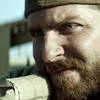

Every cineaste and his uncle wants to be part of the public debate raging in the US today about American Sniper, Clint Eastwood’s adaptation of a memoir of the Iraq war by Navy SEAL Kris Kyle, considered the most lethal sniper in American military history, with a 160 confirmed kills and nearly 100 more unverified ones. Wow, save us from evil, dear Lord!
Well, here’s my two cents worth in that public debate about the film: It’s superficial. It is, at any rate, decidedly not the kind of cinematic oeuvre that deserves the attention it’s been getting. It does not deserve being nominated for Best Picture Oscar. And it does not deserve the windfall at the box office it has reaped.
Unless you are from another planet, you would know by now that American Sniper tells the story of a real-life Iraq war veteran who appears to be totally unburdened by moral rectitude, often stationed on rooftops in Baghdad, typically to protect fighters on the ground. He kills not only insurgents but children as well — children, that is, he suspects of preparing to throw hand grenades at convoys of Marines. Eastwood humanizes his protagonist by showing him at times, only at times, to be no different from the rest of us human beings battling our conscience and dealing with doubts about the meaning of our acts.
But in the end, the director is more interested in adapting Kyle’s memoir (in which the author refers to Iraqis as “savages,” a reference omitted in the movie) as a good, old war yarn. American Sniper, however, is not a cerebral war movie like, say, Lewis Milestone’s All Quiet on the Western Front (1929), that depicts the unspeakable mental stress that German soldiers experience in the trenches during WWI and the detachment from the self they feel upon returning to civilian life; Stanly Kubrik’s Paths of Glory (1957), also set during the Great War, where Col. Dax, played by Kirk Douglas, refuses on moral grounds to obey an order to send his soldiers on a suicide attack; or Steven Spielberg’s more recent Saving Private Ryan (1998), which received universal critical acclaim for its graphic portrait of the ravages of war, especially its opening 27 minutes that show the harrowing Omaha Beach assault of June 6, 1944.
I stopped taking notes in the Uptown, the movie theater in Cleveland Park, my neighborhood in Washington, less than half way through the screening. American Sniper was just too pedestrian to be worthy of much critical consideration. A movie that dehumanizes the “other,” in this case Iraqis, can only be aiming to ignore what is of man in man and focusing instead on what there is in him of beast.
And Kris Kyle, in real life as on the screen, played by the fine actor, Bradly Cooper, was a beast. Perhaps the question we should raise here is this: Do we go to war already predisposed to commit mayhem, or is it that our encounter with war itself that makes us go off the deep end, debasing our humanity and driving us, in this case middle-class, middle-brow, middle-American boys one and all, to fall into the garb and glove of beastly creatures?
We all recall Abu Ghraib, for example, do we not? Who were those twenty-somethings who committed the atrocities there? Were they not, for the most part, the offspring of God-fearing, tax-paying, law-abiding citizens who raised their kids to respect human life? Last Thursday, the New York Times editorialized, though not in context of Eastwood’s movie: “What happened at the Abu Ghraib prison during the early days of the Iraq war is no secret. The whole world has seen the appalling photos. Detainees under American control were raped, beaten, shocked, stripped, starved of food and sleep, hung by their wrists, threatened with death and, in at least one case, murdered. These are war crimes, punishable under both American and international law.”
“Yet,” the editorial added, “more than a decade after the fact, only a few low-level military personnel have been held criminally accountable for the abuse and torture that went on there.”
Those who live by the sword, we say, will die by the sword. Kris Kyle died “by the gun” just before the film was released the second week of January. He had taken a fellow Iraq war veteran — albeit a disturbed individual suffering from post-traumatic stress, with a history of violence — to a shooting range in order “to unwind.” While there, he turned his gun on Kyle, and one of Kyle’s friends who had accompanied them to the range, killing them both. The way I see it, Clint Eastwood blew it this time. He owes me $12, the price I paid for my movie ticket to American Sniper. Modesty aside, I happen to take films seriously — and trust me on this one, for I subscribed to Cahier du Cinema in my late teens.
Films, serious films, can transform society. They can transform our personal lives. They can transform our perceptions of the objective world we inhabit, a world whose existential terrors and seeming futilities we often dodge only by sitting quietly — or if we’re critics, with a steno notebook and a flashlight — in a darkened theater, pondering over the musings on the screen. Film is, or should be seen as, sacrosanct.
Just as friends don’t let friends drive drunk, as the slogan against drunk driving has it, fans don’t let filmmakers direct bunk. Clint Eastwood, the brilliant director of cinematic masterpieces like Unforgiven, Mystic River and Million Dollar Baby, should have known better than to adapt an infantile, self-serving and vainglorious memoir like American Sniper on the screen. What else is there to say?


