
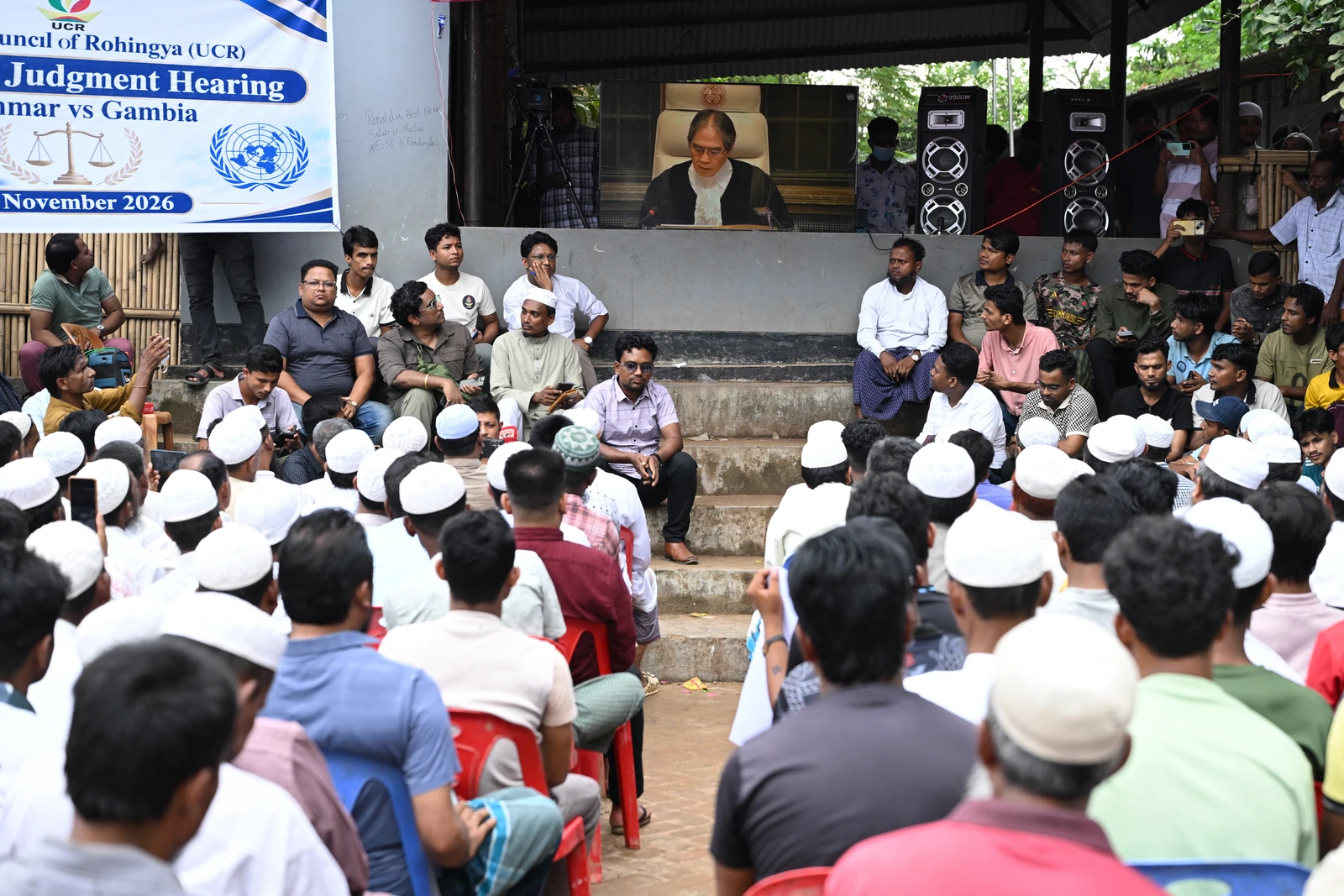

The International Court of Justice has done something no international institution has previously been willing to do: It has held a state responsible for committing genocide.
By nine votes to six, the court found that Myanmar committed genocide against the Rohingya during the military operations of 2017. It ordered the state to investigate and prosecute those responsible, prevent recurrence, enable the safe and voluntary return of displaced Rohingya, and provide compensation.
The immediate temptation will be to ask whether Myanmar will comply. It almost certainly will not, at least under its present leadership. But focusing only on enforcement misses another consequence of the ruling. The judgment changes the terms on which every other government now deals with Myanmar.
Until this week, relations with Naypyitaw could still be framed primarily as a political question. Governments could debate whether engagement would encourage stability, whether sanctions had failed, whether regional security required dialogue or whether Myanmar should gradually be brought back into the Association of Southeast Asian Nations.
Those debates will continue. But they now take place against a binding judicial finding that Myanmar committed genocide.
The debates will continue. But they now take place against a binding judicial finding that Myanmar committed genocide
Dr. Azeem Ibrahim
That matters because diplomatic normalization is no longer simply about whether foreign governments approve of Myanmar’s domestic politics. There is now an authoritative legal determination concerning the conduct of the state itself.
International law does not require every country to isolate Myanmar indefinitely. Diplomacy with governments accused of grave crimes is often necessary. Neighbors need to discuss borders, trade, migration and security. Humanitarian agencies need access. Regional organizations cannot simply pretend that Myanmar no longer exists.
But engagement after a genocide judgment should not look the same as engagement before.
The court has provided a clear set of obligations around which diplomacy can now be structured. Myanmar must investigate and prosecute those responsible. It must ensure that violations are not repeated. It must enable safe return and provide remedies to the victims. Those obligations give regional diplomacy something it has often lacked: measurable substance.
ASEAN has spent years debating how far to engage Myanmar and under what conditions. Some members have favored greater contact, arguing that isolation has achieved little. Others have been more cautious, particularly governments facing domestic concern over the treatment of the Rohingya.
Governments considering military exports can no longer claim uncertainty about what happened in Rakhine
Dr. Azeem Ibrahim
The world court judgment does not resolve that disagreement but it should change its terms. The question should no longer be whether engagement is good or bad in the abstract but about what it achieves.
A ministerial meeting should be used to press for humanitarian access. Greater regional participation should be connected to measurable progress on citizenship and protection. Economic engagement should be accompanied by demands that the state preserve evidence, cooperate with investigations and create conditions in which displaced Rohingya can eventually exercise a genuine choice over return.
This is not punishment. It is conditional diplomacy built around obligations that Myanmar now undeniably possesses.
The same principle should apply beyond ASEAN. The Organization of Islamic Cooperation played an essential role in bringing the case to the court through Gambia. A small West African state, backed by the OIC, sustained litigation for seven years and ultimately secured a historic judgment.
The next phase requires a different kind of commitment. Legal victory must now be converted into coordinated diplomacy. OIC members can use bilateral relations, development assistance and international institutions to keep the judgment at the center of discussions with Myanmar. Gulf states also have an important role because of their humanitarian contributions and their relationships across Asia.
The objective should not be permanent isolation. It should be to ensure that normalization does not become unconditional amnesia.
That principle matters because time generally favors governments responsible for mass atrocities. Political attention shifts. New crises emerge. Leadership changes. Economic interests return. What once seemed intolerable gradually becomes another unresolved historical grievance.
The Rohingya have already experienced this process. Nine years have passed since more than 700,000 people fled the violence of 2017. Bangladesh continues to host almost 1.2 million registered Rohingya refugees, while conditions in the camps have deteriorated as humanitarian funding has fallen. Meanwhile, Myanmar’s regional relationships have begun recovering.
This is why the judgment matters politically even if the court itself cannot enforce it. International courts rarely possess armies or police forces. Their power lies in changing the legal environment in which other actors make decisions.
Governments considering military exports can no longer claim uncertainty about what happened in Rakhine. States expanding political relations with Myanmar cannot treat the Rohingya question as merely competing historical narratives. Companies considering investments linked to the military must now weigh the implications of dealing with institutions belonging to a state judicially found responsible for genocide.
Most importantly, regional governments have a benchmark against which Myanmar’s rehabilitation can be measured.
That does not mean every diplomatic relationship must wait until every Rohingya returns home. Myanmar’s political and territorial reality is far too complicated for such a simple formula. Much of Rakhine State is now controlled by the Arakan Army rather than Naypyitaw, creating practical obstacles the international court cannot solve.
But complexity should not become an excuse for abandoning conditions altogether.
The court has settled one argument. What happened to the Rohingya was not merely excessive counterinsurgency, communal violence or forced migration. Myanmar committed genocide. The next argument is therefore political. Will governments treat that finding as something that changes their behavior or merely as something that happened in a courtroom in The Hague? The answer will determine whether the judgment becomes a turning point or simply a historical record.
Myanmar can, and eventually should, return fully to regional diplomacy. But rehabilitation should be connected to responsibility. After this judgment, engagement cannot simply mean moving on. It must also mean moving Myanmar toward compliance.
Dr. Azeem Ibrahim is the director of special initiatives at the New Lines Institute for Strategy and Policy in Washington.
X: @AzeemIbrahim


