

It is not unusual that disagreement is always dominating the situation in Lebanon, being a country that has 17 officially recognized religious sects. This small state, which is nearly half the area of Kuwait, has a bigger influence than its size. This could be why regional competition for its territory and institutions has continued since its independence during WWII.
A new chapter is being added to Lebanon’s history with the election of Gen. Michel Aoun as the president of the oldest republic in the Arab world. Like all states in the region, Lebanon keeps the formalities of a republic like elections, parliament and rotation of power, but in fact it is more subject to the rule of the elite. And even the influence of the sects’ conventional political elite has waned when the political balances emerged. The current situation in Lebanon is quietly dominated by a single party, that is, Hezbollah, which eventually realized its goal by forcing all opposing parties to accept the election of Aoun, a matter which had been very impossible before.
Many of the Lebanese and the non-Lebanese are not satisfied with election of Aoun, with some rejecting him personally while others are raging for the dominance of Hezbollah over the presidency, which is dedicated to the Christian Maronite, according to Taif Agreement.
However, despite the ongoing anger and resentment, the question is: Will the president — whoever he is — will be able to change the Lebanese internal reality or external relations? Does the position deserve objection and fighting to keep the presidential and constitutional vacuum? In fact the presidential powers are curbed by many restrictions and the state’s three main posts have been marginalized by the militias and the political warring factions.
I think Aoun is the one who will be in more need for his adversaries than they will. He should fear them after they feared him in the past when he took the opposition seat. Aoun alone will not be able to find solutions or preserve the national peace without bridging the gap with the others.
Lebanon is big stage for the Arab world and the region as a whole. It used to host many regional powers like the Nasserites, the Pan-Arabists and the Nationalists, the Syrians and the Palestinians, the Sunnis and the Shiites, the Christians and the Muslims, the Iranians and elements from the Gulf region. This has been the cause of its destruction and the reason for the big attention by all.
A lot of questions are going to impose themselves, which would help us examine the status quo and predict the near future with regard to the status of the sects, the relations with the opposing countries, especially with Damascus and Iran, the Gulf countries, France and Russia.
Will President Auon will reward Hezbollah by empowering it to have influence over Baabda palace? What President Aoun can do under the ongoing extreme local and regional polarizations? Very little, I think. We are usually overestimating the president’s role due to the considerable powers presidents have in other Arab countries, but in Lebanon the presidential powers are limited by the constitution and the Taif Agreement. The case is same for the prime minister.
However, let us be optimistic at first. President Aoun can present a reconciliation initiative for all factions to end a dispute he actively took part in.
Then, he will be the best one to assume the Lebanese presidency since late President Bechara El-Khoury. On the contrary, he could be worse than Emile Lahoud by enlarging division and sparking more conflicts. He can achieve reconciliation if he wants to, but if he opted to boost the status of Hezbollah, he will collide with the cruel Lebanese reality and powers which will not surrender its rights.
Aoun has become a president for all Lebanese in accordance with the principles of Lebanese “democratic” game.
Now all parties should recognize him, regardless of his views reservations and enormities, and urge him to be a bridge toward reconciliation.
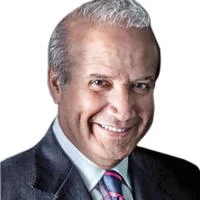
* Abdulrahman Al-Rashed is a veteran and internationally acclaimed columnist. He is the former general manager of Al Arabiya news channel and former editor-in-chief of Asharq Al-Awsat.
* Originally published in Asharq Al-Awsat


