
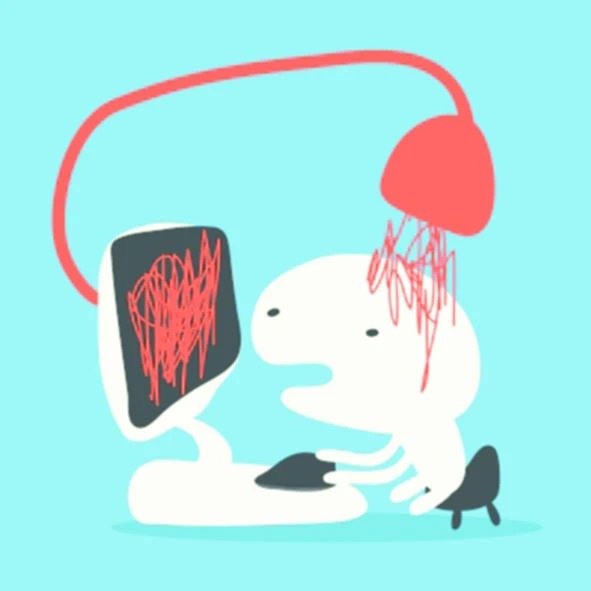

Thirty-five-year-old Shikha Girgla, a brand consultant and a happy-go-lucky personality for her peers, never thought that shifting office emails to her smartphone will reach a stage where she will require medical attention. The habit of checking e-mails every 10 minutes or so caused her sleeplessness, anxiety and lack of concentration in family affairs.
After much deliberation and counselling, she finally decided to deactivate office emails as soon as she reached home. Today, Girgla feels much better and in control of her life. Like Girgla, if you too can’t avoid responding to work or client emails after every few minutes, you may be suffering from obsessive compulsive disorder that is debilitating and needs immediate intervention, experts say. With smartphone use on a rise, email stress has become a new health hazard for young Indian professionals.
“Besides the immediate impact on physical health, excessive dependence on technology like checking emails every few minutes is likely to lead to poor lifestyle choices, disturbed sleep, a source of distraction and social alienation,” Dr. Samir Parikh, says director of mental health and behavioural sciences at Fortis Hospital in New Delhi. With the blurring of lines dividing work from home, individuals are being more prone to have unclear boundaries which is likely to contribute towards increasing stress levels and intermingling of roles, thereby having an adverse impact professionally, personally as well as in social aspects.
Earlier, workplace issues would mostly be encountered when the employee was physically present at the workplace.
Young professionals are lining up at his clinic with complaints of insomnia, anxiety and insecurity — at the root of which lies the unhealthy work culture.
Constantly hounded by work communication, the stress is clearly visible on their faces. Having emails accessible to us at one click can be used as a major advantage as it saves time, energy and also improves connectivity.
According to a study released by the apex trade association Assocham in April this year, over 42 percent of employees in the private sector suffer from depression or general anxiety disorder due to demanding schedules, high stress levels and performance-related perquisites at work. According to Dr. Manish Jain, psychiatrist at BLK Super Speciality Hospital, checking e-mails frequently has become a new trigger of anxiety for the working professionals who come to see him quite often nowadays.
“A new deadline or task can just be communicated through mail which may become a trigger for anxiety attacks for some,” he said.
If one’s work environment is extremely demanding, there is a greater likelihood of a work-life imbalance. To add to this, an excessive dependence on technology could definitely blur the demarcation between work and home, thereby leading to an overflow of stress into various aspects of the individual’s functioning.
Such an anxiety is likely to interfere with the person’s cognitive as well as social functioning. “People with mild pre-existing anxiety traits are at a higher risk,” Dr. Jain stresses. Sleep deprivation and long-standing unattended stress are known to disturb endocrine functions and biological rhythm. This leads to various psychological and psychosomatic disorders such as depression and anxiety. Self-discipline is the key when it comes to dealing with work communication. Learn to say a polite but firm no when the demand on your time and body or the expectation is unreasonable.
“Beyond office hours, you owe your body proper sleep, relaxation, exercise and a balanced diet,” the experts advise.


