

A new study by Yale University (yes, the same university Indian HRD Minister Smriti Irani claims to have a ‘degree’ from) reports that Hindu-Muslim riots in India strengthen the "ethno-religious parties at the expense of multiethnic ones like the Congress." In other words, the study says the Bharatiya Janata Party (BJP) gains in polls after every riot. Is anyone surprised?
Given the fact that the then Gujarat Chief Minister Narendra Modi won elections after the 2002 Gujarat riots or the BJP had a clean sweep in Uttar Pradesh in the 2014 Lok Sabha elections after the Muzzafarnagar riots (August-September 2013), it can be said that the conclusions made by the three political scientists of Yale University make perfect sense.
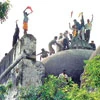
It was 22 years ago when on Dec. 6, 1992, a mosque in Ayodhya, Uttar Pradesh, was demolished by militant Hindus, leading to nationwide riots causing the death of at least 2,000 people, which helped the BJP emerge as a national party. In the ensuing midterm polls, the BJP increased its tally, winning 120 seats as compared to 85 it won in the previous elections, thus becoming the second largest party after the Congress.
Hindu fundamentalists say the mosque was built on a sacred spot where Ram was born. According to legend, in 1528 CE, troops of the first Mughal emperor Babur invaded the Hindu city of Ayodhya, demolished a temple that stood on the place where Ram was born, and built a mosque named after Babur. However, some historians deny the existence of any evidence proving whether or not a temple really was demolished to build a mosque.
Even after over two decades of its demolition, Babri Masjid’s criminals are free and the Indian judiciary has failed to deliver justice. It certainly does not help that those directly involved in the crime are ministers in the Modi government.
In contrast to its more aggressive stand in 2009, the BJP did not talk about constructing Ram temple at the disputed site in the run-up to the 2014 Lok Sabha elections, although it did say in its manifesto: "BJP reiterates its stand to explore all possibilities within the framework of the constitution to facilitate the construction of the Ram Temple in Ayodhya."
Post Ayodhya, the Indian polity took a turn for the worse as the demolition and riots came with deadly consequences: The 1993 Mumbai bombings as well as the birth of terrorist outfits such as the Indian Mujahideen, which cited the demolition as a reason for their terror attacks.
The narrative on the Babri Masjid issue today, as is evident on news channels and other media can be deceiving. The belief that the India of today does not care about which religious structure stands in Ayodhya and that the issue no longer evokes any passion in the common man is not relevant as the individual who opines on these lines sitting in the comforts of a news studio did not scale the mosque, dug into its walls and pull it down. Those who did it were ruthless Kar Sevaks and sadhus, who probably even today feel no remorse for their deplorable act and have only been emboldened by the rise of the saffron party.
The issue of the Babri Masjid/Ram Janmabhoomi is an unfinished business for both Hindus and Muslims. Dec. 6 will go down in history as a day when democracy was murdered by the very people who claim to be the proponents of democracy.
If the 2010 Allahabad High Court’s judgment under which the control of the main disputed area — where the mosque was torn down was to be given to Hindus — is anything to go by, then there is very little hope.
—
Email: [email protected]


