
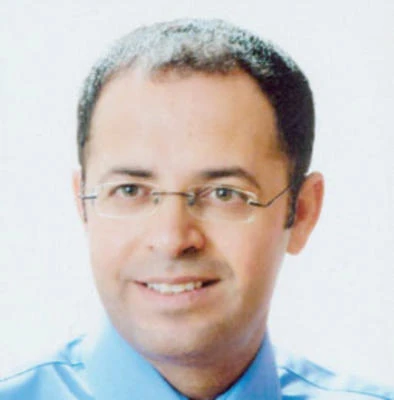

The militants of the self-ascribed Islamic State (IS) are holding a Jordanian pilot captive after his F-16 fighter went down in Syria a few days ago. It is not as if it was the first time that the Jordanian air force took part in such a battle, but the capture of a pilot and the posting of his pictures on the Internet is of great importance for public debate in Jordan.
The news of the Jordanian pilot’s capture went viral on social media outlets in Jordan. The common theme is that Jordanians are united in their support and sympathy for the captive pilot and his family. While a few cast doubts on the decision of Jordan to take part in the coalition in the first place, the mainstream position in Jordan has been of unwavering support to the army and the family of the captive pilot.
The public display of support to the army puts a lot of pressure on the regime to act swiftly to secure the release of the Jordanian pilot. King Abdallah himself took the leading role and contacted regional friends and allies to arrange for the release of the pilot. Of course it is not the first time that Jordan got involved in this kind of a business. Not a while a go, the Jordanian ambassador in Libya was kidnapped by militants and the Jordanians intelligence managed to secure his release. In other words, Jordan is willing to cut a deal with the militants to save the pilot and assure the public moral in Jordan.
On the whole, Jordanians feel that their country does not have to pull out of the coalition or give in to all of the demands of the IS as a quid pro quo for the release of the pilot. Many countries, the United States included, found themselves in a situation where they had to negotiate with the enemy without having to put an end to the war. Even great powers paid ransom to terrorists. Both Hezbollah and Hamas reached a deal with Israel for prisoners’ exchange without having to stop the hostility.
Some in Jordan even hinted that the military option is not off the table. But it is easier said than done. Any military action that is not based on accurate intelligence may end in a failure while risking the life of the pilot. But thus far, it is obvious that Jordanians are inclined to reach a deal with the IS.
While many are optimistic that the release of the pilot will be carried out in the near future, this writer believes that negotiations will be complex and may be dragged for months. All in all, the process will be wrenching and may push people to ask difficult questions. Soon people will be asking about the details of the negotiations. Will the government be transparent and if yes how will transparency affect the negotiations?
To be sure, the Muslim Brotherhood had made it perfectly clear that the war against IS cannot be “our war.” On Friday, the movement issued a statement about the incident in Syria. Implicit in their official statement is a sort of gloating. That is too bad. How on earth can a political party — who claims to be seeking democratic reforms — come up with a statement that does not condemn IS in plain language? The Jordanian mainstream and social media were quick to pick on the statement calling on the movement to rethink its statement.
To many Jordanians, it is not the legitimacy of Jordan joining the coalition that is at stake at this moment, but it is the necessity to first, secure the release of the captive pilot, second, to understand expected utility of the preemptive strikes against IS.
It remains to be seen how things are going to unfold. But meanwhile, the Jordanian government should not rule out another similar incident. It should be prepared to deal with such scenarios with a degree of transparency to guarantee the continuation of public support in the war against IS.


