
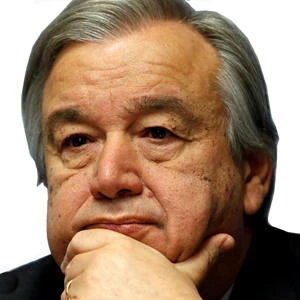

The United Nations General Assembly has on Oct. 13 affirmed António Guterres, the former premier of Portugal and UN High Commissioner for Refugees, as the next United Nations Secretary-General (UNSG). The UN Security Council had on Oct. 5 nominated him for the position after considering 13 candidates.
Guterres will have a number of challenges as he prepares to take up the UNSG position in January 2017. These include implementation of the Sustainable Development Goals, addressing climate change, managing the continuing global refugee crisis, ensuring progress on disarmament, curtailing armed conflicts in a number of countries and regions, and reducing the tensions between Russia and the West, and between China and its neighbors in East Asia.
The expertise of Guterres in managing the global refugee crisis appears to have been one critical factor in securing support for his UNSG candidacy from the five permanent members of the Security Council. It is widely recognized that Guterres has managed this issue incredibly well in very difficult circumstances.
However, the fact that Guterres never directly challenged the nuclear weapons policies of the P5 during his term as the premier of Portugal, might also have been an influential factor in him getting the Security Council endorsement ahead of the other candidates. The P5 are all nuclear-armed, and are the ones most responsible for a continued lack of progress in achieving multilateral nuclear disarmament. So does this mean the Guterres will be weak on nuclear disarmament as UN Secretary-General? Not necessarily.
Ban Ki-moon, the retiring UNSG, was also not very strong on nuclear disarmament when he was elected as UN chief, but became more so while in office.
As foreign minister of South Korea, a country in an extended nuclear deterrence relationship with the US, he had joined with other nuclear-reliant countries in opposing a number of UN nuclear disarmament initiatives and resolutions. And, in one of his first initiatives as UNSG, Ban announced that the UN Department for Disarmament would be folded into the Department of Public Information (effectively closing the office) and the position of UN Under-Secretary-General for Disarmament would be canceled.
However, Ban reversed this decision following strong appeals from non-nuclear states and civil society, who argued that nuclear disarmament was a primary objective of the UN. He established a UN Office of Disarmament Affairs and re-instated a top-level position — the UN High Representative for Disarmament Affairs at the level of Under-Secretary-General.
Ban then took a number of initiatives, which have resulted in him being probably the most active UNSG ever on nuclear disarmament. Encouragement to Guterres from non-nuclear states and civil society will probably be important to ensure that he also takes a strong leadership role on this issue like Ban Ki-moon.
As UN chief, Guterres would also have a strong mandate from the UN General Assembly and the majority of UN members to take leadership on nuclear disarmament. On the other hand, reliance by nuclear-armed states and their allies on nuclear weapons does not appear to be waning. Rising tensions between nuclear-armed states, including over the Ukraine and in the South China Sea, have led to heightened nuclear threat postures and re-affirmation of nuclear deterrence. As such, most of the nuclear armed and allied states have indicated that they will not join the UN negotiations next year to prohibit nuclear weapons, which will severely limit its impact. If the new UN leader is to play an effective role in facilitating nuclear disarmament, he will need to be able to assist in managing or resolving these conflicts so that the countries currently relying on nuclear weapons, can build confidence that security can be met without them. This is not impossible.
Russia and the West might currently be at loggerheads over Ukraine, for example, but compare this with the territorial dispute between Russia and Norway over delineation of the continental shelf running from their north coasts all the way to the North Pole. This was resolved through arbitration (Law of the Sea Tribunal) and diplomacy. By simultaneously promoting nuclear disarmament and the achievement of security by non-nuclear means, the new UNSG could ensure progress on both, and help achieve the aspiration of the first UN resolution for the elimination of nuclear weapons. This would indeed be an achievement of the highest order.
—
Alyn Ware is Global Coordinator of Parliamentarians for Nuclear Non-proliferation and Disarmament. IDN-InDepthNews
Guterres will have a number of challenges as he prepares to take up the UNSG position in January 2017. These include implementation of the Sustainable Development Goals, addressing climate change, managing the continuing global refugee crisis, ensuring progress on disarmament, curtailing armed conflicts in a number of countries and regions, and reducing the tensions between Russia and the West, and between China and its neighbors in East Asia.
The expertise of Guterres in managing the global refugee crisis appears to have been one critical factor in securing support for his UNSG candidacy from the five permanent members of the Security Council. It is widely recognized that Guterres has managed this issue incredibly well in very difficult circumstances.
However, the fact that Guterres never directly challenged the nuclear weapons policies of the P5 during his term as the premier of Portugal, might also have been an influential factor in him getting the Security Council endorsement ahead of the other candidates. The P5 are all nuclear-armed, and are the ones most responsible for a continued lack of progress in achieving multilateral nuclear disarmament. So does this mean the Guterres will be weak on nuclear disarmament as UN Secretary-General? Not necessarily.
Ban Ki-moon, the retiring UNSG, was also not very strong on nuclear disarmament when he was elected as UN chief, but became more so while in office.
As foreign minister of South Korea, a country in an extended nuclear deterrence relationship with the US, he had joined with other nuclear-reliant countries in opposing a number of UN nuclear disarmament initiatives and resolutions. And, in one of his first initiatives as UNSG, Ban announced that the UN Department for Disarmament would be folded into the Department of Public Information (effectively closing the office) and the position of UN Under-Secretary-General for Disarmament would be canceled.
However, Ban reversed this decision following strong appeals from non-nuclear states and civil society, who argued that nuclear disarmament was a primary objective of the UN. He established a UN Office of Disarmament Affairs and re-instated a top-level position — the UN High Representative for Disarmament Affairs at the level of Under-Secretary-General.
Ban then took a number of initiatives, which have resulted in him being probably the most active UNSG ever on nuclear disarmament. Encouragement to Guterres from non-nuclear states and civil society will probably be important to ensure that he also takes a strong leadership role on this issue like Ban Ki-moon.
As UN chief, Guterres would also have a strong mandate from the UN General Assembly and the majority of UN members to take leadership on nuclear disarmament. On the other hand, reliance by nuclear-armed states and their allies on nuclear weapons does not appear to be waning. Rising tensions between nuclear-armed states, including over the Ukraine and in the South China Sea, have led to heightened nuclear threat postures and re-affirmation of nuclear deterrence. As such, most of the nuclear armed and allied states have indicated that they will not join the UN negotiations next year to prohibit nuclear weapons, which will severely limit its impact. If the new UN leader is to play an effective role in facilitating nuclear disarmament, he will need to be able to assist in managing or resolving these conflicts so that the countries currently relying on nuclear weapons, can build confidence that security can be met without them. This is not impossible.
Russia and the West might currently be at loggerheads over Ukraine, for example, but compare this with the territorial dispute between Russia and Norway over delineation of the continental shelf running from their north coasts all the way to the North Pole. This was resolved through arbitration (Law of the Sea Tribunal) and diplomacy. By simultaneously promoting nuclear disarmament and the achievement of security by non-nuclear means, the new UNSG could ensure progress on both, and help achieve the aspiration of the first UN resolution for the elimination of nuclear weapons. This would indeed be an achievement of the highest order.
—
Alyn Ware is Global Coordinator of Parliamentarians for Nuclear Non-proliferation and Disarmament. IDN-InDepthNews


