
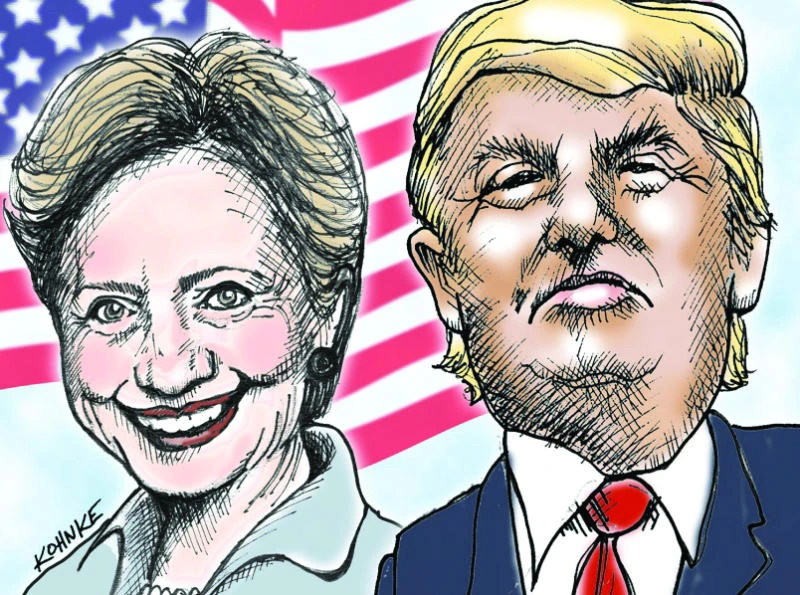

There is no way out, around or through it: After his runaway, landslide victory in Indiana’s primary last Tuesday, we have to get used to the idea that Donald Trump is now his party’s presumptive nominee for president of the United States, destined to lock horns, as seems very likely, with Hillary Clinton in the general election in November.
As for his chief rival, the insufferable Ted Cruz, loathed even by his Republican colleagues on the Hill for his mean-spiritedness and petulance, who could see no path forward to his salvation in a contested convention, it is now curtains. “Tonight,” he told his backers despairingly, “I’m sorry to say, it appears that path has been foreclosed. Together we left it all on the field in Indiana.” To which, as Americans inter his political career, we say: “Rest in pique, Ted.” Trump’s other remaining rival, John Kasich, who had clung on to relevance throughout the campaign by his fingernails, chose to drop out the following day.
On the Democratic side, Bernie Sanders scored an upset victory over Clinton, giving the Vermont senator and his supporters a psychological boost, but not much more, since the trajectory, and maths, of the Democratic race strongly favor the former secretary of state, senator and first lady, who will hold what seems like an irreversible lead in total delegates when she arrives at the Democratic National Convention in Philadelphia next July.
And Trump, resorting to his brash lingo — a lingo his supporters see as being engagingly earthy — declaimed about his projected matchup with Hillary in November: “We’re going to win big league, believe me. We’re going after Hillary Clinton. She will not be a great president. She will not be a good president. She will be a poor president.”
Even those of us who cannot stand Hillary, accusing her of being duplicitous, cold and two-faced, do not go along with that facile identification of a woman who at one time was America’s top diplomat, especially when the identification is advanced by a dangerous, erratic and impetuous business tycoon with little or no experience in politics, let alone in how to run the affairs of a global power from the sanctum of the Oval Office.
But the long and short of it is this: A general election matchup in November between Trump and Clinton is now all but certain, with the latter seeming, according to polls, to have the advantage — no more though than an advantage, since the mercurial billionaire has already, at least so far in the primaries, bedeviled all predictions abut his chances, bucked all the odds everywhere he campaigned and upended all tenets of the conventional wisdom.
Sure, in national polls, Donald is unpopular, but Hillary Clinton is not seen as Miss Congeniality either. Still, though a majority of Americans may not trust the former first lady, they are scared of the New York mogul — whose views on race, women and minorities they find odious — and will end up voting for her anyhow, though having to hold their noses as they did so.
So, true, Hillary has the lead, so far. But is it an unbeatable lead? Will Trump score an upset victory, going after her as he had done after his 16 Republican rivals, whom he dispatched one by one, much in the manner as Joe Louis, in the ring, had dispatched his opponents from “Bum of the Month Club,” dealing each a knock-out blow before any of them had finished eating their peanut butter and jelly sandwiches?
Upset victories? They’ve been to happen in American presidential elections. Consider the one in 1948, when incumbent Harry S. Truman, the Democratic nominee who had, as vice president, succeeded to the presidency after the sudden death of Franklin D. Roosevelt in 1945, and who ran against Republican nominee Thomas E. Dewey. Virtually every prediction at the time indicated that Truman would be defeated. Yet he won, and his victory was considered the greatest election upset in American history.
Or consider, closer to home in temporal terms, the even more unusual spectacle, in the 2008 election, of Hillary Clinton, the front runner, losing to Barack Obama in the primaries, with the freshman senator from Chicago then going on to beat the seasoned John McCain in the general election. If that’s not an upset, I don’t know what an upset is.
Clinton may, just may — some polls suggest, will — prevail, but lest we forget, this has been one of the most unpredictable election years in recent memory, and strange happenings have taken place. One of these may be that Donald would wipe out Hillary.
If that happens, then Trump, the man with the elaborate comb-over, who has an issue with dancing Muslims, greedy Chinese, criminal Mexicans, free-loading Europeans and sundry others, will not just be America’s problem but that of the rest of the world.
As for his chief rival, the insufferable Ted Cruz, loathed even by his Republican colleagues on the Hill for his mean-spiritedness and petulance, who could see no path forward to his salvation in a contested convention, it is now curtains. “Tonight,” he told his backers despairingly, “I’m sorry to say, it appears that path has been foreclosed. Together we left it all on the field in Indiana.” To which, as Americans inter his political career, we say: “Rest in pique, Ted.” Trump’s other remaining rival, John Kasich, who had clung on to relevance throughout the campaign by his fingernails, chose to drop out the following day.
On the Democratic side, Bernie Sanders scored an upset victory over Clinton, giving the Vermont senator and his supporters a psychological boost, but not much more, since the trajectory, and maths, of the Democratic race strongly favor the former secretary of state, senator and first lady, who will hold what seems like an irreversible lead in total delegates when she arrives at the Democratic National Convention in Philadelphia next July.
And Trump, resorting to his brash lingo — a lingo his supporters see as being engagingly earthy — declaimed about his projected matchup with Hillary in November: “We’re going to win big league, believe me. We’re going after Hillary Clinton. She will not be a great president. She will not be a good president. She will be a poor president.”
Even those of us who cannot stand Hillary, accusing her of being duplicitous, cold and two-faced, do not go along with that facile identification of a woman who at one time was America’s top diplomat, especially when the identification is advanced by a dangerous, erratic and impetuous business tycoon with little or no experience in politics, let alone in how to run the affairs of a global power from the sanctum of the Oval Office.
But the long and short of it is this: A general election matchup in November between Trump and Clinton is now all but certain, with the latter seeming, according to polls, to have the advantage — no more though than an advantage, since the mercurial billionaire has already, at least so far in the primaries, bedeviled all predictions abut his chances, bucked all the odds everywhere he campaigned and upended all tenets of the conventional wisdom.
Sure, in national polls, Donald is unpopular, but Hillary Clinton is not seen as Miss Congeniality either. Still, though a majority of Americans may not trust the former first lady, they are scared of the New York mogul — whose views on race, women and minorities they find odious — and will end up voting for her anyhow, though having to hold their noses as they did so.
So, true, Hillary has the lead, so far. But is it an unbeatable lead? Will Trump score an upset victory, going after her as he had done after his 16 Republican rivals, whom he dispatched one by one, much in the manner as Joe Louis, in the ring, had dispatched his opponents from “Bum of the Month Club,” dealing each a knock-out blow before any of them had finished eating their peanut butter and jelly sandwiches?
Upset victories? They’ve been to happen in American presidential elections. Consider the one in 1948, when incumbent Harry S. Truman, the Democratic nominee who had, as vice president, succeeded to the presidency after the sudden death of Franklin D. Roosevelt in 1945, and who ran against Republican nominee Thomas E. Dewey. Virtually every prediction at the time indicated that Truman would be defeated. Yet he won, and his victory was considered the greatest election upset in American history.
Or consider, closer to home in temporal terms, the even more unusual spectacle, in the 2008 election, of Hillary Clinton, the front runner, losing to Barack Obama in the primaries, with the freshman senator from Chicago then going on to beat the seasoned John McCain in the general election. If that’s not an upset, I don’t know what an upset is.
Clinton may, just may — some polls suggest, will — prevail, but lest we forget, this has been one of the most unpredictable election years in recent memory, and strange happenings have taken place. One of these may be that Donald would wipe out Hillary.
If that happens, then Trump, the man with the elaborate comb-over, who has an issue with dancing Muslims, greedy Chinese, criminal Mexicans, free-loading Europeans and sundry others, will not just be America’s problem but that of the rest of the world.


