
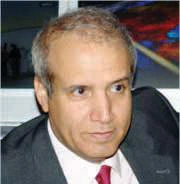

Was Iraqi Prime Minister Haider Al-Abadi sending a message to his rivals or crying out to his allies when he frankly spoke a few days ago about defying “them” — his rivals — even if this led to his assassination? Al-Abadi is waging simultaneously a war on many fronts. He’s fighting the Islamic State of Iraq and Syria (ISIS) and terrorist groups spreading like cancer cells in northern and western Iraq. He’s also trying to stop inciting campaigns against him led by his predecessor, Nuri Al-Maliki. The third front is cleansing the state of rampant corruption that has destroyed most of the state’s resources and has pushed it on the verge of bankruptcy especially with the decline in oil revenues.
Al-Abadi was clear in linking the cleansing operation with the threat against his life. It’s as if he meant specific people in his speech and he defied them saying he won’t stop pursuing them even if this will cost him his life. Truth be told, his life was in danger the minute he dared to announce that he will run for the premiership last August while other candidates went into hiding out of fear of Al-Maliki who refused to step down. One of them traveled to London and announced from there that he would reject the task of premiership if assigned to him. It was said that another traveled to Beirut while a third candidate did not pick up any calls. Al-Abadi was thus the only courageous man left to accept the challenge. It’s due to his willingness to assume this post that Al-Maliki thundered and said he was the only candidate for the position and that he won’t submit to other options. However, Shiite clerics, the United States and some European countries warned him against that. Al-Abadi was quickly assigned to the post in a brief ceremony where even his oath-taking pictures looked bad. Since that moment, the dangerous mission of the new Iraqi prime minister began, and he doesn’t know where the treacherous bullet will come from.
Any follower of the battles with the ISIS will realize the magnitude of the challenge and will thus be surprised at how expanded and violent it has all become. It is also clear that the Iraqi forces are not likely to emerge victorious in the near future despite the support they’re receiving from the US. There’s a huge war with ISIS today — a war which US troops may have seen nothing like even during their battles with Al-Qaeda in the previous years. This raises serious questions regarding the Iraqi state’s ability to withstand the battles in rebellious zones. The crisis is a direct result of the failure and corruption of the Al-Maliki administration who gained the enmity of Sunni provinces and who at the same time built a weak army dependent on sectarian and personal interests. Al-Abadi vows he will continue to reform what he inherited from Maliki — i.e. the corrupt state, which he says was paying certain people billions of dollars and which provided fake contracts within the context of a wide and organized operation.
Al-Abadi does not have many options, as the battles are intertwined and necessary for the current regime to survive. Fighting corrupt men is as important as fighting ISIS because Al-Abadi’s government will become bankrupt and collapse without the financial resources that enable it to pay employees and fund its activities and the fate-determining war. Some funds are also being smuggled to political parties who compete with the government and work to topple it. This is happening at a time when most Iraqis don’t have government jobs and when the government is still underperforming in its duties toward its citizens — duties linked to education, health care and implementing promised construction plans.
There’s no doubt that Al-Abadi is risking his life and a lot more at a time when his rivals are also afraid of harming him after their scandals became well-known to the Iraqis and a source of overwhelming public anger.


