
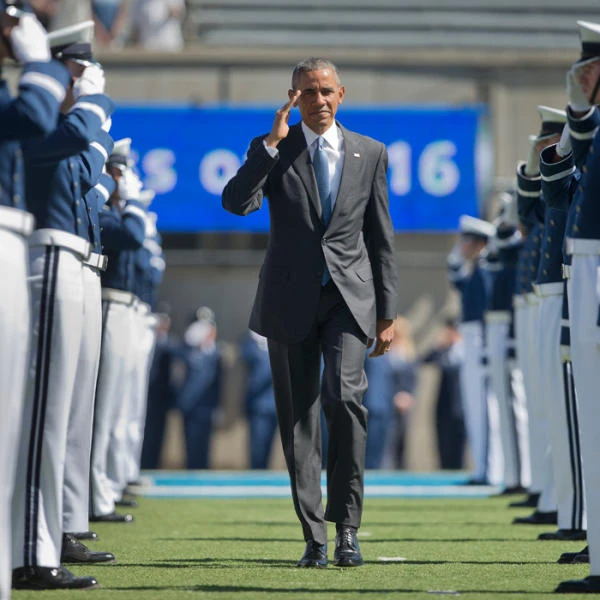

President Barack Obama’s visit to Hiroshima comes almost 71 years after the conclusion of a world war that was fought and ended with tremendous sacrifice, huge casualties and immense devastation. Today, global nuclear arsenals are capable of destroying not only cities but also civilization itself. Albert Einstein’s prophesy bears repeating: “I do not know how the Third World War will be fought, but I can tell you what they will use in the Fourth — rocks!”
Since the end of World War II, the United States and our allies have relied on the ultimate threat of mutual assured destruction for our security, as the Soviet Union did and Russia does now. Today, with nine nations possessing nuclear arms and terrorists seeking them, this strategy has become increasingly hazardous and decreasingly effective.
Warren Buffett, a man who knows how to calculate risk, has reminded us that if the chance of an event occurring is 10 percent in a given year, and that same risk persists over 50 years, there is a 99.5 percent probability that it will happen during those 50 years. For more than 70 years, the United States and Russia have beaten the odds, avoiding a number of near-disasters. The recent deterioration in relations between the United States and Russia has greatly increased these risks.
The two nations still deploy thousands of nuclear weapons ready to fire on a moment’s notice, risking a catastrophic accident or miscalculation based on a false warning. Cold War dangers compelled dialogue between Washington and Moscow on nuclear security and strategic stability. This dialogue is dangerously absent now, even as our planes and ships have close encounters in Europe and the Middle East.
Globally, enough highly enriched uranium and plutonium to build tens of thousands of nuclear bombs is spread across 24 countries, down from 36 in 2009. But there is still no system for tracking, accounting for, managing or properly securing these materials. States with nuclear arms are moving ahead with plans to modernize their arsenals. Nuclear programs continue in unstable countries, while conflicts that give rise to nuclear ambitions persist — and suggestions that we increase the number of nuclear weapon states compound these problems. We have entered a high-risk era in which weapons of mass destruction and disruption — nuclear, radiological, biological, chemical and cyber — are no longer monopolies of nation-states.
Since 2007, former secretaries of state George P. Shultz and Henry Kissinger, former defense secretary William Perry and I have worked together on the steps needed to reduce reliance on nuclear weapons, keep them out of dangerous hands and ultimately end them as a threat to the world. That work must be put back at the top of the global agenda. We cannot predict whether or when the goal of a world free of nuclear weapons might be reached, but a clear US nuclear policy goal consistent with the Nuclear Non-Proliferation Treaty is required to guide our diplomacy and defense programs.
Around the world, leaders must take practical steps to reduce nuclear risks now:
First, the agreement to curb Iran’s nuclear program has significant regional and global implications for stopping the spread of nuclear weapons. All parties must live up to their commitments, assuring full implementation.
Second, North Korea’s nuclear weapons and ballistic missiles threaten regional stability in Northeast Asia. We must work closely with our allies in South Korea and Japan to stop these programs and eliminate nuclear weapons from the Korean Peninsula. China must play a vital role in this joint venture if we are to avoid this nuclear nightmare without military conflict.
Third, we should build on the progress to secure nuclear materials that Obama and other leaders have made at the four Nuclear Security Summits. We must also make an all-out global effort to secure dangerous radiological materials and prevent a terrorist “dirty bomb.”
Fourth, the US and Russia cannot afford to treat dialogue as a bargaining chip when our two countries hold more than 90 percent of the world’s nuclear weapons and weapons-usable nuclear materials. Most urgently, Washington and Moscow must rebuild a bridge of cooperation to ensure that neither Daesh nor any other violent extremist group acquires nuclear, radiological or other weapons of mass destruction.
Fifth, nuclear weapon states should avoid reckless rhetoric that can lead to disastrous mistakes. Split-second decisions made by those directly responsible for nuclear weapons and warning systems can be affected by the surrounding atmosphere. A poisoned political climate can lead to miscalculation, turning a false warning caused by a software glitch or a cyberattack into a nuclear exchange.
Obama’s visit to Hiroshima should remind the world that we are in a race between cooperation and catastrophe. The day after a nuclear weapon explodes, God forbid, what would we wish we had done to prevent it? Why don’t we do it now?
— Sam Nunn, a Democratic US senator from Georgia from 1972 to 1997, is co-chairman and chief executive of the Nuclear Threat Initiative.
— www.washingtonpost.com
Since the end of World War II, the United States and our allies have relied on the ultimate threat of mutual assured destruction for our security, as the Soviet Union did and Russia does now. Today, with nine nations possessing nuclear arms and terrorists seeking them, this strategy has become increasingly hazardous and decreasingly effective.
Warren Buffett, a man who knows how to calculate risk, has reminded us that if the chance of an event occurring is 10 percent in a given year, and that same risk persists over 50 years, there is a 99.5 percent probability that it will happen during those 50 years. For more than 70 years, the United States and Russia have beaten the odds, avoiding a number of near-disasters. The recent deterioration in relations between the United States and Russia has greatly increased these risks.
The two nations still deploy thousands of nuclear weapons ready to fire on a moment’s notice, risking a catastrophic accident or miscalculation based on a false warning. Cold War dangers compelled dialogue between Washington and Moscow on nuclear security and strategic stability. This dialogue is dangerously absent now, even as our planes and ships have close encounters in Europe and the Middle East.
Globally, enough highly enriched uranium and plutonium to build tens of thousands of nuclear bombs is spread across 24 countries, down from 36 in 2009. But there is still no system for tracking, accounting for, managing or properly securing these materials. States with nuclear arms are moving ahead with plans to modernize their arsenals. Nuclear programs continue in unstable countries, while conflicts that give rise to nuclear ambitions persist — and suggestions that we increase the number of nuclear weapon states compound these problems. We have entered a high-risk era in which weapons of mass destruction and disruption — nuclear, radiological, biological, chemical and cyber — are no longer monopolies of nation-states.
Since 2007, former secretaries of state George P. Shultz and Henry Kissinger, former defense secretary William Perry and I have worked together on the steps needed to reduce reliance on nuclear weapons, keep them out of dangerous hands and ultimately end them as a threat to the world. That work must be put back at the top of the global agenda. We cannot predict whether or when the goal of a world free of nuclear weapons might be reached, but a clear US nuclear policy goal consistent with the Nuclear Non-Proliferation Treaty is required to guide our diplomacy and defense programs.
Around the world, leaders must take practical steps to reduce nuclear risks now:
First, the agreement to curb Iran’s nuclear program has significant regional and global implications for stopping the spread of nuclear weapons. All parties must live up to their commitments, assuring full implementation.
Second, North Korea’s nuclear weapons and ballistic missiles threaten regional stability in Northeast Asia. We must work closely with our allies in South Korea and Japan to stop these programs and eliminate nuclear weapons from the Korean Peninsula. China must play a vital role in this joint venture if we are to avoid this nuclear nightmare without military conflict.
Third, we should build on the progress to secure nuclear materials that Obama and other leaders have made at the four Nuclear Security Summits. We must also make an all-out global effort to secure dangerous radiological materials and prevent a terrorist “dirty bomb.”
Fourth, the US and Russia cannot afford to treat dialogue as a bargaining chip when our two countries hold more than 90 percent of the world’s nuclear weapons and weapons-usable nuclear materials. Most urgently, Washington and Moscow must rebuild a bridge of cooperation to ensure that neither Daesh nor any other violent extremist group acquires nuclear, radiological or other weapons of mass destruction.
Fifth, nuclear weapon states should avoid reckless rhetoric that can lead to disastrous mistakes. Split-second decisions made by those directly responsible for nuclear weapons and warning systems can be affected by the surrounding atmosphere. A poisoned political climate can lead to miscalculation, turning a false warning caused by a software glitch or a cyberattack into a nuclear exchange.
Obama’s visit to Hiroshima should remind the world that we are in a race between cooperation and catastrophe. The day after a nuclear weapon explodes, God forbid, what would we wish we had done to prevent it? Why don’t we do it now?
— Sam Nunn, a Democratic US senator from Georgia from 1972 to 1997, is co-chairman and chief executive of the Nuclear Threat Initiative.
— www.washingtonpost.com


