
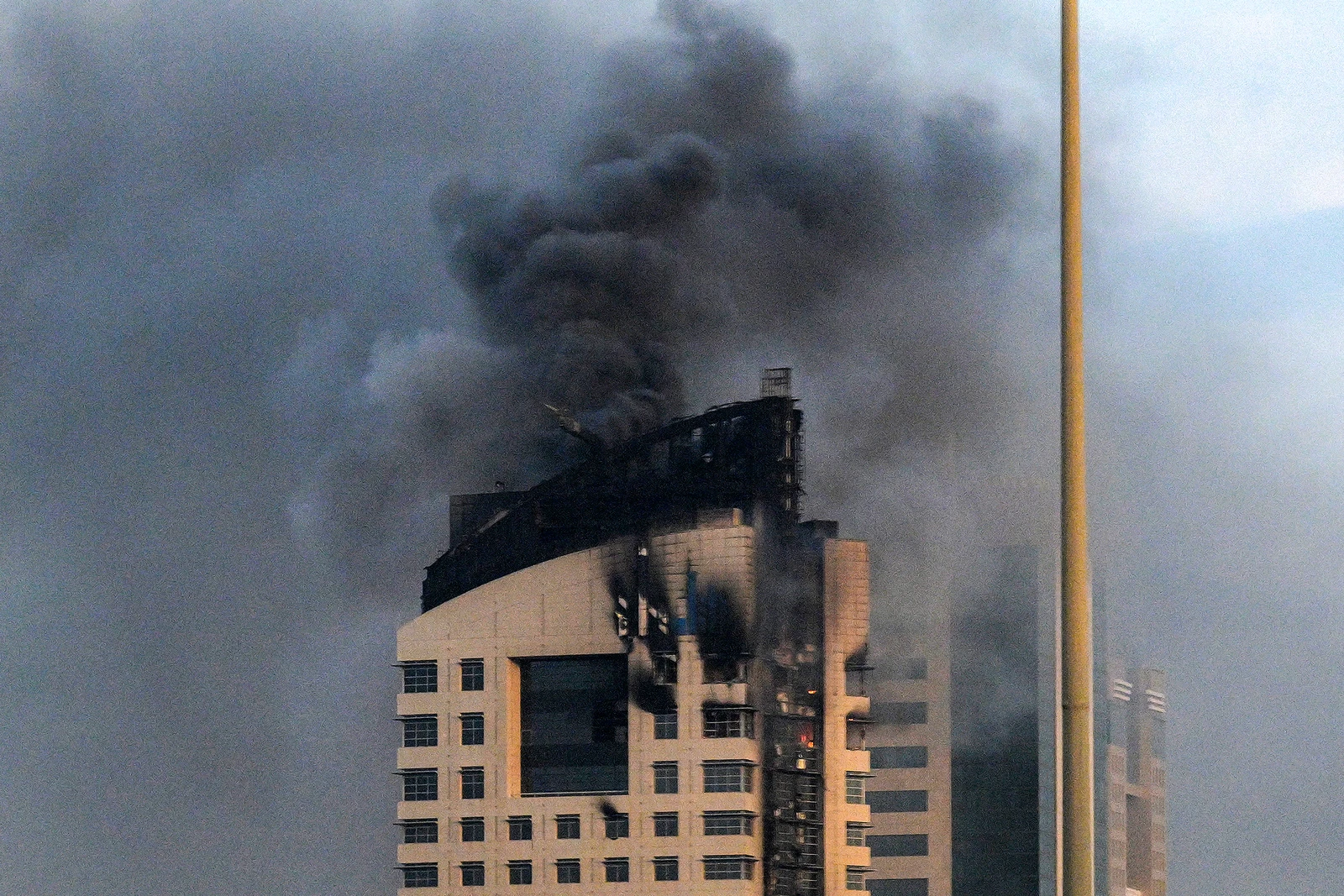

The attacks by Iran and its proxies on its neighbors in the Gulf Cooperation Council have highlighted the weakness of the Global South’s geopolitical cohesion. They have shown that the emerging bloc does not yet propose or offer a cohesive alternative structure for political stability. The Western-led international order that it opposes has, for the last 80 years, provided a degree of stability to the international system. Iran may therefore have damaged the prospects of the Global South becoming a meaningful global political voice before it has even had the opportunity to fully establish itself.
There has been significant condemnation across the Global South of Iran’s attacks on the GCC states. India and Brazil have called for restraint, diplomacy and a political resolution. South Africa has explicitly condemned Iran’s attacks on Gulf countries, while China has called for an end to the conflict and a return to diplomacy.
China’s position is particularly significant. Beijing maintains close relations with Iran while also having extensive economic, energy and strategic ties with the GCC countries. Yet even Beijing has been unable to achieve a breakthrough with Tehran. The broader mediation efforts of Global South countries have similarly failed to produce a change in Iran’s position.
There is little need to repeat that the GCC states did not initiate the US-Israeli attacks on Iran. What matters is that, despite this, a significant proportion of Tehran’s retaliatory strikes have targeted Gulf countries. The condemnations, calls for restraint and mediation efforts from Global South countries, combined with the GCC’s own efforts to find a constructive way out of the current situation, have so far produced little in the way of results.
The broader Global South response has not amounted to unequivocal support for the GCC in the face of the Iranian attacks
Khaled Abou Zahr
The same dynamic can be seen in Saturday’s BRICS joint declaration, which called for maximum restraint, dialogue and diplomacy. Its position extended beyond the traditional Western bloc and placed sovereignty, international law and diplomacy at the center of its response. Yet these principles have not translated into a meaningful response from Iran.
Part of the problem is that the broader Global South response has not amounted to unequivocal political support for the GCC in the face of the Iranian attacks. Many countries have maintained distinct positions on the broader conflict and continued to place emphasis on the original attacks against Iran. This creates a contradiction: the same principles of sovereignty, international law and restraint that the Global South invokes are difficult to uphold consistently when one of its own major actors refuses to respect them.
This is particularly significant because the GCC has been a major supporter of the Global South. Between 2020 and 2025, GCC countries provided nearly $14 billion in official humanitarian aid, making the group the fourth-largest humanitarian donor globally and consistently placing it among the leading donor groupings from the Global South. This support has taken the form of humanitarian assistance, development finance and investment.
The role of Gulf development institutions has been particularly important. They have supported and helped finance infrastructure, energy, water, healthcare and education projects across Africa, Asia and other developing regions. The scale and institutional depth of this support demonstrate that the GCC’s contribution to the Global South extends well beyond diplomacy.
The GCC has also strengthened the Global South’s voice in international affairs. Through broad partnerships and individual foreign policies, its countries have used their diplomatic and economic weight to bring Global South concerns into major international forums. Before the current conflict and Iran’s escalation, the Gulf states had increasingly positioned themselves as a bridge between the West and the Global South.
Their ability to maintain structured relations with China and Russia while also engaging Washington and Brussels gave them a position from which they could act as partners and intermediaries across geopolitical divides. This was particularly important at a time of increasing polarization. It also created space for dialogue on regional security, including the possibility of greater engagement with Iran itself. Tehran blew this apart.
The inability of major Global South powers to push Iran toward restraint highlights the limits of their collective influence
Khaled Abou Zahr
The GCC has therefore supported the Global South in two important ways: by helping strengthen its voice and influence on the global stage, and by acting as a bridge for development through sustained financial assistance, investment and development support to developing countries.
Despite these efforts, Iran has shown little regard for the Global South’s condemnations and calls for restraint. On the contrary, the Houthi attacks of the last week have demonstrated that the confrontation can continue to expand rather than move toward de-escalation. The inability of major Global South powers to push Iran toward restraint highlights the limits of their collective influence.
This creates a broader geopolitical contradiction. The Global South presents itself as a challenge to the established Western order but, if it cannot influence the behavior of one of its most important actors, it remains difficult to see how it can provide a credible alternative framework for international stability. Iran’s actions therefore risk demonstrating that what emerges in opposition to the existing order is not necessarily a new order but greater instability and fragmentation, including attacks against countries that have arguably done more to support the Global South than Iran itself.
There is also a historical parallel with the Non-Aligned Movement, which presented itself as an independent and sovereign alternative to the major blocs of the Cold War. Yet, despite maintaining formal independence, many of its members were politically or economically closer to one side or the other and the movement ultimately struggled to translate its collective position into a sufficiently powerful geopolitical force. Iran’s actions may have exposed that same challenge for the Global South earlier than expected. Moreover, it shows that ambitions for regional hegemony will not be quelled by declarations of brotherhood.
Khaled Abou Zahr is the founder of SpaceQuest Ventures, a space-focused investment platform. He is the CEO of EurabiaMedia and editor of Al-Watan Al-Arabi.


