

A lack of credibility has dimmed the prospects for constructive engagement between Iran and its neighbors and with the world at large. Tehran’s brand of Orwellian doublespeak has often made it difficult to take it seriously, with official statements from different branches of the regime frequently being at odds with each other. Speeches directed at domestic audiences vary greatly from discourse directed at the outside world. At times, statements emanating from Iran are based on fake news or unfounded conspiracy theories. In sum, there is a clear gap between what Iran counts as true and legitimate and what the rest of the world believes.
Especially insidious are the ways in which Iranian officials dismiss international institutions as illegitimate lackeys of the West and their decisions as invalid. They use that pretext to avoid referring disputes to the International Court of Justice, for example, when the UAE and the Gulf Cooperation Council called for submitting territorial disputes with Iran to the global court. Tehran systematically violates the UN Charter, which calls for respect for the sovereignty and territorial integrity of states, by attacking its neighbors. This is because the Iranian state is based on the principle of exporting its revolution, which is at odds with the UN Charter. Tehran uses the same excuse to disregard international law instruments, including human rights conventions and UN Security Council resolutions.
I will give two examples to illustrate these dilemmas. In June, UN Secretary General Antonio Guterres issued his ninth report on the implementation of Security Council resolution 2231 of 2015. The report documented in detail Iran’s violations of the resolution, especially the restrictions imposed on the deliveries of missiles and conventional weapons to and from Iran.
The report determined that the sizable cache of weapons captured by the US off the coast of Yemen last November were “evidently of Iranian origin.” They included missiles, components of anti-ship cruise missiles, anti-tank guided missiles, and components for aerial, surface and boat drones.
The report made a similar examination of a larger cache of weapons seized in February this year, also off Yemen’s coast, and reached a similar finding that they were of Iranian origin or made in a third country but sold to Iran between 2016 and 2018, i.e., after the adoption of resolution 2231. They included a larger number of missiles and anti-tank guided missiles, among other military equipment.
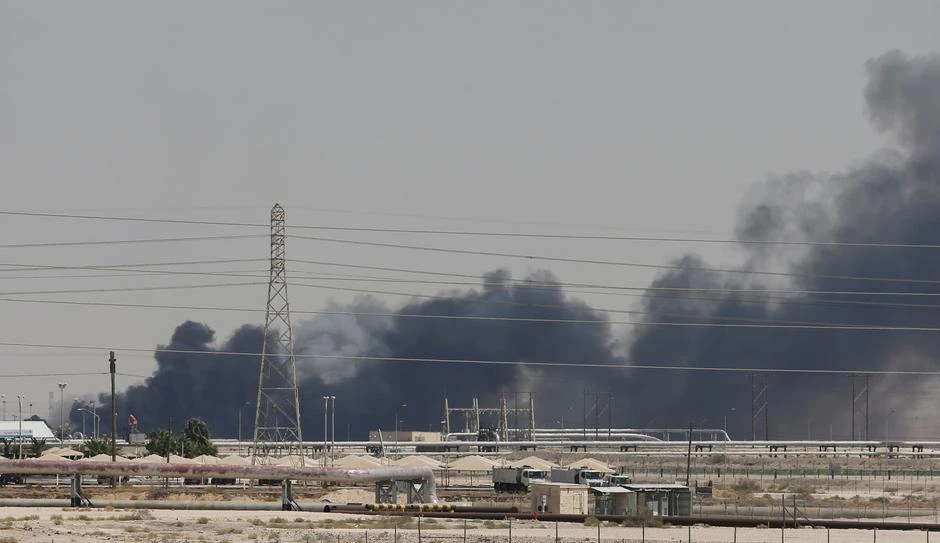
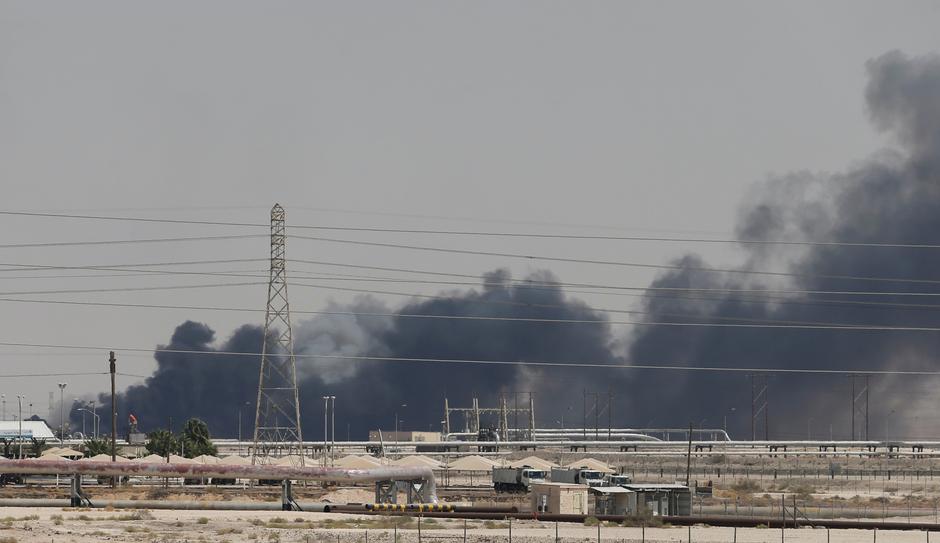
The same conclusion was drawn about the missiles and drones used in the attacks against Saudi oil facilities in Afif in May 2019, Abha International Airport in June and August 2019, and Abqaiq and Khurais in September 2019. The report found that they were similar to Iranian drones recovered in Afghanistan in 2016 and displayed in Iran itself in 2016 and 2019. The engines were similar (in terms of dimensions, design characteristics and configuration) to an Iranian jet engine exhibited in Iran, and the digital air data computers were identical to parts previously identified as Iranian.
According to the secretary-general’s report, the UN is investigating several other cases of weapons seized in different locations in the region with suspected links to Iran. The findings will be included in future reports.
However, despite the meticulous UN documentation, Iran dismissed the report, which has become a habitual response by Tehran toward international institutions.
Another example that undermines Iran’s official statements relates to how it has recently reported to the World Health Organization (WHO). For months, it has fed the WHO numerous reports about coronavirus disease (COVID-19) cases in the country. According to those figures, about 276,000 individuals had tested positive for the virus in the country, as of Monday. However, on Saturday, President Hassan Rouhani revealed that the extent to which COVID-19 has spread in Iran is actually much greater. He said: “Our estimate is that so far 25 million Iranians have been infected with this virus.” That is 90 times more than the official figure and represents about 30 percent of Iran’s population of 84 million.
In a speech broadcast on national television, Rouhani added: “There is the possibility that between 30 and 35 million more people will be at risk.” This news was reported incredulously by news agencies around the world, but health officials confirmed the estimates. Reuters cited a report in the semi-official ISNA news agency that stated that the 25 million people mentioned by Rouhani included “mildly affected patients,” according to a government health official.
Despite the meticulous UN documentation, Iran dismissed the report, which has become a habitual response.
Abdel Aziz Aluwaisheg
These two cases encapsulate two essential dilemmas facing any prospective interlocutor with Iran. First, how to avoid doublespeak and speak truthfully and openly, in order to make Iran a credible party with whom neighbors could negotiate. Second, how to decide on a common basis for negotiations. For the rest of the world, including Iran’s neighbors, that is clear: The UN Charter and international law. Tehran has to make it unequivocal that it shares that belief.
Once these two issues are settled in a satisfactory fashion, other steps could follow, such as taking confidence-building measures to establish trust and pave the way toward future negotiations.
- Abdel Aziz Aluwaisheg is the Gulf Cooperation Council’s assistant secretary-general for political affairs and negotiation, and a columnist for Arab News. The views expressed in this piece are personal and do not necessarily represent those of the GCC. Twitter: @abuhamad1


