
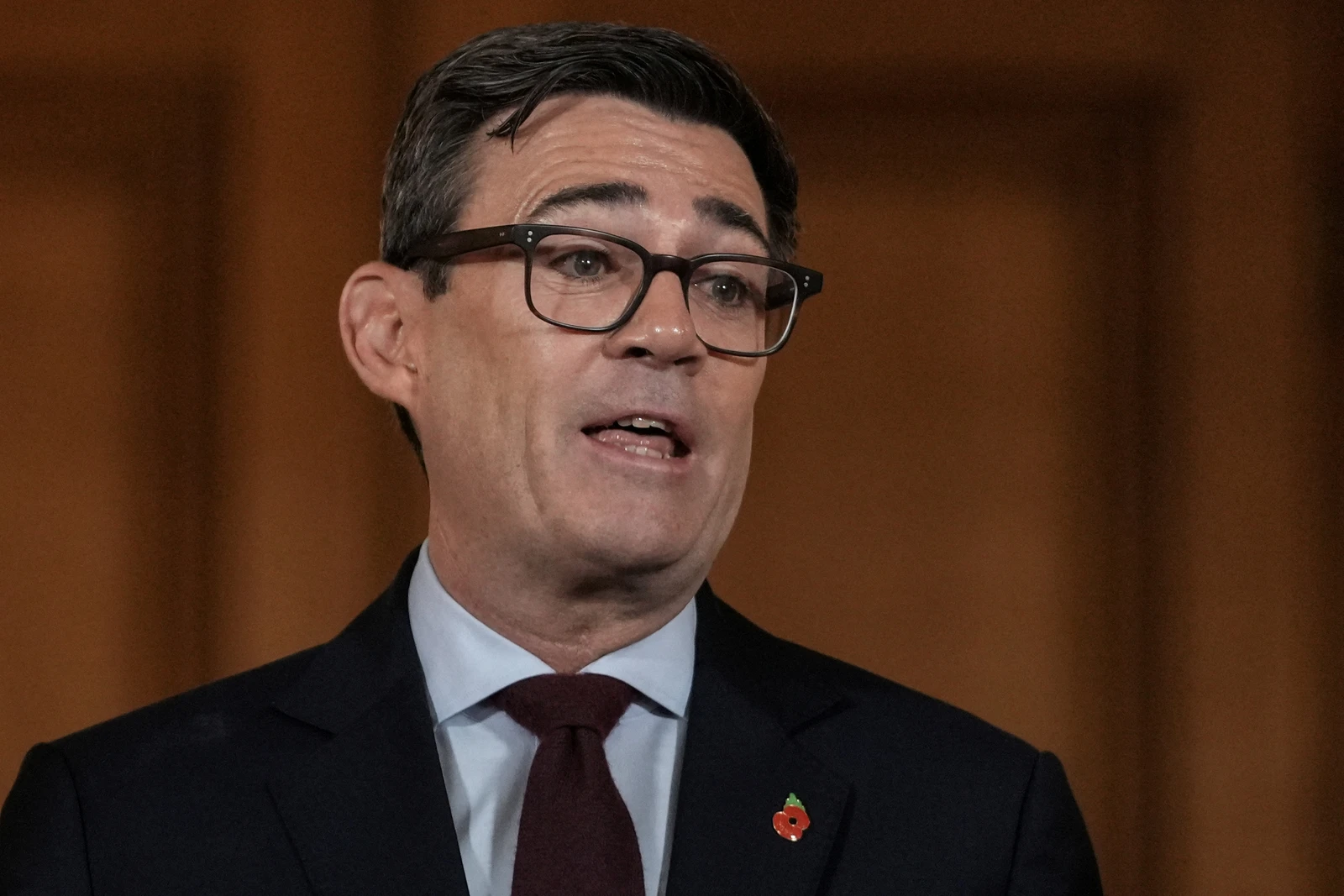

To continue muddling through with Brexit or to set a clear agenda to largely reverse it, while stopping short of rejoining: this is the question the UK faces and maybe it will be a defining one for the premiership of Andy Burnham.
It is clear Brexit has not benefited Britain. Ahead of a major foreign policy speech at the Lord Mayor’s Banquet in London this week, Burnham’s thinking was that the Brexit deal delivered by Conservative Prime Minister Boris Johnson is not working. But it is a divisive issue, to the point that no one in the country seems prepared to say the obvious truth.
For a moment this week, it seemed like Burnham might be the person to tell the truth and do something about it. But I am afraid to say that, amid some Cabinet disquiet, the jury remains out. At Friday’s EU-UK summit, Burnham will go as far as agreeing to reduce the barriers to food trade, link carbon emissions markets and create a limited youth mobility scheme, along with endorsing closer ties in immigration and defense, with more deals to be secured down the line.
However, it seems that Burnham is wary about challenging the conventional Westminster approach, opting to avoid the difficult conversations about Brexit, even though he himself once espoused such an approach. And because of that muddling, his leadership might not be as different or as bold as he promised.
London and Brussels have a unique opportunity to reverse the lose-lose deal on Brexit in favor of a win-win recipe
Mohamed Chebaro
In a changing world and with the EU and UK besieged by adversities, led by a strange double act in Vladimir Putin and Donald Trump, London and Brussels have a unique opportunity to reverse the lose-lose deal on Brexit in favor of a win-win recipe of a closer relationship. Such a move would be a conduit for mutual safety, security and prosperity.
A realignment of regulations on food and drink to remove the damaging border checks, as well as some freedom of movement for youths and students through the EU’s Erasmus scheme, could be the start of a “better together” future. Both sides surely need steady steps and strong leadership to bring about a deeper political, social, economic and technological alignment, as the guardrails of the transatlantic alliance and the security architecture with the US falter.
Burnham’s initial stance was promising, as he said that Brexit has “done more harm than good.” That was always obvious, as so many reports and experts made clear, even if many chose to ignore them during the campaigning ahead of the 2016 referendum. But political realism and maneuvering both within and outside his party might muddy the chance of giving his premiership the benefits of the single issue that could show results.
The figures all point in the same direction, both before and after the referendum and the conclusion of the UK-EU divorce agreement. The Centre for European Reform in 2022 placed Britain’s gross domestic product hit due to Brexit at 5.5 percent. The US’ National Bureau of Economic Research had it even higher at up to 8 percent by the end of 2025, with investment reduced by 12 percent to 13 percent. Services exports to the EU have fallen by more than 7 percent. All of which has led to tax revenue being an estimated £40 billion ($52 billion) per year lower than it would have been had the UK not left the EU.
The reputable UK Office for Budget Responsibility in July 2025 expected that both exports and imports will be 15 percent lower in the long run due to Brexit, warning that new trade deals with non-EU countries will not have a material impact.
All this is to say that the numbers have been clear all along. Burnham, as prime minister, seems to be able to read them clearly and is thought to be willing to propose a remedy. Since announcing that he wanted to succeed Keir Starmer, his messaging has been clear and it has pointed to a leader who is willing to confront issues that others have skirted.
Burnham should try to sell the rapprochement as a geostrategic and geoeconomic objective to safeguard British interests
Mohamed Chebaro
In the summer, Burnham looked hopeful as he embarked on his journey to 10 Downing Street. He claimed he wanted to boost Britain’s growth by forging a closer relationship with the EU, effectively undoing the “hard Brexit” deal Johnson negotiated. He was courageous to raise hopes that Britain could rejoin the bloc in the longer term. Burnham was reportedly poised to lay out to the country what he believed to be the different options for Britain’s long-term relationship with the EU. Yet, in Monday’s speech, he said that the country ought to wait.
It is understandable that the people are the boss and the final say-so should be with Parliament and the voters. Yet he is also the leader tasked with leading and showing the nation what is in its best interests.
Redesigning the EU-UK relationship after the acrimonious years of Brexit and amid the rise of the extreme right in Britain and across Europe could have its own limitations. But Burnham should try to sell the rapprochement as a geostrategic and geoeconomic objective to safeguard British interests and sovereignty in a world that is looking more splintered politically and ideologically and more protectionist commercially.
Kicking the can of Britain’s options for its long-term relationship with the EU down the road is not what was expected of Burnham. Everybody knows that the discussions between Brussels and London will take time but a positive and clear direction could give the nation the shot in the arm it needs after a lost decade of trying and failing to make Brexit work.
Since Brexit, the country has lacked direction. Above all, it has lacked certainty and belief about the UK’s place in the world, not just in Europe. Burnham has a unique chance to remedy that and he should not pass up the opportunity. A Brexit reset is key for the UK and the EU to face the headwinds of a changing world that is going through a dangerous technological and ecological transition.
Mohamed Chebaro is a British-Lebanese journalist with more than 25 years of experience covering war, terrorism, defense, current affairs and diplomacy.


