
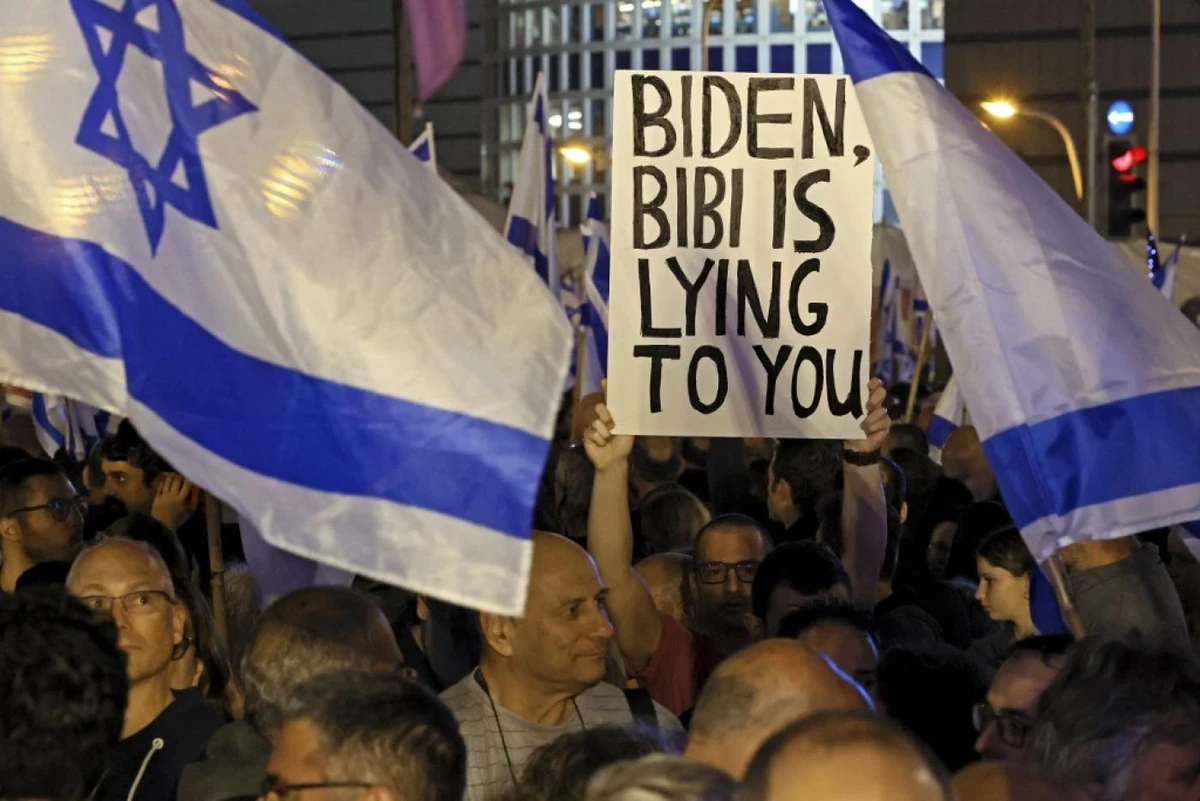

Cracks are starting to appear in Israel’s robust public relations strategy. It has taken decades for the Israeli government to convince supportive governments in the West, most notably the US, that the country was a full-fledged democracy. The hurdle has been the unavoidable reality of Israel’s control of millions of Palestinians. In the face of this glaring inequality, the country has managed to market itself as the Middle East’s only democracy. This core talking point for Israel’s supporters worldwide is now at risk.
Israel’s recently elected government — the most openly right-wing in its history — is pushing a proposal that would effectively remove the power of the Supreme Court. With a simple majority, the Israeli parliament could overrule the court and make unchecked laws on everything from free speech to voting rights. The proposed law, which has passed the first of three readings in the Knesset, includes a provision that laws passed by the parliament are unreviewable by the Israeli court system. According to Israeli law professor Gila Stopler, the stage has been “set for the deepest and most dangerous constitutional — and even existential — crisis in Israel’s history.”
The fever pitch around these judicial reforms is that they will affect the country’s Jewish citizens, who have full democratic rights. Even if they fail to pass, Israel will remain a half-baked democracy in which rights are granted based on ethnicity and religion. If Israel passes the judicial reform, it will further erode the democratic process.
The politicians driving this historic overhaul have long argued that the Supreme Court is an unabashedly political body hiding behind a veneer of judicial legitimacy. Over time, the Supreme Court has been one of the few government bodies that has pushed back against aspects of Israel’s occupation of Palestinian land. This isn’t to say that the Supreme Court has an anti-occupation bias. Instead, the court has ruled in favor of Palestinians on issues such as the Israeli separation barrier and other land takeovers. Perhaps more importantly for the judicial reforms, the court has also counterbalanced the deep-seated corruption pervading the Israeli political establishment. It’s no shock that Benjamin Netanyahu, who is currently facing major corruption allegations in the criminal courts, is the prime minister driving this dramatic change.
The judicial crisis has set off nationwide protests, along with numerous frantic pleas from Israel’s steadfast supporters. Israel’s business establishment, especially in the vaunted high-tech sector, has been among the most ardent critics of the judicial overhaul. Several influential technology chief executives have said in no uncertain terms that they will look to move their businesses outside the country if the reforms pass. Whether these threats amount to posturing remains to be seen. The Israeli shekel is down more than 6 percent in the past month and is currently at its lowest level against the dollar in three years.
A new discussion about the hollow nature of Israel’s democracy is starting to break through decades of Israeli PR.
Joseph Dana
Ardent Israel supporters such as Michael Bloomberg and The New York Times columnist Thomas Friedman have used their platforms to warn that if the reforms become law, it will significantly hamper their pro-Israel efforts in the US. They may be jumping the gun. If the reforms pass, Israel’s PR strategy will have to shift. We are already seeing evidence of this. Groups such as the Israeli-American Council have rolled out new talking points minimizing the reforms and suggesting that any criticism of Netanyahu is antisemitic. While these talking points are divorced from reality, it’s vital to focus on how Israel is currently using the media diversion from the reforms to push through its long-term objectives.
The horrific settler attack on the Palestinian village of Huwara demonstrated the lengths the current Israeli government will go to encourage and enable settler violence against Palestinians. A couple of days before the attack on Huwara, the new Finance Minister Bezalel Smotrich was given full governing authority over many aspects of life in the West Bank, including urban planning, building, and infrastructure. This was remarkable because transferring the authority of a territory under military occupation to a civilian minister is a form of formal annexation. After the authority was handed over, the leading Israeli human rights lawyer Michael Sfard wrote on Twitter that “today the government of Israel has taken an action which entails de jure annexation of the West Bank.”
Yet, these developments barely escaped the Israeli mediasphere despite all the coverage of judicial reforms and the pleas from columnists such as Friedman that the world must save Israel’s soul.
However the reforms end, the debate may have a positive long-term effect. A new discussion about the hollow nature of Israel’s democracy is starting to break through decades of Israeli PR. Such conversations need to happen if the international community is going to get serious about the reality of the Israeli regime. There can’t be any genuine peace deals between Israel and the Palestinians if the true nature of the Israeli government is cloaked in fantasy. This isn’t to say there will be any change to the peace process because of judicial reform — quite the opposite. But at least there is a slight chance for a more honest discussion about Israel and its views on democracy.
- Joseph Dana is a writer in South Africa and the Middle East. He has reported from Jerusalem, Ramallah, Cairo, Istanbul, and Abu Dhabi. He was formerly editor-in-chief of emerge85, a media project in Abu Dhabi exploring change in emerging markets. © Syndication Bureau 2023


