
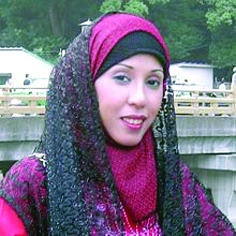

I have many non-Muslim friends on Facebook that I have met in England or the United States. With many I have shared late nights studying at our university library, others worked here in Saudi Arabia for a time, and some I have met socially through my husband in the US.
As my friendships developed I rarely, if ever, encountered inappropriate comments about my faith, my hijab or how I go about my business. These are truly fine people who I have come to respect and enjoy being in their company. I also have among my Facebook friends academic acquaintances, former coworkers and supervisors and students whom I have shared classes with, but wouldn’t necessarily count as my circle of friends. Again, there have been few awkward encounters. Now, however, the Charlie Hebdo incident in France has prompted some acquaintances to freely give opinions about Islam and Shariah. Anybody is free to voice their opinions about Islam regardless of what terrorists may think. And, of course, people are free to give their opinion although they may not have any idea what they are talking about. And as I have discovered over the past week or so, no matter how educated people may be, they don’t necessarily know what they are talking about.
Contrary to what is implied in the western media, Shariah is not a set of rigid laws that one must follow to the letter. No, Shariah, based on the Qur’an and Sunnah, focuses on personal religious observances and how we conduct our daily lives among ourselves and with our faith. It’s similar to Jews following Halakha. You will not find a huge, dusty annotated tome at the local Islamic law library to satisfy your craving for yes or no answers.
In essence there are six principles in Shariah that any law-abiding citizen, Muslim or non-Muslim, would gladly follow:
1) The right to the protection of life;
2) The right to the protection of family;
3) The right to education;
4) The right to the protection of religion;
5) The right to the protection of property and access to resources;
6) And the right to the protection of human dignity
So what’s the issue here? We are fundamentally on the same page, are we not? The issue is how countries — and even murdering terrorists — interpret Shariah by adhering to their own local customs.
There are about 35 countries that implement Shariah as law and interpret in a manner that reflects culture, local customs and standards. There is no one Shariah and there is no one interpretation of the Shariah.
Consider this: The self-ascribed Islamic State (IS) has implemented its version of Shariah in Iraq by banning school curriculum that includes art, literature and national history. Is this Shariah? Not to me. It’s the worst kind of law. But the IS, in its limited, uneducated worldview and need to control the Iraqis, interprets Shariah in this manner.
Perhaps a better example of interpreting Shariah that reflects local community standards is the government of Brunei, which has banned the display of Christmas decorations. According to its interpretation of Shariah, Brunei asserts that by displaying Christian decorations, it propagates a religion other than Islam to Muslims, and is therefore illegal. One can quibble with this interpretation because most educated Muslims can make the distinction and go about their business without converting to another religion. But for many Brunei citizens, this kind of law makes perfect sense.
In an effort to capsulize the meaning of Shariah, media outlets rarely discuss its nuances and how its principles are really applied on a more individual level. The fact that extremists abuse the principles of Shariah is somehow lost in the conversation.
Each country to some degree, whether a free democratic society or a country governed by theocracy, interprets some laws as a form of control over their citizens.
For example, abuses of the Patriot Act in the United States are routinely reported in the media. Another example would be how American local and state local enforcement officers are using anti-terrorism laws to stop motorists for traffic violations and seize any large amounts of cash they may find on the driver to determine if the cash is used for illegal purposes. They need no evidence, which is a clear violation of the US Constitution’s Fourth Amendment. That money, by the way, is rarely returned to the owner and ends up in the police departments’ coffers.
Shariah is subject to human interpretation. Those humans are Islamic scholars. Some are educated better than others. And some, as evidenced in Iraq and Syria, are not educated at all. Just because a self-appointed Islamic scholar in Syria decides his oppressive and cruel laws are Shariah, it doesn’t make it so. He is only corrupting the essence of Shariah to deliver his own agenda.
—
Email: [email protected]


