
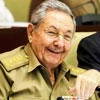

After more than 50 years of bad blood, Washington, capital of the most powerful nation on earth, and Havana, capital of an impoverished island nation off the Florida Keys, have decided to reconcile, leaving behind a rancorous relationship that had spanned decades stretching from the second half of the 20th century to well into the 21st.
That is good news. And it’s about time. Judging by the public debate in the media, the move by the Obama administration to end the US embargo and renew official ties with Cuba is seen as the right one to make at this time. After all, the argument goes, if the US could live, as it had done, with the Soviet Union during the coldest days of the Cold War, and to pursue detente with Communist China after more than 20 years of estrangement, why not with Cuba, whose government, now led by the less fiery Raul Castro, Fidel Castro’s younger brother, whose government represents no “clear and present danger” to the United States national interests anywhere around the world? To be sure, there are a lot of people in the US who are convinced that the administration is extending diplomatic recognition, and ultimately a kind of economic bailout — in the form of, say, a flood of American tourists and investors — to a regime that deserves neither. Those opposed include, along with the usual suspects like Sen. Marco Rubio (a Cuban American) and commentators like those at the Washington Post’s editorial board, the hotheads in the Miami “exile community.”
And the role these exiles have played since the early 1960s is not to be minimized. In effect, they managed to create a separate Cuba, as it were, from the Cuba we know as the largest island in the Caribbean, home to 15 million souls. Theirs was a world of roughly two million refugees centered in Miami, to which they began to flee after the Castro revolution in 1959.
Combative to the core, bent on vengeance and retribution, they adopted over the years a scorched earth policy toward those who opposed their implacable opposition to normalization of relations with Fidel Castro and later Raul. Like Jewish Americans, who number a mere six million but wield disproportionate power relative to their numbers, the two million-strong Cuban community in Florida — an important swing state in national elections — who make up a mere .02 percent of the population, also have wielded influence and clout beyond their numbers.
Consider this: Though for decades on end the US embargo, which ultimately hurt the people of Cuba and indirectly helped the “hated regime,” failed to achieve its stated goal — regime change — successive administrations were made to eat humble pie, take it no the chin from these folks and continue to promulgate a transparently disastrous policy in pursuit of electoral gains.
Reams and tomes have been written about the Maximum Leader’s Cuba, along with that Maximum Leader’s brother and the whole cabal of Fidelistas in government, as the Castro brothers’ supporters and functionaries are known. What emerges from it all is the sad fact that they did not run a prosperous and free island nation, though to the outside world Cuba appeared to be both.
Example? On New Year’s Eve, in January 2001, which heralded not just the advent of the third Christian millennium but also the 40th anniversary of the revolution, Fidel Castro, with brother Raul standing by his side, triumphantly addressed thousands of Cubans at Plaza de Aramas, the tree- lined square where Havana was founded by the Spanish Conquistadors in 1519. He had outmaneuvered and in most cases outlived nine American presidents, from Eisenhower to Clinton. A professed Marxist, he had worked with six Soviet heads of state, from Krushchev to Gorbachev. As an advocate of anti-colonial struggle, Castro had also been acquainted with all the prominent figures of the Third World, including Yasser Arafat, who visited him in November 1974, soon after the Palestinian leader gave his famous speech (while packing a pistol on his hip) at the United Nations General Assembly.
And a mere two years after he took power, he stood up to and defeated a CIA-backed invasion of the island by Cuban exiles in April 1961
But then the Castro brothers opted to go on a honeymoon with the Soviet Union, which led to what came to be known as the Cuban missile crisis, a crisis that brought the world a hair short of a nuclear disaster. After news of the US-Cuba detente broke last week, it was as if we were looking at a rewind to 1989, when the Berlin Wall was breached, though Cuba is hardly Germany in terms of influence and resources. And if the news, nevertheless, was monumental, it was due to the legacy and charisma of Fidel Castro, with whom we had grown up mesmerized by his exploits — including the time in September 1960, when he arrived in New York as the head of the Cuban delegation at the United Nations for the plenary meeting of the General Assembly — the very time Nikita Krushschev sensationally pounded his shoe on his delegate desk in protest of a speech by British Prime Minister Harold Macmillan — and refused to stay at a fancy hotel in Manhattan, opting instead to bunk down at the Theresa Hotel in Harlem, where he met with African American leaders.
Cuba will never be the same again. A new chapter has been opened. Détente is upon us — as is nostalgia for the absolutes we were accustomed to over the last half-century.


