
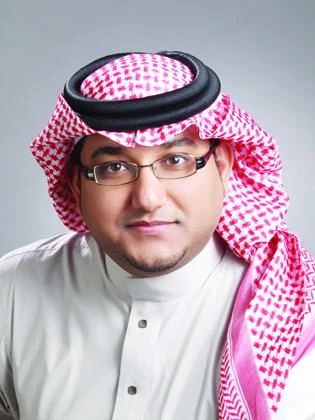

His neighbors and friends say that you can set your watch to Ahmed’s movements. At 6:45 a.m. every weekday, he leaves his apartment to walk to the school’s bus stop five minutes away from where he lives. Ahmed is a teacher, but he uses the same bus his students, who live nearby, use. This is part of a new green initiative the Ministry of Education has taken two years ago in a bid to cut the carbon footprint of the educational system in the Kingdom.
Ahmed has never been happier, it is his dream job; to be part of making the future by preparing the young minds who will take the responsibility to build it. Pursuing such a noble job is not for everyone. He was not only among the best in his specialized studies in teaching besides his mathematics major, but he had to undertake different courses and tests in psychology, creativity, problem solving, and leadership among many others. It is not easy to be among the elites. Every time he remembers the teary eyes of his father and mother on his graduation day, sees the look of pride in his wife’s eyes, witnesses the lineaments of respect and reverence drawn on the faces of others when he tells them his profession, he feels the huge burden of responsibility he is carrying on his shoulders.
In the first period, he joins the physics teacher in the playground to experiment and explains the basics of ballistic trajectory calculations. He has developed this experiment along with a number of math and physics teachers from a neighboring school a couple of years ago. They had won a prize for their method and their experiment has been circulated as a recommended method to teach physic’s concepts at local schools and a number of international ones. It is a simple implementation of the widely known concept of learning by having fun, do it yourself, develop your own analysis and try to reach the concept that governs the phenomenon. It is the way most of the courses are taught in Saudi schools now, so long for old techniques of lecturing rigid concepts, of memorization, of cramped and dull classrooms, of total dependence on quantity rather on quality.
During the second period, he joins the drama teacher in a writing session to prepare for the midyear play competition sponsored by one of the private associations of art and theater. His school is known for its theater productions
He cannot wait for the fourth class though, one of his senior students has challenged one of the calculus concepts and Ahmed had asked him to read more about the subject, and dedicated the next class to debate the topic with the rest of his colleagues. He loves such classes; it is what made him love teaching in the first place. Seeing young minds questioning and finding their own ways to understand and apply different concepts that some would consider unquestionable.
Ahmed likes to discuss new ideas and help parents, especially those who are having their first kids into school and likes to deal with challenges and pressure they and their kids will be facing.
By now, most of you must have already realized that Ahmed is just a figment of my imagination. It is every Saudi’s wish to see teachers like the one I have just described.
It is, however, not impossible to build such a system or produce such teachers. Once the Ministry of Education realizes that what it needs to deal with is much deeper than teachers’ attendance, changing curriculums, or banning selfies in classrooms. The entire system needs to be redesigned.
—
@smaldosari


