

These are grim and deeply concerning hours, yet they do not require us to repeatedly fall back on conspiracy theories.
We are undeniably trapped in a state of enduring despair and painful backwardness, the repercussions of which are far worse than any conspiracy. Alongside these twin blights of despair and backwardness, we are targeted by a brutal, fierce, relentless and highly favored enemy that enjoys unlimited global backing.
The incidents at a security checkpoint in the Palestinian city of Hebron and in the village of Hamoud in Jordan’s Karak governorate were unjustifiable, just as they were catastrophic by all measures.
This catastrophe only compounds the ongoing turmoil across the eastern and southern Arabian Peninsula, Israel’s military actions in Palestine, Lebanon and Syria, and the broader open wounds that continue to inflame the Arab world.
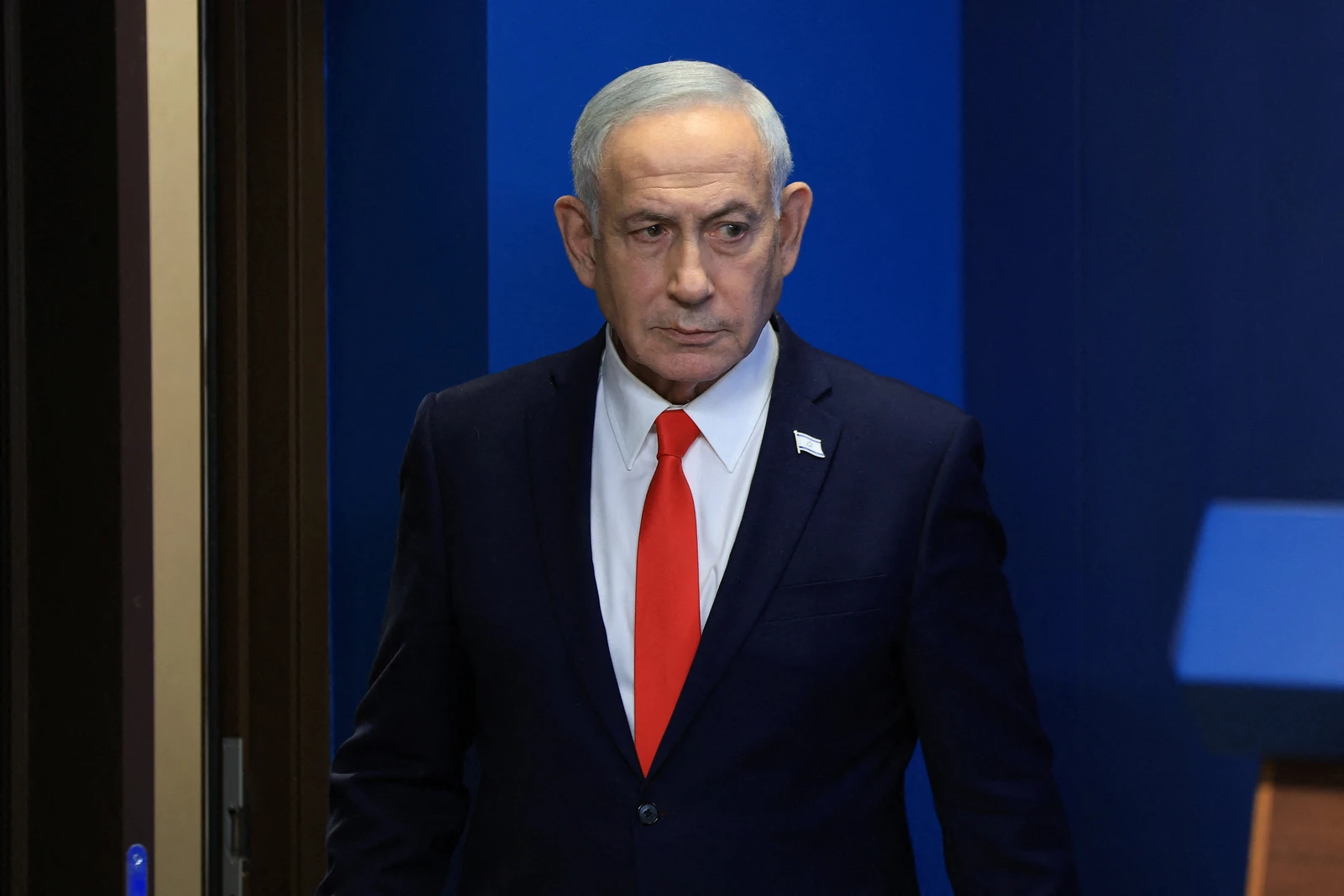
Consequently, the events in the vicinities of Hebron and Karak — sister cities across the Jordan Valley and the Dead Sea — reinforce a highly “promising” and “suitable” climate for the Israeli fascist right-wing project, which is predicated on dividing and humiliating the Arab region. Benjamin Netanyahu, currently preoccupied with the obsession of retaining the Israeli premiership following Tuesday’s elections, was undoubtedly dreaming of additional free gifts from his Arab enemies on the eve of an election that is fateful for him.
We are targeted by a brutal, fierce, relentless and highly favored enemy that enjoys unlimited global backing
Eyad Abu Shakra
Netanyahu, who some time ago became Israel’s longest-serving prime minister, is an intelligent politician. Naturally, he is also fortunate in his alliances and enmities and an expert in the strengths and weaknesses of those he deals, bargains and exchanges favors with — both inside and outside Israel.
Inside Israel, Netanyahu has never hesitated to extend a hand of cooperation to the most horrific, eliminationist extremists, whom his right-wing predecessors, such as Menachem Begin and Ariel Sharon, refused to include in their coalition governments. Today, he relies on the likes of Itamar Ben-Gvir and Bezalel Smotrich, unleashing their hatred, militias and settler mobs everywhere his army reaches.
Outside Israel, Netanyahu’s strategic exploitation in forging alliances with neofascists and neo-Nazis across Europe is striking, capitalizing on their newly minted priority centered on combating third-world immigrants, particularly Muslim communities.
It is perhaps one of the greatest ironies that the doctrines of Netanyahu’s new European allies and their teachers before them, such as antisemitism, were the very root of the diseases that the Israeli leader currently exploits and uses to blackmail the world.
On the other hand, Netanyahu’s lobbies are joining forces with the efforts of hard-line evangelicals within the Republican Party in the US and across Latin America. While the relationship between the Israeli prime minister and the occupant of the White House has traditionally been more than excellent, Netanyahu’s recent breakthroughs in Latin American countries warrant close attention and monitoring.
In recent years, the predominantly Catholic nations of the continent have witnessed major victories for the far right. Protestant evangelicals have taken over the role that Catholic Church leaders used to play during the Cold War. Consequently, their votes, funding and ties with high-ranking military officers have become the backbone of their electoral campaigns and of financial and weapons cartels.
Meanwhile, as tens of millions head to polling stations in Europe and America, two important shifts must be noted.
Netanyahu’s recent breakthroughs in Latin American countries warrant close attention and monitoring
Eyad Abu Shakra
The first shift is that, despite the apparent decline in Israel’s popularity across most Western societies, particularly in the US and Western Europe since 2023, this decline is less robust and influential than figures alone suggest. The so-called deep state, which encompasses the financial environment, opinion makers (the print, broadcast and online media and their funding sources) and the institutions of power with their agencies, parties and organizations, remains deeply and intensely loyal to Israel.
As for the voices of dissent, even if they number in the millions in street demonstrations, they remain a soft power and mere vocal phenomenon with little influence on decision-making mechanisms.
The second shift is connected to the immense technological advancement and its influential role in political, economic and social life, not only in Western Europe and the US but across the entire world. This influential change has several dimensions.
First, the monopoly of a tiny, radical oligarchy of billionaires over the advanced technology sector — most recently artificial intelligence — who increasingly control not only the world’s industrial and consumer landscapes but also its ways of thinking, concepts, cultural exchanges, privacy and the determination of lifestyles.
Second, due to immense technological advancement, long-held axioms in human life and societies are collapsing one after another. Indeed, some high-tech billionaires now frankly declare that the concepts of work and jobs that we are accustomed to have become things of the past.
Third, the decline of the human being’s central role in the world of tomorrow, as a result of technological progress, will inevitably eliminate the need for social and systemic causes and, with them, the existence of political parties, trade unions, governments and judiciaries.
Faced with this terrifying scenario, whose architects are already living in the 22nd century, we find that those holding the weapons that grip our impoverished region are either thinking with a 10th-century mentality or acting as deaf and mute tools serving their masters — the clique of the 22nd century.
Eyad Abu Shakra is managing editor of Asharq Al-Awsat, where this article was originally published.
X: @eyad1949


