
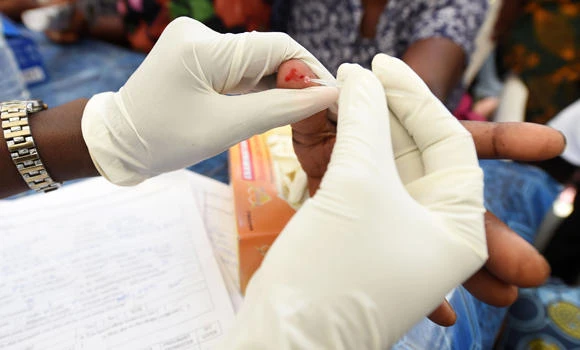
In recent years, tremendous progress has been made in the battle against malaria. According to the World Health Organization, the number of deaths from the disease has fallen by a staggering 60 percent since 2000 — the result of improved access to diagnostic testing and treatment.
To be sure, there is still considerable work to be done, but the downward trend in new infections and deaths underscores the power of collaboration among governments, between commercial and non-profit organizations, and between academic science and medicine. Without such partnerships, advances in fighting this deadly disease would not have been possible.
There is a growing recognition within the scientific community that no single organization or group has the know-how or resources to tackle malaria alone. Reversing the tide on malaria requires us to pool resources and combine the diverse experience and expertise of scientists from different backgrounds and specialties.
Fortunately, scientists are already taking note, and the result is the emergence and spread of a disruptive new approach to research and development. Called “open innovation,” it turns the traditional R&D model on its head and removes barriers to collaboration. Based on the recognition that the whole can be greater than the sum of its parts, open innovation is a collegial way of working, in which sharing is everything.
This openness is well illustrated by unprecedented levels of data sharing. In 2010, GSK, the Genomics Institute of the Novartis Research Foundation, and the St. Jude Children’s Research Hospital in Memphis, Tennessee, released into the public domain the details of more than 20,000 compounds that are active against the malaria parasite. This was a landmark move, one intended to galvanize the international research community.
Medicines for Malaria Venture (MMV), a non-profit organization, took things a step further. Through the “open access malaria box,” MMV provides physical access to a diverse selection of 400 commercially available compounds. Access is free for scientists around the world, as long as they agree to make the results of their research public. To date, the malaria box has been shared with more than 250 research groups in 30 countries around the world, and has led to the initiation of several new drug-discovery programs across a range of neglected diseases.
In addition to facilitating the sharing of tools and insights, open research creates frameworks for scientists from different institutions and backgrounds to work together (both physically and remotely), draw on each other’s strengths, and exchange know-how.
One example of this type of collaboration is the world’s first “open lab” for research into diseases of the developing world, established in 2010 at GSK’s research site in Tres Cantos, Spain. The lab operates with the support and advice of a broad range of actors. It enables researchers from leading institutions worldwide to work alongside industry scientists in a dynamic and collaborative environment, with the aim of transforming early research ideas into drug-discovery programs.
But while we have good reason to be encouraged by recent progress, we must not become complacent in our efforts to defeat malaria. Each positive statistic is balanced by the stark reality that there are still around 200 million cases of malaria each year, killing nearly 500,000 people, the vast majority of whom are children under the age of five.
With the establishment of a strong, collaborative research community and the increasingly free flow of knowledge, we are now better placed than ever to step up our efforts, and to encourage others to follow suit. In an area where commercial gains are limited, but the potential for vastly improving the health and economies of entire countries is enormous, scientists must continue to break down silos and collaborate for the global good.
—
©Project Syndicate
To be sure, there is still considerable work to be done, but the downward trend in new infections and deaths underscores the power of collaboration among governments, between commercial and non-profit organizations, and between academic science and medicine. Without such partnerships, advances in fighting this deadly disease would not have been possible.
There is a growing recognition within the scientific community that no single organization or group has the know-how or resources to tackle malaria alone. Reversing the tide on malaria requires us to pool resources and combine the diverse experience and expertise of scientists from different backgrounds and specialties.
Fortunately, scientists are already taking note, and the result is the emergence and spread of a disruptive new approach to research and development. Called “open innovation,” it turns the traditional R&D model on its head and removes barriers to collaboration. Based on the recognition that the whole can be greater than the sum of its parts, open innovation is a collegial way of working, in which sharing is everything.
This openness is well illustrated by unprecedented levels of data sharing. In 2010, GSK, the Genomics Institute of the Novartis Research Foundation, and the St. Jude Children’s Research Hospital in Memphis, Tennessee, released into the public domain the details of more than 20,000 compounds that are active against the malaria parasite. This was a landmark move, one intended to galvanize the international research community.
Medicines for Malaria Venture (MMV), a non-profit organization, took things a step further. Through the “open access malaria box,” MMV provides physical access to a diverse selection of 400 commercially available compounds. Access is free for scientists around the world, as long as they agree to make the results of their research public. To date, the malaria box has been shared with more than 250 research groups in 30 countries around the world, and has led to the initiation of several new drug-discovery programs across a range of neglected diseases.
In addition to facilitating the sharing of tools and insights, open research creates frameworks for scientists from different institutions and backgrounds to work together (both physically and remotely), draw on each other’s strengths, and exchange know-how.
One example of this type of collaboration is the world’s first “open lab” for research into diseases of the developing world, established in 2010 at GSK’s research site in Tres Cantos, Spain. The lab operates with the support and advice of a broad range of actors. It enables researchers from leading institutions worldwide to work alongside industry scientists in a dynamic and collaborative environment, with the aim of transforming early research ideas into drug-discovery programs.
But while we have good reason to be encouraged by recent progress, we must not become complacent in our efforts to defeat malaria. Each positive statistic is balanced by the stark reality that there are still around 200 million cases of malaria each year, killing nearly 500,000 people, the vast majority of whom are children under the age of five.
With the establishment of a strong, collaborative research community and the increasingly free flow of knowledge, we are now better placed than ever to step up our efforts, and to encourage others to follow suit. In an area where commercial gains are limited, but the potential for vastly improving the health and economies of entire countries is enormous, scientists must continue to break down silos and collaborate for the global good.
—
©Project Syndicate


