
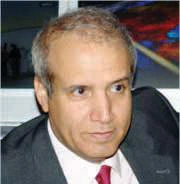

There is a widespread conviction among the majority of Sunnis that the death sentence against Iraqi MP Ahmed Al-Alwani is the result of a sectarian measure engineered by the government of Nouri Al-Maliki, which hunted down many of its opponents. It accused all those who were against it of terrorism, forcing them to flee or be subject to imprisonment. Therefore, Prime Minister Haider Al-Abadi shocked everyone when he said that he would not interfere in the judiciary, despite appeals from international organizations, Iraqi and Arab figures.
What we aim at is not for Al-Abadi to interfere in the course of justice; we just wanted him to reconsider the circumstances of Al-Alwani’s arrest and the evidence presented in support of his execution. We cannot forget that the security, military and intelligence services were all under the control of Al-Maliki’s extremist government, which did not hesitate to fabricate cases against opponents.
We also cannot forget how catastrophic was Al-Maliki’s stance against Albou Alwan tribe and its leaders in the Anbar province during that period; when he pushed army troops to hunt down his opponents, including those who gathered in the protest square, instead of fighting the IS.
Al-Maliki used state funds and resources to suppress those who disagreed with him, especially in the last four years of his rule. MP Alwani was not the only persecuted; Al-Maliki also targeted other rivals such as Tariq Al-Hashemi, Rafie Al-Issawi, and Saleh Al-Mutlaq. Al-Maliki had previously accused Iyad Allawi of plotting a coup against him. Al-Abadi ought to reconsider the investigations that were adopted by the Central Criminal Court, especially that prisons and investigators affiliated to Al-Maliki did not hesitate to fabricate cases and threaten the opposition during his rule. Ahmed Al-Alwani was an outspoken opponent of Al-Maliki and his government, as well as many Shiite leaders, such as Muqtada Al-Sadr. Al-Alwani was among the few Sunnis who entered the political process and accepted to represent his province in the Iraqi parliament, defying the extremists’ criticism in Anbar who refused to work for the Iraqi state. Sentencing MP Ahmad Al-Alwani to death on sectarian charges is unreasonable, especially that extremist sectarian killers like Qais Al-Khazali, Watheq Battat and Ali Al-Yasiri are roaming the streets of Baghdad, just because they are Shiites. These imbalances are the reasons behind chaos, terror and the emergence of IS. They are dragging the country toward more fighting, and threaten the unity and stability of Iraq.
If the Iraqi premier refuses to consider all these facts, he will disappoint a large segment of Iraqi people, who were optimistic about his assuming of power, and hoping that justice will reign and sectarian feuds will end. This will be a negative message from Al-Abadi against the reconciliation between the constituents of the Iraqi state, and will bolster the position of sectarian Sunni and Shiite figures. It is time for the government to act rather than talk about an Iraq for all.


