

When we are near a forest we may feel its gentle call. When we enter a forest we find not only trees shrubs and various plants but also a wide variety of birds and animals.
Forests are symbols of life. If we did not have forests on the planet Earth it would be difficult to visualize what type of life could be present. But life as we know it would not exist. How is this so?
When human or animal life breathes Oxygen (O2) is inhaled and carbon dioxide (CO2) is exhaled. Forests are able to transform CO2 again into O2. If forests were not present this transformation would not be possible. But forests have much more utility for life on earth. Life consists not only of human beings but also of the ecosystem — animal, fish and flora. The ecosystem is interdependent on each other in different complex ways. Without one part the other parts would not easily survive. And forests provide the ideal natural habitat for the ecosystem to flourish.
Forests are full of life – animals, birds, plants, fish and other creatures that make us feel joyful and tranquil. Forests provide fruit, fresh air, and firewood for cooking, medicinal plants and of course timber for building homes or furniture or bridges. In addition, forests have been helping the tribal communities in many parts of the world to survive and even flourish for centuries.
Tribes and indigenous peoples are found all over the world — in Alaska, Canada, Greenland, Australia, New Zealand and countless other regions. In India there are a large number of tribal communities living in different regions especially in the Andaman and Nicobar islands far away from mainland India. For these tribal people, forests are and have been their habitats for centuries. They are happy to live in the so-called primitive conditions of the forests, which provide them food, water, fishing and hunting opportunities. But due to various development activities taking place the tribal lands are being encroached upon and the local people are being forced to move out. Forests are one part of the environment that consists of air, mountains and hills, oceans, rivers, lakes, glaciers among others. If the environment is clean and unpolluted we have a sense of amity, peace and joy.
When we seek peace in our environment, what do we mean? Here peace implies wellbeing, harmony and being one with nature. If the environment is clean we feel peaceful and happy.
Romila Thapar, the internationally acclaimed historian has highlighted the significance of forests and trees from the earliest times in the Indus Valley civilization. Due to our lifestyles and several development processes going on in the world the world is witnessing climate change and other adverse effects such as increasing global temperatures, rising levels of oceans, loss of agriculture and erratic weather conditions among others.
Another undesirable outcome of development is the issue of deforestation. When a dam or power plant or any project such as a road or bridge is to be set up, trees are cut on a large scale. In the 1970s and 1980s of the last century massive cutting of trees was going on in the northern part of India. This was ruinous for the local people especially because there was a timber mafia, which was felling trees for commercial profit. To salvage their life the people started a movement under the leadership Chandi Prasad Bhatt and Sunderlal Bahuguna. Most women also supported this moment and ultimately due to their combined efforts the rampant cutting of trees was stopped.
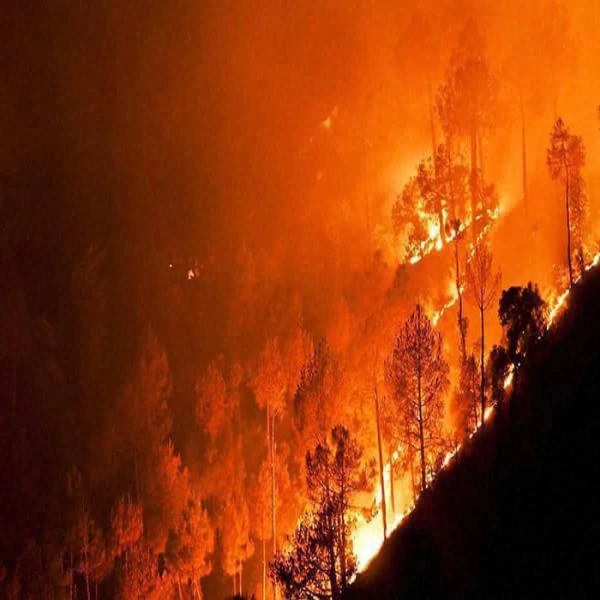
If the earlier call of a forest was to invite all forms of life to partake its abundance, today the forests are calling for help so that trees can survive and in turn help modern life to exist. Will we heed this call?
—
TRANSCEND Media Service
Forests are symbols of life. If we did not have forests on the planet Earth it would be difficult to visualize what type of life could be present. But life as we know it would not exist. How is this so?
When human or animal life breathes Oxygen (O2) is inhaled and carbon dioxide (CO2) is exhaled. Forests are able to transform CO2 again into O2. If forests were not present this transformation would not be possible. But forests have much more utility for life on earth. Life consists not only of human beings but also of the ecosystem — animal, fish and flora. The ecosystem is interdependent on each other in different complex ways. Without one part the other parts would not easily survive. And forests provide the ideal natural habitat for the ecosystem to flourish.
Forests are full of life – animals, birds, plants, fish and other creatures that make us feel joyful and tranquil. Forests provide fruit, fresh air, and firewood for cooking, medicinal plants and of course timber for building homes or furniture or bridges. In addition, forests have been helping the tribal communities in many parts of the world to survive and even flourish for centuries.
Tribes and indigenous peoples are found all over the world — in Alaska, Canada, Greenland, Australia, New Zealand and countless other regions. In India there are a large number of tribal communities living in different regions especially in the Andaman and Nicobar islands far away from mainland India. For these tribal people, forests are and have been their habitats for centuries. They are happy to live in the so-called primitive conditions of the forests, which provide them food, water, fishing and hunting opportunities. But due to various development activities taking place the tribal lands are being encroached upon and the local people are being forced to move out. Forests are one part of the environment that consists of air, mountains and hills, oceans, rivers, lakes, glaciers among others. If the environment is clean and unpolluted we have a sense of amity, peace and joy.
When we seek peace in our environment, what do we mean? Here peace implies wellbeing, harmony and being one with nature. If the environment is clean we feel peaceful and happy.
Romila Thapar, the internationally acclaimed historian has highlighted the significance of forests and trees from the earliest times in the Indus Valley civilization. Due to our lifestyles and several development processes going on in the world the world is witnessing climate change and other adverse effects such as increasing global temperatures, rising levels of oceans, loss of agriculture and erratic weather conditions among others.
Another undesirable outcome of development is the issue of deforestation. When a dam or power plant or any project such as a road or bridge is to be set up, trees are cut on a large scale. In the 1970s and 1980s of the last century massive cutting of trees was going on in the northern part of India. This was ruinous for the local people especially because there was a timber mafia, which was felling trees for commercial profit. To salvage their life the people started a movement under the leadership Chandi Prasad Bhatt and Sunderlal Bahuguna. Most women also supported this moment and ultimately due to their combined efforts the rampant cutting of trees was stopped.
If the earlier call of a forest was to invite all forms of life to partake its abundance, today the forests are calling for help so that trees can survive and in turn help modern life to exist. Will we heed this call?
—
TRANSCEND Media Service


