
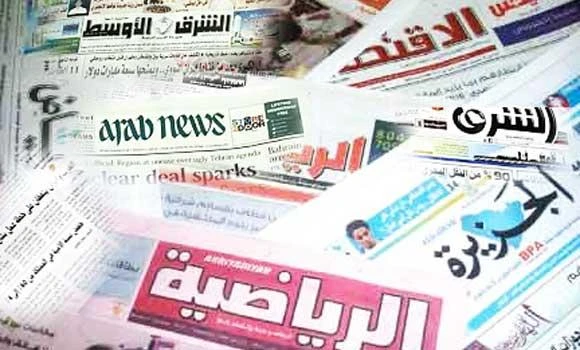
United we stand
The standing in prayer of nearly three million Muslims in the plain of Arafat, which has been transmitted by satellite channels all over the world, reflects the unity of Muslims. Millions of Muslims and others follow this gathering with keen interest. But the reality of Muslims is quite different from what has been depicted by the annual pilgrimage.
Muslim countries are going through very pathetic conditions. There are civil wars and conflicts in most of these countries. Arabs have the lion’s share of these conflicts. Even in Palestine, there are different groups fighting each other to realize their vested political interests, although they stand united against the Zionist forces. It is quite strange that the people of Syria, Iraq, Libya and Yemen fight and kill each other.
Even those Muslim countries, which have not witnessed any civil strife, are not free from problems. Most of them face economic difficulties and political tensions. This situation has weakened the Ummah, despite its huge human and material resources. Muslims remain placed at the backseat of the world. They are backward in industry and technology. We cannot compare ourselves even with the achievements of a small country like Israel.
Muslims have fallen in the gutters of extremism, terrorism and conflicts. Their guns are directed against each other, instead of their enemies. We become an epitome of ignorance, backwardness and wastage of resources. All these facts show that we are far away from the teachings of Islam.
— By Dr. Abdul Wahid Al-Humaid, Al-Jazira
Mistake management
After its tremendous loss during the World War II and US nuclear bombing that killed thousands of Japanese, the country adopted a series of development plans to restore its honor and power. It sent a large number of its students to the West to specialize in various subjects. But the students returned without realizing their objectives. On the contrary they were influenced by the western culture. They were all assembled in an opened area and burned to death on the order of the then emperor of Japan.
The country studied the reasons for the failure for its foreign scholarship program before sending the second batch to western universities. As a result the second batch realized all its objectives. They learned the secrets behind scientific inventions in western countries. The result was that Japan became one of the major industrialized nations in the world.
During the development process, mistakes may occur but it should not continue for several years. We have to learn lessons from mistakes committed in the past. Several organizations, companies and countries waste billions of dollars every year as a result of repeated mistakes.
In order to avoid this situation, I propose the formation of a special department at every ministry or organization to manage and overcome mistakes.
— By Hussein Al-Sinan, Al-Sharq
SMEs and unemployment
Small and medium enterprises (SMEs) play an important role in strengthening the national economy. As a result the government has been extending all support for SMEs, which can create more job opportunities for Saudis.
Total investments in SMEs in Saudi Arabia are expected to cross $70 billion by 2015 with allocations from the national budget and loans provided by commercial banks. SMEs are expected to contribute 37 percent to the GDP by the end of 2015 compared to 35 percent in 2013.
Ahoud Al-Wadiee, a researcher at King Faisal University, has conducted a study on challenges faced women entrepreneurs in Abha and Khamis Mushait. In the US, SMEs account for 97 percent of projects and contribute 34 percent of the GDP and create 58 percent of jobs.
She found out that SMEs plays a significant role in combating unemployment. In Canada 33 percent of jobs are created by SMEs while in Japan it offers 55.27 percent jobs, in the Philippines 74 percent, Indonesia 88 percent and South Korea 35 percent of jobs.
The above figures show that most countries give utmost importance to SMEs in their bid to eradicate unemployment.
— By Abdul Rahman bin Mohammed Al-Mansour, Al-Riyadh
Fencing Mount Arafat
Despite efforts to prevent people from performing Haj without permits, some people flouted the rule. Edicts and threat of deportation fail to put an end to this phenomenon.
These people without permits cause overcrowding and also affect official plans to ensure a smooth pilgrimage for those who possess legal documents.
Frankly speaking, the huge number of pilgrims without permits cannot be controlled unless thousands of security officials are deployed. I witnessed how impossible it is for a security officials at checkpoints to deal with the influx of pilgrims entering the holy site. As we are aware of the fact that there are many entry points leading to Makkah, so the situation is really difficult to control.
In my opinion, the only way to prevent pilgrims without permits from entering into Makkah or performing Haj is to surround the Mashaer area with a high-wall preventing infiltration. This project was approved by Custodian of the Two Holy Mosques King Abdullah in 2012 and is still under study.
I believe this idea that can be implemented at least partially at Arafat area, because it’s a small and controllable area. Once we’re able to prevent pilgrims without permits from entering Arafat, the most rite of Haj, we can help put an end to this phenomenon.
— By Sattam Al-Thaqil, Al-Eqtisadiah
Importance of dialogue
It has been a decade since the establishment of the King Abdul Aziz National Dialogue Center. We need to assessment the achievements of the center.
Two important factors should be considered while assessing its performance: Youth participation and implementation of its proposals.
Dialogue is the key to resolve conflicts in the region so as to prevent crisis. The center’s establishment encouraged the culture of dialogue in our changing world. Dialogue is importance as citizens, particularly the young, are subject to different sources of information and various ideologies. The technological revolution has exposed vulnerable minds to extreme views. Fundamentalists can communicate their views easily with the rest of the world without boundaries.
This new form of interaction has left the region much more vulnerable and prone to conflicts. These platforms have managed to topple regimes and oust long-serving leaders.
Amidst the ideological disputes in the virtual world and what follows of materialistic conflicts, we see a new trend in the countries that face violent confrontations. Citizens have started viewing dialogue as a key to survive this phase, particularly after they have seen the harmful effects of violence. Sadly, the call to dialogue came too late in an atmosphere of mistrust.
We, in Saudi Arabia, are lucky to live under the wise and able leadership of Custodian of the Two Holy Mosques King Abdullah and in a cohesive society that encourages dialogue.
— By Ali Al-Khubti, Al-Watan


