
Hezbollah’s foolish steps
Hezbullah plans to recruit Christian, Sunni and Druz youths to fight the Islamic State (IS) and its affiliates, reported Lebanese daily Al-Nahar. The Hezbollah’s drive targeting youths in Lebanon and Syria is under the slogan of countering the Islamic State threat, which is more immediate than the danger from Israel.
The recruitment is under way for Iran’s Revolutionary Guards at high salaries and for Hezbollah at a lesser wage. However, this kind of recruitment amounts to setting up a mercenary force.
This also shows that Hezbollah is aware of fact that its involvement in Syrian crisis has been exposed and it can no more claim that it is only a resistance movement against Israel. The militia is also compelled to tone down its anti-Israel rhetoric against the backdrop of Iran’s efforts to hammer out a nuclear deal with the US.
With the imminent US-Iran imminent deal, Hassan Nasrallah will have to take a U-turn in his policy toward Israel to portray the organization as the defender of Israeli borders with Lebanon — a role identical to the Assad senior and junior.
The Hezbollah’s move also signifies the magnitude of the loss it has suffered in Syria. Another stupidity on the part of Hezbullah in recruiting a mercenary force is that it could be easily penetrated by foreign intelligence agencies.
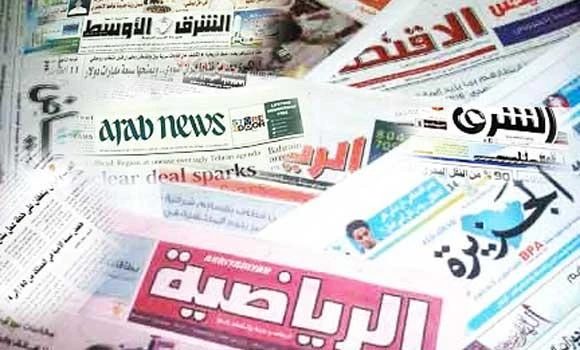
— By Tareq Al-Homaid, Al-Shar Al-Awsat
Future of subsidies
The current trend of falling oil price poses a serious threat to the economies of petroleum exporting countries, which rely solely on oil for its Gross Domestic Product (GDP). It remains to be seen as to what extent the ongoing uplift projects and government subsidies will continue in this situation.
According to a World Bank’s senior economist for the Middle East and North Africa, Shanta Devarajan, the recent fall in the oil prices is a strong warning to petroleum exporters to reconsider their subsidy policies.
Devarajan said that Gulf countries needed to reduce their governmental subsidy gradually in all fields and if they failed to do so they would face huge budget deficit in near future.
Just imagine a citizen in Saudi Arabia who used to fill gasoline lavishly in his car paying more than SR2 for a liter and also paying higher tariff for utilities and other heavily subsidized goods and services. Some experts recommend that the subsidies should be confined to deserving Saudi citizens and misuse and waste should be stopped.
— By Salah Al-Shelhoub, Al-Eqtisadiah
Revitalizing Nazaha
The people welcomed the establishment of the National Anti-Corruption Commission (Nazaha) with great expectations. They hoped that the Nazaha would help rid the country of corruption. But it has failed to live up to their expectations. Administrative and financial corruption cannot be wiped out unless strong action is taken against high-ranking officials involved in dubious practices.
While in most cases low-ranking officials are punished, powerful kingpins are spared. Mere threats, trials or sermons without strong penal measures will not produce any result.
We should fear that widespread corruption and selective combat against might affect our economy. The Nazaha’s current approach is not likely to make any significant impact against corruption. Some of the factors that make Nazaha less effective is the lack of forcefulness on the part of the commission and similar bodies to undertake their tasks, lack of a data bank on the officials involved in criminal activities, weak proceedings against high- ranking officials and overlapping of jurisdictions of various investigating bodies.
— By Muhammad Al-Oufi, Makkah newspaper
Developing industries
The million-dollar question is how we can achieve what we have been aspiring for over the past 40 years. We have been trying to diversify our sources of income to put an end to our heavy reliance on the oil sector.
The minister of commerce and industry hinted recently that a separate ministry would be established for industry to speed up the industrial development in the country. A royal decree in this regard is expected any time. The reason for our failure to achieve notable diversification of revenue base and independence from oil is our lack of earnestness to find the means to achieve that goal.
We should have started asking years ago how all other countries achieved diversification of their sources of income. The studies conducted on the economic prosperity of the western countries point to the fact that they focused their attention on industrial development and the result was amazing economic progress.
After the western countries, the countries in the East also adopted the same policy of attaching importance to the industrial sector. They also promoted their foreign trade to find more markets for their products. We should also draw up an industrial strategy linked with a vision of international trade to create windows of distribution and marketing for our products.
— By Muhammad Al-Kuthayyer, Al-Riyadh
Al-Maliki’s legacy
Many were skeptical about Haidar Al-Abadi’s ability to take up the challenging task of Iraq’s premiership. In his capacity as the head of the government, Al-Abadi is also commander general of the armed forces. It is not an easy matter for a civilian to be a military chief especially in an embattled nation.
To ensure his total control over the military establishment, Al-Maliki transferred or appointed a number of high-ranking officers. He appointed Babakr Zaybari, a Kurd, chief of staff after granting him the rank of general and appointed two assistants to him with the same rank. The Iraqi army was mockingly called as an army of 1,000 generals. The unskilled and inefficient generals were responsible for the poor show against the IS. Al-Abadi got rid of most of the inefficient generals as part of cleaning the military of Maliki’s legacy.
— By Jasser Abdul Aziz Al-Jasser, Al-Jazirah


