
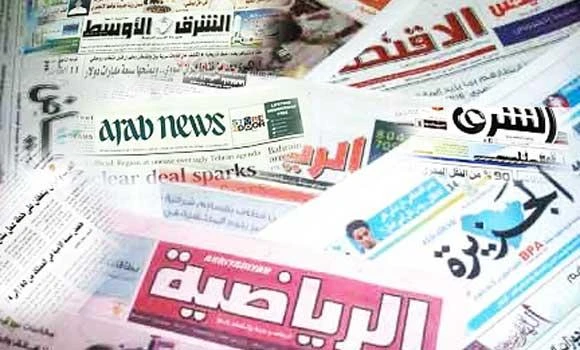
Double standard
The western media has ignored the murder of three Muslim students in the US — Syrian Dhia Shadi Barakat, his Palestinian wife Yusr Mohammed Abusaleha and her sister Razan. Had the social media not highlighted the case, it would have become a forgotten issue.
The hashtag #MuslimLivesMatter began trending on the social media after the shooting deaths of the three young Muslim students in North Carolina. It accused the US authorities and western media of ignoring the tragedy and keeping mum on it.
The incident occurred at the family’s house on Wednesday. A white man broke into the victims’ home while they were sleeping and shot them to death. But the US media did not give this incident its usual wide coverage for such crimes.
The media was not ready to say that it was a terrorist attack or a hate crime against Muslims in the country. When the Charlie Hebdo magazine in Paris was attacked a few weeks ago world leaders came forward to condemn the attack and the world media gave it wide coverage.
Slogans such as “We are all Charlie” were raised while 24 world leaders assembled in Paris to express their solidarity with French President Francois Hollande against what they called “Islamic terrorism.” The funniest thing was that Israeli Prime Minister Benjamin Netanyahu, the biggest terrorist in the world, also took part in that rally. His hands are still tainted with the blood of our Palestinian brethren in Gaza. This double standard by western media and governments is a shame for the whole humanity.
People might say that both incidents cannot be looked at in the same way. Imagine if the victims in North Carolina were Jews and the attacker was a Muslim belonging to a terrorist group, what would have been the media and official reaction? For 12 hours after the attack in North Carolina, no US or other western media reported the incident. The Independent was the first newspaper to report the crime, followed by the CNN after 12 hours. Major American newspapers like New York Times and Washington Post did not give the incident any importance.
On the other hand, some western media outlets tried to cover up the crime and protect the attacker in order to give the impression that it was not a hate crime.
This incident has removed the mask of human rights, justice, religious freedom and freedom of expression from the western countries. It also proves that the so-called war on terror has been launched just to cover their war on Islam and Muslims.
— By Sami Saeed Habib, Al-Madinah
Defending Islam
One day while I was standing in front of a huge television screen along with a big crowd I saw a Muslim man holding a bloodstained chopper appearing on the screen shouting “We’ll flood London streets with more blood.” That picture saddened me and I felt defeated as that man had violated all the principles of Islam.
I also noticed that when a western soldier was killed at the hands of a Muslim named Michel it was given wide publicity while an Asian Islamic scholar, who was living in London for more than 50 years, was killed by a university student, the British media completely ignored it. Nobody considered it a crime.
When Charlie Hebdo incident took place, Muslim leaders condemned the incident and said Islam had nothing to do with it. Some leaders appeared on television and refused to offer any apology. They said it was not our mistake when a group of journalists at the magazine provoked 1.5 billion Muslims in the world, all these Muslims responded to it with patience, except four who were born and brought up in the West and feeding off violent American films, they carried out the crime in Hollywood style.
It is depressing that terrorist organizations like IS, Al-Qaeda and Hezbollah carry out horrendous crimes in the names of Islam and they quote the Qur’an and Hadith out of contexts to support their terrorist actions.
While all these saddening incidents take place around us, I got an opportunity to read “Muhammad, a Prophet for Our Time,” a book authored by Karen Armstrong, a professor at Oxford University. In this book, Armstrong explains a number of the Prophet’s stances that are helpful in tackling many modern issues, including religious hatred.
Apart from Armstrong many western scholars like Huston Smith have spoken highly of our religion while many of our own writers make ridiculous criticisms about Muslims.
These books emphasize the need to read our religion again and make counterattack against those who launch smear campaign against our faith to highlight the truthfulness of Islam. We should not keep silence on these falsifications, as it would only embolden our enemies.
— By Azza Al-Subaie, Al-Watan
Haia needs overhaul
I would like to emphasize the need for an organization like the Commission for the Promotion of Virtue and Prevention of Vice (Haia) to carry out social reforms and enlighten the public on moral values. I totally disagree with the move by some quarters to create fear about this vital organization. However, I insist the need to bring about a facelift for Haia, improving its performance and its general structure.
I hope the new president would look into some of the organization’s mistakes and complaints being made against some of its workers whose activities have created a bad impression about Haia. The organization should create new departments and carry out an overhaul with the support of HR experts. It should have a department for planning and development and another one for women’s affairs.
The members of Haia should be given proper training on how to deal with the public properly and treat them with a smile. The president should appoint academics as its leaders in order to change the perception about the organization. He should also open a hotline to receive complaints and proposals from the public. He should also look into cases of people who have been convicted before issuing charges against them.
The Haia officials should deal with the public with love, giving the impression that they are their friends not enemies. In the past, the Haia was not ready to accept proposals to change its condition. They should know that constructive criticism is essential for the progress of any organization. We have seen some Haia members sitting with youth while playing billiards, but the old guards did not like that idea. Haia members should be friendly in their attitude. They should know that they are members of an organization that was setup to reform the society. They should learn lessons from past mistakes to make it a totally different organization, which is friendly and tolerant.
— By Abdu Al-Asmari, Al-Sharq
Misuse of power
Makkah Gov. Prince Khaled Al-Faisal, who is also adviser to the king, apologized to Saleh Al-Zahrani, security chief of the National Gas and Industrialization Company, for wrongdoing committed against him by some officials after he prevented a government committee to enter the company’s production area.
Al-Zahrani said he prevented the committee members on Feb. 10, 2015 when they wanted to visit the production unit as he told them they have to wear special uniforms to enter the facility because of security reasons.
The next day Al-Zahrani was called by police and was detained for 24 hours. The Bureau of Investigation and Public Prosecution looked into Al-Zahrani’s case and found he had not done anything wrong.
It is surprising a government employee is arrested for doing his job perfectly. Imagine if a traffic officer had given ticket to a government official for violating a traffic law, would he be punished for that it. Our officials should understand that they are all equal before the law. They should carry out their duties with humbleness understanding their responsibilities. They should not misuse their official powers.
— By Abdullah bin Ibrahim Al-Kaeed, Al-Riyadh
Comparison for progress
A scientific method for comparison between a strong and weak organization can be done considering the sectors they work. This will help identify the problems and suggest solutions for improving their condition.
This comparison helps get a clear picture of the real problems facing the organization as well as the obstacles hampering its progress. The specialized team in charge of making the comparison with benchmarking partners would propose measures to strengthen the organization.
I believe that this system can be applied to social life by comparing two families in the same strata of society. There are some families who live peacefully and happily while there are many others that go through difficulty due to internal fighting.
There are certain criteria for this comparison. They include mutual respect, education, Islamic values, readiness for dialogue, family bonds, tolerance among members, good dealings, good examples, cohesion among members and role of both parents in settling disputes. I believe that his comparison would have an exciting result.
Every family member should play his/her role to ensure its happiness, spreading a spirit of cooperation among its members.
— By Othman bin Hamad Abalkhail, Al-Jazirah
Nazaha’s challenge
A recent public survey showed that performance of the National Anti-Corruption Commission (Nazaha) was not satisfactory, as it did not achieve the objective of ending administrative and financial corruption in the country. In a survey conducted by Makkah newspaper on its website, 86 percent of participants were of the opinion that Nazaha was not instrumental in fighting corruption while seven percent said it was successful in carrying out its duty perfectly.
Despite the passage of four years since its formation, Nazaha has yet to effectively deal with corrupt officials. Many Saudis believe that instead of correcting the mistakes being committed by government departments, Nazaha had become a victim of those mistakes. Saudis say they have lost their confidence in the organization.
Changing this wrong perception is one of the major challenges facing the organization’s new President Khaled Al-Muhaisen. He should also work for improving the image of the Kingdom, because in the reports published by Transparency International, Saudi Arabia was holding 57 to 66 positions among 177 countries during the past three years.
The Kingdom held 57th position in the report in 2011 but the following year it reached 66th position and 63 in 2013. Nazaha has been given big powers by the Saudi leadership to carry out its duties effectively.
— By Mohammed Al-Aufi, Makkah Newspaper


