

A terrorist attack has long been feared in Australia, but it would be reasonably safe to say that the events that unfolded in the heart of Sydney in the past couple of days took everyone by surprise — not just the public and the authorities but quite possibly even the potential perpetrators of violence.
The saga unfolded on Monday morning with a gunman entering a cafe owned by a Swiss chocolate franchise and, shortly afterwards, evidently compelling two of his hostages to hold up a black piece of cloth with an Arabic inscription at the cafe’s window, which inevitably led some observers to conclude that the attack was associated with the organization known as Islamic State or Daesh.
The city’s largest-selling tabloid even came out with a special edition proclaiming a “Death cult CBD attack” (CBD stands for central business district), although by then less sensationalism-driven analysts were already remarking upon the gunman’s bizarre choice of target and his unusual modus operandi. By Monday afternoon, five of the hostages had already fled the premises. As of Tuesday morning, it was uncertain whether they escaped while the gunman’s attention was concentrated elsewhere, or were permitted to leave. By the time the siege ended shortly after 2 a.m. local time, two of the hostages were tragically dead, and some of the others injured. Somewhat less tragically, the gunman was also killed in the eventual shootout. As a consequence, precisely what motivated him to undertake an act of monumental — and ultimately fatal — stupidity may never be known.
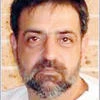
A few hours before his demise, the perpetrator was named as Man Haron Monis, a 50-year-old deviant of Iranian origin who gained asylum in Australia back in 1996, based on complaints of persecution in his homeland that included his wife and children being taken into custody. That claim is inevitably unverifiable. What we do know, however, is that Monis changed his name from Manteghi Boujerdi, and that his claims to being an ayatollah sparked complaints to the Australian police from Shiites in Australia. It wasn’t his confessional pretensions, though, that landed him in jail but alleged criminal offenses — including being an accessory to the murder of his ex-wife by his subsequent partner. He also faced charges based on a string of indecent and sexual assaults, including earlier this year a complaint by a young woman who visited him for “spiritual healing” after coming across a newspaper advertisement in which Monis claimed expertise in “astrology, numerology, meditation and black magic.”
Intriguingly, not long ago Monis also posted on his website — which no longer appears to be available — a diatribe against “moderate Islam.” In his communications with the police after he “conquered” the Lindt cafe in Sydney’s Martin Place, one of his demands, apparently, was for a genuine Daesh flag to be brought to the premises. The likelihood of the New South Wales (NSW) police stocking such emblems was minuscule, and any other demands he may have made remain shrouded in secrecy. That he yearned publicity is evident from the likelihood that he persuaded some of his hostages to call media outlets. Exactly what they may have said remains unknown. The NSW police commissioner has suggested that his troops decided to storm the cafe just after 2 a.m. local time on Tuesday after shots rang out within the premises. That seems plausible, although none of the media representatives staking out the precinct were entirely clear about the course of events. The commissioner has this far refused to comment on how the fatalities occurred, saying that the facts would be presented to a coroner’s inquiry. That could take a while.
Another factor that brought the self-styled Sheikh Haron to police attention was his obnoxious missives to the families of Australian soldiers killed in Afghanistan. Australia’s propensity to step in where angels fear to tread is a century-old phenomenon, based primarily on the assumption that unless it contributed to imperialist wars, the imperial powers — be it Britain or America — it would be isolated in a potentially hostile part of the globe, and it was demonstrated once more when Canberra pledged troops to the western effort against Daesh almost before it got under way.
That’s stupid, and part of a geopolitical cringe relating to Australia’s vulnerability. It obviously does not follow, though, that this pathetic predilection should in some way expose Australians to violence from within the community — some components of which are all too keen to latch on to any excuse for demonizing Muslims in general. The possibility of the lone-wolf attacker remains a potent threat, not least after relatively recent events in Canada and elsewhere. And the possibility obviously ought not to be discounted, notwithstanding the dismissal by some analysts of Monis as a lone nut rather than a wolf.


