


As Haj approached this season an Arab friend complained the government had ruined Makkah with its modern construction and dramatic changes to the Grand Mosque that in his mind had changed the way pilgrims performed Haj.
His complaint is common and some Saudis have similar feelings about the approach the government has taken to expand the Grand Mosque and modernize Makkah. From the towering clock to the massive hotels and apartment buildings, many have taken to grumbling about the government destroying some historic sites in the name of expansion.
I can’t join the chorus of complaints. I, as much as anybody, am saddened by the destruction of historic venues, but at the same time there is a solid logic exercised by authorities that see the big picture. And that is the problem with my Arab and Saudi friends, who like the idea of things as they were and the way they should be.
The problem is that we can’t live in the past. When I was a child, the number of pilgrims arriving in Saudi Arabia to perform Haj was a healthy number, but nowhere near the millions we host now. There was a time that pilgrims arrived by sea and even by camel. The young and healthy performed Haj, and when their elders came there was strong support from the younger generation to see them through the rituals.
Modern travel has changed all that, and now we have millions of pilgrims arriving annually because air travel is cheaper and accommodations are more comfortable. Can Makkah really remain the same as it was 75 years ago and still accommodate 3 million people? Of course not. It would be ridiculously dangerous and negligent.
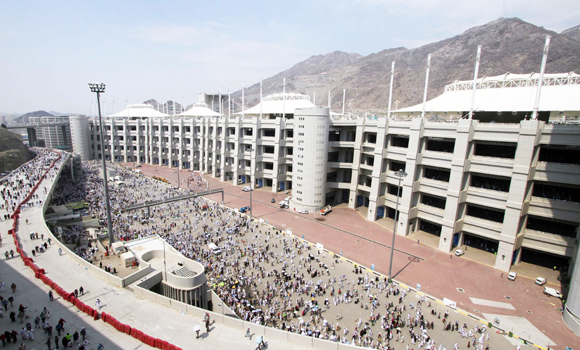
Today, we have hundreds of thousands of sick, infirm and elderly pilgrims arriving in Makkah. Many pilgrims come to perform Haj toward the end of their lives because they spend most of their adulthood raising children and making a living. They saved their money for the day to perform these rituals, and that day often comes when they are in the 60s and 70s, if not older. This was not necessarily possible during an earlier time.
To accommodate the vast number of pilgrims and the old and infirm, we are duty-bound to protect them with wider streets, better and more comfortable living quarters, the necessary Mataf, which accommodates 130,000 pilgrims per hour, and other improvements that ensure the safety of our guests.
This is what many Muslims, particularly the young, don’t see. Imagine an accident occurring during the rituals; a fire that may create a stampede, or a collapsed building or structure. Imagine the number of injuries and deaths, and then imagine with all our certainty the fingers pointed at the Saudi government for its failure to protect pilgrims. We would rage against the government for its negligence and then shake our heads at their “incompetence.”
So the government takes the initiative to protect its visitors, but faces a storm of criticism for its insensitivity toward traditions, customs and the old way of doing things. Simply, the government is damned if it does and damned if it doesn’t implement safety measures.
There is a right way and a wrong way to modernize a city, and I will be the first to say that the government has made some mistakes in clearing away historic venues in the name of progress, particularly when it ignores public opinion. But the authorities are more right than wrong on this issue, and I for one am grateful for their foresight.
—
Email: [email protected]


