
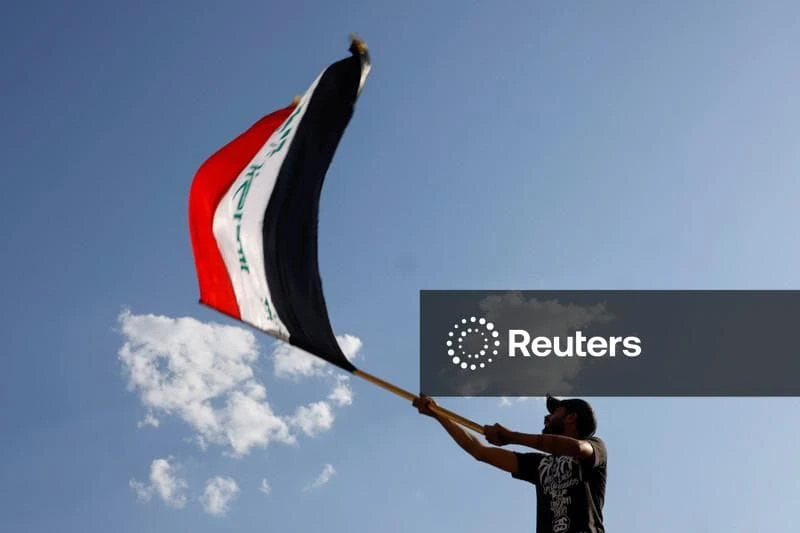

The enduring paradox of Iraqi sovereignty was exposed again last week. The final US-led coalition forces left the country late last month, ending a military presence that, in different forms, had lasted more than two decades. Baghdad designated Oct. 1 “Sovereignty Day,” with Prime Minister Ali Al-Zaidi declaring that Iraqi forces had assumed responsibility for the country’s security, while Iran-aligned factions celebrated the withdrawal as the defeat of the “American project.” Yet, on Wednesday, Baghdad devalued the dinar by 14.5 percent, from 1,300 against the US dollar to 1,520, after the US’ war with Iran disrupted oil exports and cut state revenues. Iraq has removed the most visible symbol of foreign interference but many of the pressures constraining its freedom of choice remain.
The currency decision showed how exposed the Iraqi state still is. Oil accounted for 88 percent of government revenue and 91 percent of merchandise exports in 2025, while the International Monetary Fund expects oil revenues to continue providing more than 90 percent of government income through 2030. Before the war, Iraq exported more than 3.6 million barrels per day. By July, that figure had fallen to about 1.35 million bpd, before recovering to 2.34 million in August as Baghdad offered steep discounts and Iranian approvals allowed more Iraqi tankers through the Strait of Hormuz. Devaluation gives the government more dinars for every dollar earned but it also makes imports more expensive and erodes the national household purchasing power.
Iraq funds a large state apparatus and public sector wage bill through a commodity whose principal route to market it cannot secure alone. Its 2027 draft budget assumes oil at $58 a barrel and exports of around 4 million bpd, with expenditure of 217 trillion dinars ($166 billion) and a deficit exceeding 40 trillion dinars. The distance between those assumptions and the export volumes reached this summer shows how quickly a regional security crisis can become a domestic fiscal one.
The US retains instruments capable of imposing significant costs without deploying a single soldier on the ground
Zaid M. Belbagi
This dependence also helps explain why the end of the Global Coalition Against Daesh’s mission has changed the nature of Washington’s influence rather than ended it. Iraqi oil proceeds continue to flow into a Central Bank of Iraq account at the Federal Reserve Bank of New York, an arrangement inherited from the post-2003 Development Fund for Iraq. The system protects Iraqi revenues and facilitates access to dollars but it also gives Washington considerable leverage over a country whose budget depends overwhelmingly on oil income.
And that leverage has been used before. In April, the US halted a shipment of between $450 million and $500 million to Iraq as Washington sought to pressure Baghdad over attacks by Iran-aligned militias. Electronic dollar transfers for trade continued but the message was clear. In 2020, Washington had similarly threatened to restrict Iraq’s access to its New York Fed funds during a dispute over the presence of US troops. Thus, American forces may have left but Washington retains instruments capable of imposing significant costs without deploying a single soldier on the ground.
Tehran’s leverage works differently. Iraq’s southern terminals remain the principal outlet for the oil that finances the state, leaving Baghdad highly exposed to disruption in the Strait of Hormuz. Iraqi officials sought Iranian approval for tankers to transit the strait and those permissions helped exports recover in August. This pushes Baghdad to give greater attention to alternatives through Turkiye and toward the Mediterranean, with TotalEnergies, BP, Chevron and other companies examining or supporting additional export routes.
According to Olivia Higgins, an expert at Hardcastle Advisory, “The coalition’s departure has ended the foreign military presence in Iraq while leaving foreign leverage over it largely intact. Washington’s hold is now mainly economic, as Iraq’s oil revenues are held at the New York Fed. This year, the US cut off dollar shipments for months to squeeze the militias. Tehran’s leverage runs through Iraq’s oil exports, since Iraqi tankers have passed through Hormuz with Iran’s permission. Inside the country, Tehran can count on state-funded armed factions that answer to it and can pressure the government from within.”
Rapid disarmament may be destabilizing. But allowing the present arrangements to continue carries its own costs
Zaid M. Belbagi
The Popular Mobilization Forces are formally incorporated into the country’s security structure and encompass groups with different loyalties. Yet several powerful Iran-aligned factions retain their own leadership, political representation, economic interests and armed capacity. The coalition’s departure removes one of the principal arguments used to justify weapons outside direct state command.
Al-Zaidi has consequently set June 30, 2027, as the deadline for bringing arms under state authority and has insisted that decisions of war and peace belong to Iraq’s constitutional institutions. But implementation will be difficult. These factions are deeply embedded in Iraq’s political and economic system, making rapid disarmament potentially destabilizing. But allowing the present arrangements to continue carries its own costs.
In March, Saudi Arabia, the UAE, Qatar, Kuwait, Bahrain and Jordan jointly condemned attacks launched by Iran-aligned groups from Iraqi territory and held Baghdad responsible for controlling armed factions within its borders. Higgins adds that “Iraq’s neighbors in the Gulf will apply a simpler test. Its sovereignty means little to them while drones can still be launched at their territory from Iraqi soil.”
And that test has consequences beyond security. Baghdad wants deeper Gulf investment, trade and political integration but those ambitions will remain difficult to advance if neighboring capitals cannot be confident that the Iraqi government controls the actions emanating from its own territory.
Iraq cannot realistically leave the dollar system overnight, change its geography or dismantle entrenched armed organizations without considerable risk, nor does meaningful sovereignty require doing so. What it can do is reduce the vulnerabilities through which outside powers shape its choices.
That translates into diversifying oil export routes beyond the Strait of Hormuz, broadening a fiscal base still overwhelmingly dependent on hydrocarbons and, above all, establishing a single national chain of command over the use of force. The coalition’s departure is therefore an important achievement but it marks the beginning of Iraq’s sovereignty test rather than its conclusion.
The question now is whether decisions made in Washington, Tehran or by armed groups inside Iraq can still determine the country’s economic stability and draw it into conflicts it did not choose.
Zaid M. Belbagi is a political commentator and an adviser to private clients between London and the Gulf Cooperation Council. X: @Moulay_Zaid


