

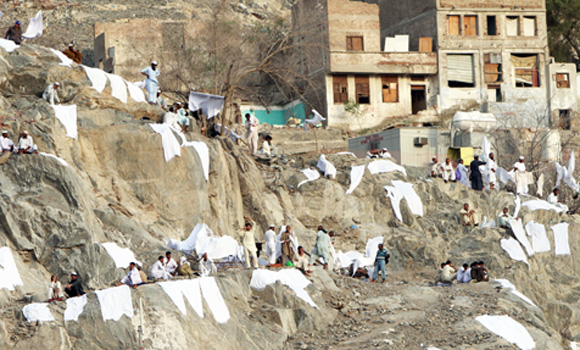
They came yearning for the mercy of Allah, and they are leaving filled with hope that they have got what they came here for. They left everything behind and arrived in their white Ihram. I do not think there is anything that is more purifying than this.
It is a tough journey; millions of pilgrims, young and old, men and women gather in Makkah. It is an honor for the Kingdom and also a huge challenge.
It is not only the responsibility of making these few days safe and easy for everyone, but it is about making sure the whole infrastructure is capable of hosting those millions year in and year out. It is a continuous responsibility, it does not start at the beginning of Haj, and does not end few days later.
And with each and every season of Haj, one of the most controversial debates related to the holy lands, and the Grand Mosque in particular, is revived; that is the repeated and ongoing modernization and expansion projects. Just before Haj, the New York Times published an article attacking these projects!
There are those who are arguing that the Grand Mosque and its surroundings have become so modern that it is affecting the spirituality of the place. The Makkah Tower, hotels, and malls, are cited as examples.
While, on the other hand, there are those who are seeing such projects unavoidable to sustain the growing number of visitors to the Grand Mosque, to upgrade the infrastructure and services delivered to the guests of Allah. Personally, I find myself inclined toward this side of the argument.
Hard facts support this argument; the Grand Mosque can now host more pilgrims, it is easer to move in and out the surrounding area; such progression is related throughout the Grand Mosque’s history.
However, I believe that documenting and preserving any artifacts found in the Mosque or its surroundings, in a museum for example, would end this debate once and forever.
Sometimes, we have to realize that necessity dictates sacrificing some of the history to salvage the future.
—
@smaldosari


