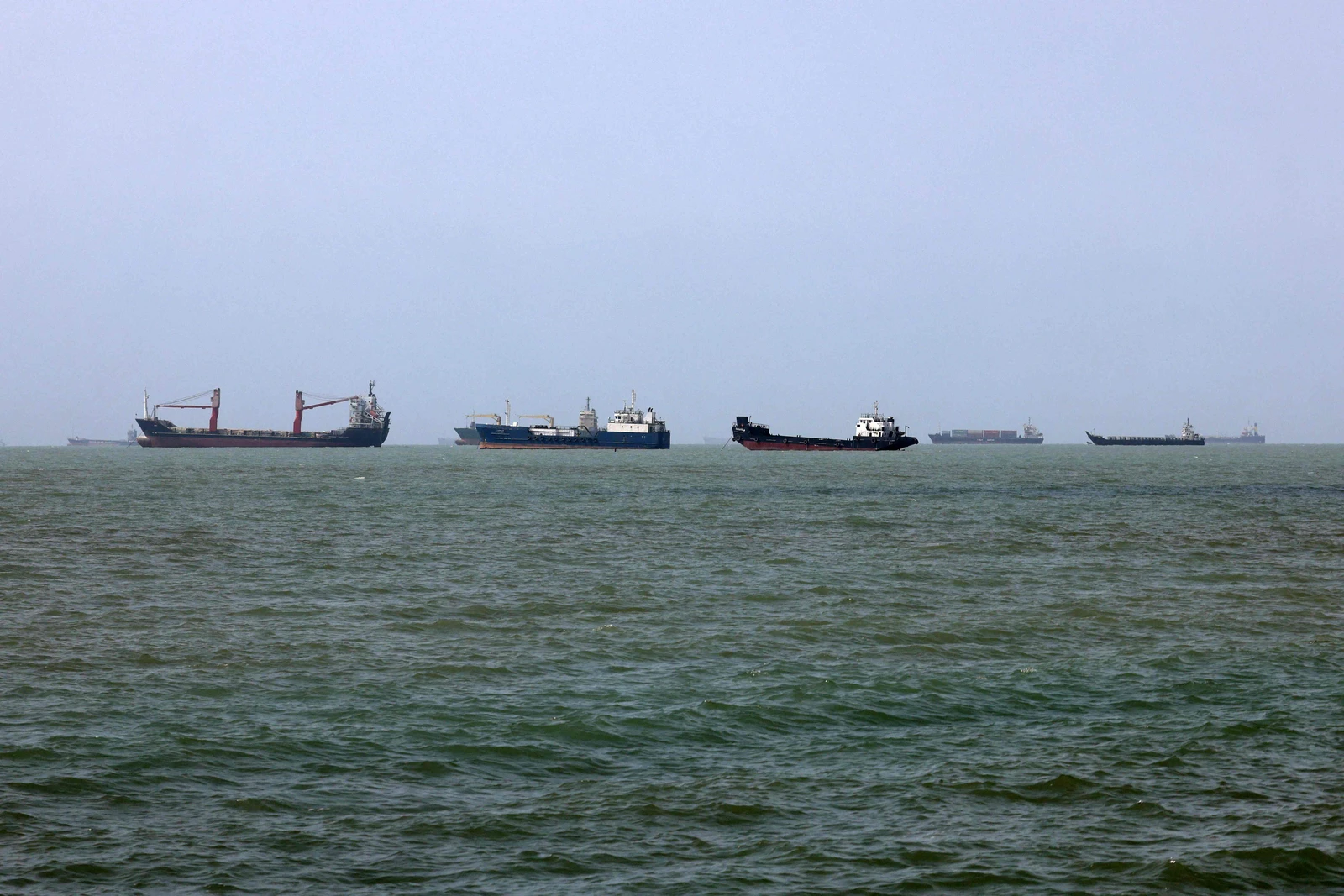
- UKMTO says the incident occurred 18 nautical miles east of Khor Fakkan, UAE, marking the sixth vessel involved in security incidents in the area this month
- Incidents in the Gulf of Oman follow ongoing conflicts and heightened concerns for commercial shipping in the strategically important Strait of Hormuz
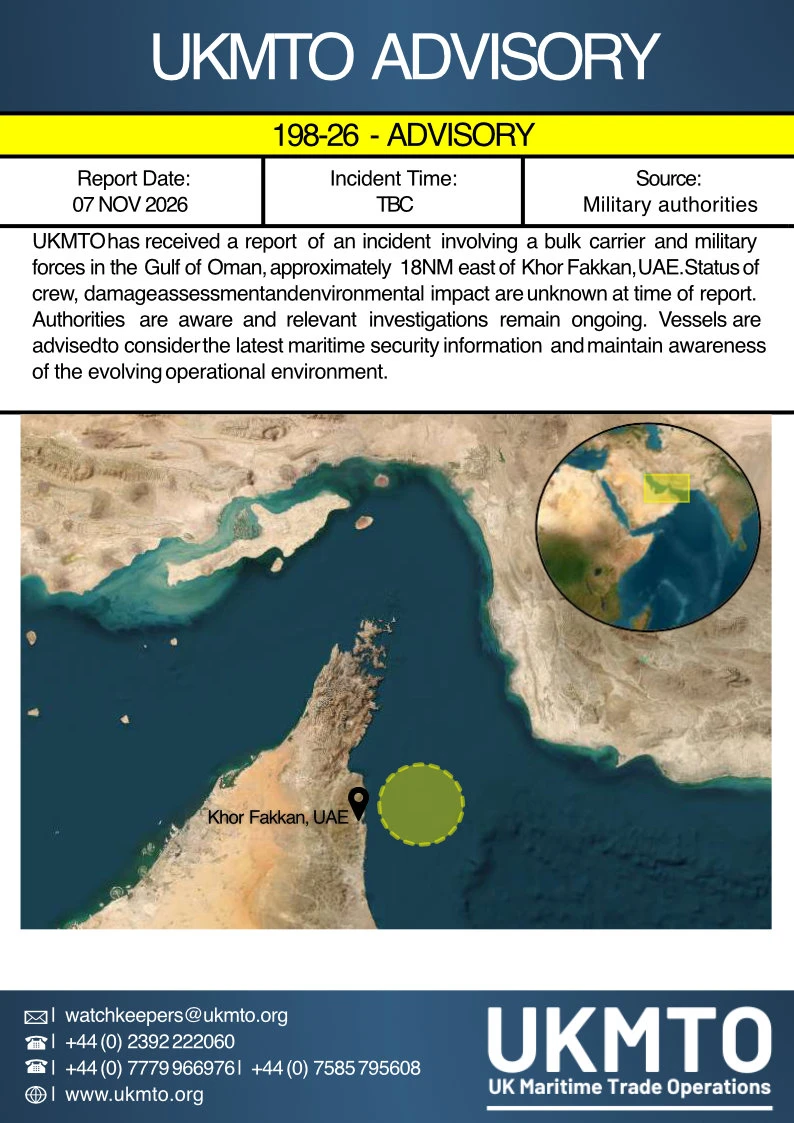
RIYADH: A bulk carrier was involved in an incident with military forces in the Gulf of Oman, the United Kingdom Maritime Trade Operations (UKMTO) said on Sunday, in the latest reported maritime incident amid the continuing conflict around the Strait of Hormuz.
The incident occurred approximately 18 nautical miles east of Khor Fakkan in the United Arab Emirates, according to a UKMTO advisory posted on X.
The maritime security agency said the status of the vessel’s crew, the extent of any damage and the possible environmental impact were unknown at the time of its report.
Authorities had been notified and relevant investigations were ongoing, UKMTO said, citing military authorities as its source.
It advised vessels operating in the area to monitor the latest maritime security information and remain aware of the evolving operational environment.
Sixth vessel
The incident, dated Nov. 7 but reported by UKMTO at about 12:40 p.m. on Sunday, marks the sixth vessel involved in reported attacks or security incidents across the Gulf of Oman-Strait of Hormuz corridor this month.
The latest development follows a series of incidents reported by UKMTO since Nov. 1, involving tankers, a traditional sailing vessel and other commercial shipping.
A seafarer on a Greek-owned oil tanker was killed in an apparent missile attack in the Gulf, its owner said Friday, after Tehran said ships were on fire after hitting mines in the Strait of Hormuz.
The Marshall Islands-flagged tanker Velos Sapphire was sailing to Bahrain empty of cargo when the attack happened on Thursday, Velos Tankers said in a statement carried by the Greek news agency ANA.
The Athens-based company said the explosion was likely caused by an unidentified projectile that struck the vessel’s port quarter, sparking a fire.
On Thursday, Iranian media reported that five oil tankers and a tugboat caught fire after hitting mines in the Strait of Hormuz.
And in a statement carried by state media Friday, Iran’s Revolutionary Guards said two more oil tankers were on fire in the strategic gateway to the energy-rich Gulf.
UKMTO said on Friday that the master of a tanker transiting the strait the previous day had reported an explosion “at the waterline, port side” off Oman.
“The crew are safe... The tanker is still under its own power and is continuing on its voyage,” it added.
Since the outbreak of the Middle East war on February 28, Tehran has sought to limit traffic through the waterway, which normally carries about one-fifth of global oil consumption.
The United States has in response imposed a blockade on Iranian ports and escorted tankers through the strait.
On Nov. 5, UKMTO said it received a delayed report from the master of a tanker sailing outbound through the Strait of Hormuz. The vessel’s captain reported an explosion at the waterline on its port side, approximately 16 nautical miles east of Khasab, Oman.
The crew were safe and accounted for, and the tanker remained under its own power and continued its voyage.
A day earlier, UKMTO reported that a tanker had been struck by two unidentified projectiles approximately 50 nautical miles north of Madinat ash Shamal in Qatar. The condition of the crew, damage to the vessel and possible environmental consequences were unconfirmed.
On Nov. 3, a tanker was reported struck by two unidentified projectiles in its engine room, approximately 14 nautical miles northeast of Lima, Oman. No casualties or environmental impact were reported.
The agency also reported an attack on an Indian-crewed dhow sailing outbound through the Strait of Hormuz. The Omani Royal Navy rescued the surviving crew, although UKMTO said it did not know the status of the vessel.
Two other incidents were reported on Nov. 1 and 2. A tanker travelling southeast through the Arabian Gulf was struck by two unidentified projectiles approximately 72 nautical miles east of Ras Al Khafji, Saudi Arabia, while another vessel sustained a hole on its starboard side after being hit by an unidentified projectile approximately nine nautical miles northeast of Lima, Oman.
The latest incidents have heightened concerns over the safety of commercial shipping in one of the world’s most strategically important maritime corridors, where the conflict between the United States and Iran has severely disrupted navigation and energy shipments.
Conflict and maritime security
The incidents are unfolding against the backdrop of the US-Israeli war with Iran, which began on Feb. 28 and has entered its ninth month.
The United States has maintained a naval blockade on Iranian ports, while Tehran has sought to use its control and influence over the Strait of Hormuz as leverage in the confrontation.
The US military said on Saturday that it had disabled a St. Kitts-flagged commercial vessel in the Gulf of Oman after it ignored repeated warnings and attempted to leave the region following a visit to an Iranian port, according to The Associated Press.
The disclosure came amid reports of further explosions in Iranian coastal areas and claims by the Iranian military that two tankers had struck naval mines in the Hormuz area and caught fire. The identities of the vessels and the circumstances of the reported incidents were not immediately established.
The latest maritime incidents come as diplomatic efforts to end the conflict continue, with Qatar playing a key mediating role between Washington and Tehran.
Qatar’s prime minister said on Saturday that mediation efforts were continuing to prevent further regional escalation, expressing confidence that an agreement could be reached.
However, disagreements over the US blockade, sanctions, Iran’s nuclear program and arrangements for reopening the Strait of Hormuz remain major obstacles to a settlement.
With commercial vessels continuing to face security threats and military activity in surrounding waters, the latest incident underscores the risks confronting international shipping as diplomatic efforts struggle to end the conflict.
• With Agencies