


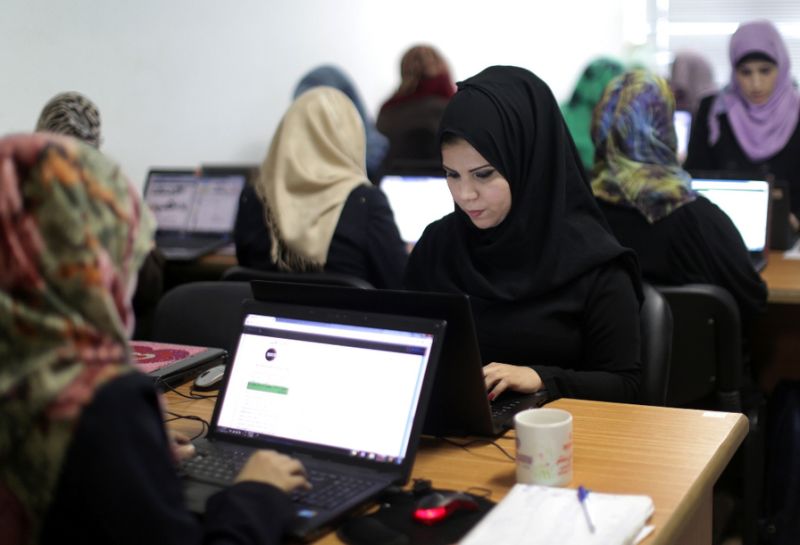
The number of female entrepreneurs around the world is growing, which is good news for families, communities and economic development. However, in most countries, the number of women entrepreneurs still lags behind men. Governments and businesses should consider polices to support women entrepreneurs in ways that are appropriate for a country’s economic stage of development and the country-specific cultural and practical challenges that women face.
The Global Entrepreneurship Monitor’s (GEM) “Women’s Entrepreneurship” report from 2016/2017 found that women’s overall rates for total early-stage entrepreneurial activity (TEA) increased by 10 percent in two years. The 2017/2018 GEM report found that the gender gap between men and women entrepreneurs had decreased by 6 percent since 2016. Multiple studies have found that — while men are more likely to become entrepreneurs — women are also an important and growing source of the economic development and job growth that comes with entrepreneurial activity around the world.
The percentage of women engaging in entrepreneurship varies significantly between different levels of economic development. Women are most likely to start businesses in factor-driven economies, which are the less developed economies. The latest GEM report found that factor-driven economies “on average show nearly equal participation in entrepreneurship between genders.” Female entrepreneurship rates tend to decline as economies enter the next phase, efficiency-driven economies. Women are even less likely to become entrepreneurs — and the gender gap between female and male entrepreneurs increases — as economies enter the innovation-driven phase. There are many reasons for these declines in overall female TEA in more advanced economies, including a decline in women’s perceived need to start their own businesses and a drop in their perceived capability to do so.
These differences between the levels of economic development help shape female entrepreneurship in different regions of the world. The region with the highest levels of female TEA is Latin America, while the lowest is Europe, according to the GEM. Within individual countries, a range of factors also affect the role of women as creators of new businesses, including social attitudes, property rights for women and government support for female entrepreneurs.
There is more to female entrepreneurship than simply the number of women who start businesses. Some of the countries with higher TEA levels also have lower levels of growth expectations for women entrepreneurs, such as in Latin America. The GEM Women’s Entrepreneurship report noted that “innovation-driven economies exhibit less demand for entrepreneurship, but entrepreneurs who start are more likely to launch sustainable businesses.”
There are many reasons why women become entrepreneurs. The GEM reports have noted that women tend to be driven more by necessity than men, especially in efficiency and innovation-driven economies. Women may start businesses to provide the sole form of income for their families or to augment their spouse’s income. They might start their own businesses in order to avoid a glass ceiling or to have a job that provides flexibility to manage their family’s needs. Women may pursue entrepreneurship because they see an opportunity in the market.
Women entrepreneurs are valuable to their communities. Multiple studies have demonstrated that entrepreneurship is essential to economic growth and job creation. Women’s income is often crucial to families, and women are more likely than men to spend their income on their families and communities in ways that produce long-term positive outcomes, such as education and health. Businesswomen often see opportunities in the market — such as serving the needs of female consumers — that businessmen miss.
Multiple studies have found that — while men are more likely to become entrepreneurs — women are also an important and growing source of the economic development and job growth that comes with entrepreneurial activity around the world.
Kerry Boyd Anderson
Despite the importance of female entrepreneurs, women who want to start businesses face additional challenges compared to their male peers. Some of these challenges are practical, such as their childcare needs. Many hurdles, however, stem from overt and subtle forms of discrimination against women. Multiple studies have demonstrated the importance of models and mentors in helping new entrepreneurs succeed, and women in most economies have fewer female models and mentors to help them navigate the unique challenges women face.
Female entrepreneurs also find it far more difficult to attract capital than men. For example, Forbes reported in September that “only 10 percent of funding globally goes to women-led startups,” and a June 2017 article in the Harvard Business Review revealed that female entrepreneurs in the US “receive only about 2 percent of all venture funding, despite owning 38 percent of the businesses in the country.” There are many reasons for the gender gap in investment, including, as the Harvard Business Review noted, that venture capitalists tend to ask male entrepreneurs questions that are more likely to lead to investment, while asking women more negatively oriented questions.
Governments and businesses can implement policies that support both male and female entrepreneurs, such as tax policies, financial tools, bankruptcy laws, one-stop resources for setting up a business, and incubation and accelerator programs. Addressing corruption and promoting positive social views of entrepreneurship are also positive steps.
At the same time, women also benefit from support tackling the particular challenges that female entrepreneurs face. There are many ideas about how to assist women, including support for working mothers, encouraging girls and women to enter STEM fields, accelerator and mentorship programs designed to help women, and a wide range of government and business approaches to address the gender gap in raising funds. Leaders who look at these ideas creatively and consider what works best in their own economies and cultures have a very good opportunity to expand and diversify entrepreneurship.
- Kerry Boyd Anderson is a writer and political risk consultant with more than 14 years’ experience as a professional analyst of international security issues and Middle East political and business risk. Twitter: @KBAresearch


