- Erdogan told Al Jazeera the agreement remained open to additional members and indicated that Egypt’s participation was possible
DOHA: Turkish President Recep Tayyip Erdogan has said Egypt could become the next country to join a newly established mutual defence pact between Turkiye, Saudi Arabia and Pakistan.
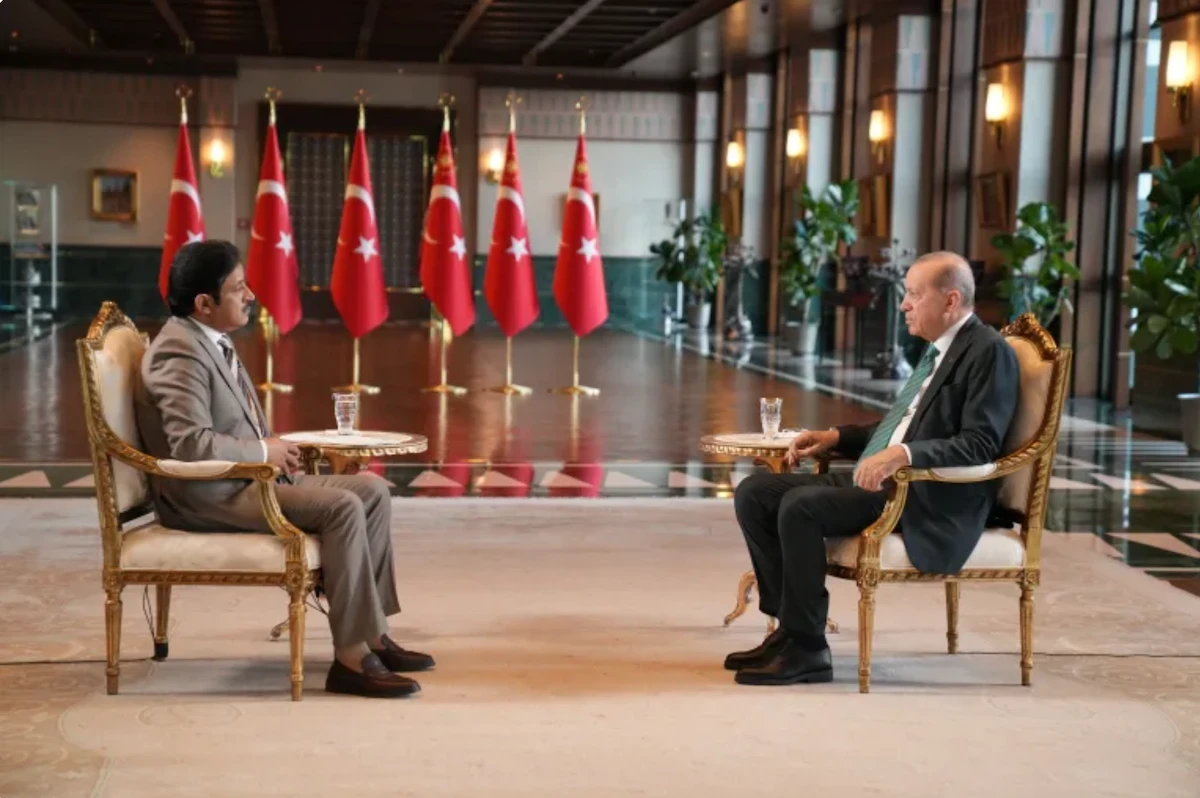
In an interview with Al Jazeera, Erdogan described Cairo’s possible accession as one of several options being considered as the alliance looks to expand its membership.
The agreement, formally known as the Makkah Joint Defence Agreement, was signed in the Saudi holy city last Friday by Erdogan, Saudi Crown Prince Mohammed bin Salman and Pakistani Prime Minister Shehbaz Sharif.
Under the pact, an armed attack against any one of the three signatory states would be treated as an attack against all of them, committing the countries to a coordinated response in the event of an external threat.
“This agreement has sent an important message to the world,” Erdogan told Al Jazeera’s Ali Al Dafiri during an interview for the programme Al Muqabala.
While the collective defence clause has prompted comparisons with NATO’s Article 5, Pakistani officials have cautioned against describing the agreement as a regional equivalent of the Western military alliance. Islamabad has also said the pact is not aimed at any particular country.
Erdogan said the agreement remained open to additional members and indicated that Egypt’s participation was possible.
His comments come as regional governments seek to deepen security cooperation amid continuing wars and political instability across the Middle East.
During the interview, the Turkish president also addressed tensions surrounding the Strait of Hormuz, as well as the conflicts in Gaza, Lebanon and Syria.
Erdogan said reopening the Strait of Hormuz was a priority for Ankara, arguing that the continued disruption of the strategic waterway was damaging to all sides.
The strait is one of the world’s most important energy corridors, linking Gulf oil and gas producers with international markets.
He also praised Qatar’s role in regional mediation efforts, saying Doha had contributed significantly to attempts to reduce tensions and bring an end to ongoing fighting.
On Syria, Erdogan said Turkiye would continue to support efforts to restore stability and would not abandon its neighbours during a period of regional turmoil.
He said he planned to visit Syria and stressed that the country’s Kurdish population should share in any future peace and stability.
According to Erdogan, Turkiye would continue strengthening its relations with Kurdish communities and supporting their rights across the region.
Turning to Gaza, he said Ankara could not leave Palestinians in the territory to face the conflict alone.
“Turkiye cannot leave Gaza alone,” Erdogan said, adding that his government would continue to provide political and humanitarian support.
He said Hamas was acting in good faith and meeting its commitments, while accusing Israel of continuing its military campaign.
Erdogan also expressed concern over Israeli attacks on Lebanon and said he had discussed the conflict with US President Donald Trump during Trump’s recent visit to Turkiye.
The Turkish leader said Washington had an important role to play in bringing the fighting to an end and that he had urged the US president to support efforts to halt the war.
Erdogan also addressed developments in Sudan and Libya.
He said Turkiye would continue supporting Sudan and described his relationship with Abdel Fattah Al-Burhan, the head of Sudan’s Sovereignty Council, as positive.
On Libya, he said relations between Ankara and Tripoli remained stable and insisted that Turkiye would not abandon the country.
Erdogan also used the interview to signal a further shift in Turkiye’s relationship with the European Union.
He said EU membership was no longer a major priority for Ankara and accused European leaders of lacking the political will to admit Turkiye.
According to Erdogan, Europe would ultimately lose more than Turkiye if accession efforts remained stalled.
Turkiye has been formally recognised as a candidate for EU membership since 1999, but negotiations have been frozen for years amid disagreements over democratic standards, regional disputes and foreign policy.
The Turkish president also spoke about Ankara’s long-running attempt to rejoin the US-led F-35 fighter jet programme.
Erdogan said Trump had made a commitment regarding the aircraft and that Turkiye was waiting for the US administration to honour it.
Washington expelled Turkiye from the multinational F-35 programme in 2019 after Ankara purchased the Russian-made S-400 air defence system.
US officials argued that the S-400 could collect sensitive information about the F-35’s stealth capabilities and compromise the security of the wider programme.
The United States subsequently imposed sanctions on Turkiye under the Countering America’s Adversaries Through Sanctions Act in December 2020.
During a NATO summit in Ankara last month, Trump said his administration planned to lift those sanctions and would consider allowing Turkiye to return to the F-35 programme.
However, any agreement is likely to encounter opposition in the US Congress.
A law passed in 2020 prevents the Pentagon from transferring F-35 aircraft to Turkiye for as long as Ankara retains the S-400 system.
Erdogan’s comments underline Turkiye’s efforts to strengthen its regional alliances while pursuing a more independent defence and foreign policy.
The possible inclusion of Egypt in the Mecca pact would bring together four of the region’s most influential military powers and could significantly reshape security cooperation across the Middle East and the wider Islamic world.