- Programs designed with Transport General Authority aim to build national talent for expanding sector
RIYADH: King Abdulaziz University, in partnership with the Transport General Authority, has launched Saudi Arabia’s first specialized bachelor’s degree programs in railway transport, aiming to prepare national talent for the Kingdom’s expanding rail and logistics sector.
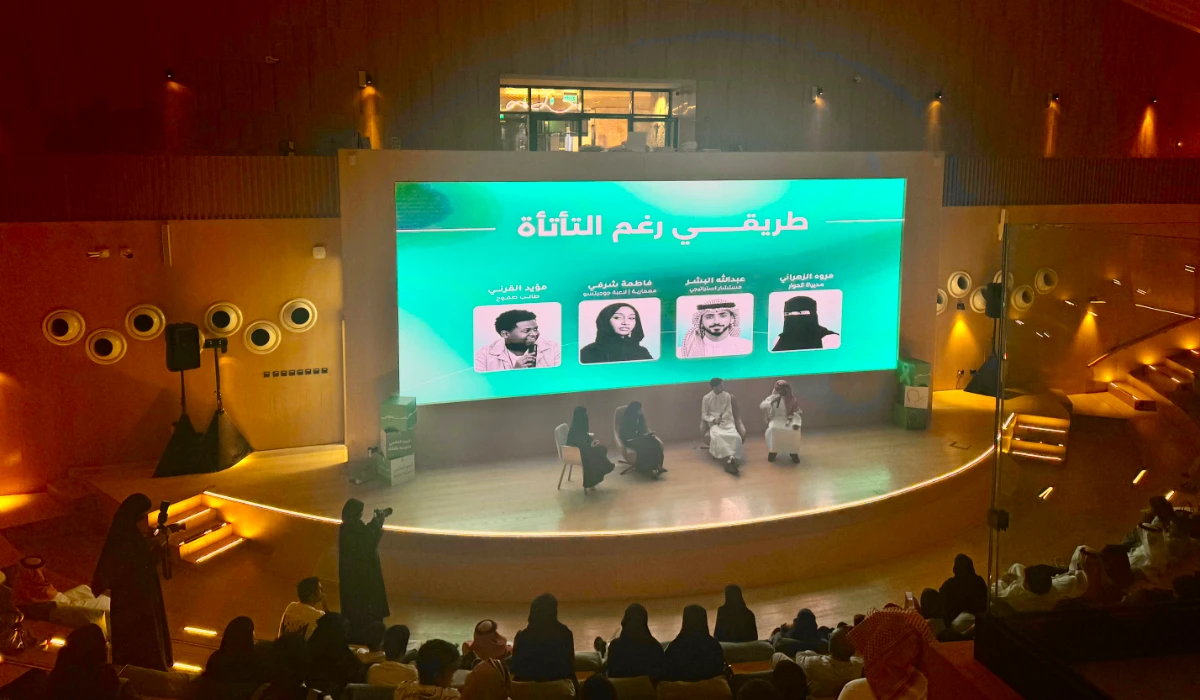
The official launch took place at the university’s Jeddah campus in the presence of TGA President Fawaz Al-Sahli and KAU President Tareef Al-Aama.
“Truthfully, this is a unique day — the inauguration of the railway transport programs at King Abdulaziz University,” Al-Sahli said. “These programs are the first of their kind in the Kingdom of Saudi Arabia and the Arabian Gulf states.”
He emphasized KAU’s pioneering role in the specialized academic field: “King Abdulaziz University is the first university to design and establish these academic programs directly linked to railway transport and train operations.”
The TGA-accredited programs include a degree in railway engineering and planning, jointly supervised by the Faculty of Engineering and the Faculty of Architecture and Planning. A second degree, a Bachelor of Science in Logistics Management and Railway Transport Services, will be offered through the Faculty of Economics and Administration alongside the Faculty of Tourism.
Both tracks were designed to align directly with the operational needs of the transport market and current labor demand.
“We are witnessing a major expansion in the railway sector, which requires qualified national cadres who possess diverse skills in engineering, planning, transport, logistics, and services management,” Al-Sahli said.
“Our dear homeland is making huge strides in railway transportation. We already have major operational projects like the Riyadh Metro, the Haramain High-Speed Railway, and the line connecting Riyadh to the Eastern Province.”
Looking toward future infrastructure expansion, Al-Sahli highlighted several projects under the TGA: “Upcoming projects include the GCC railway network, rail links connecting Saudi Arabia with Qatar and Jordan, as well as the Jeddah Metro. All of these major national projects require preparing highly skilled, efficient Saudi graduates who can, God willing, lead and operate them in the future.”
Speaking to Arab News, transport specialist Eng. Saud Al-Dalbehi said the structure of the new programs reflects the breadth of expertise needed to develop the Kingdom’s railway sector.
“This is an important point because the Kingdom has not reduced the sector to just a ‘railway engineer.’ It started from two complementary aspects: infrastructure, engineering, and planning on one side, and operations, logistics, and services on the other,” Al-Dalbehi said.
He added that the Saudi approach broadly resembles models used by countries with mature railway sectors, while offering an opportunity to develop a framework suited to the Kingdom’s specific needs.
“There is no single global model for railway education,” Al-Dalbehi said. “The first is a fully specialized bachelor’s degree in railways, and this exists clearly in some British and Chinese universities. From this perspective, the new Saudi model is initially closer to the British and Chinese models in terms of establishing a dedicated name and specialization for railways.”
Al-Dalbehi said that other countries take a broader approach, embedding railway studies within civil, transport, or systems engineering.
“It is not a requirement for an advanced country to have a bachelor’s degree called ‘Railway Engineering,’” he said. “Railways may instead be a pathway within civil engineering, transport engineering, or systems engineering.”
He cited Germany as an example where universities and railway operators work closely together to combine academic study with practical experience.
“The third model is where the university is directly linked to the operator and industry,” Al-Dalbehi said. “This is very clear in Germany and Britain. The success of the Saudi program will not be measured only by the curriculum, but by the extent to which students are connected during their studies to railway projects, operators, contractors, manufacturers, control centers, and maintenance.”
Highlighting China’s experience, where railway education developed alongside a vast high-speed rail network, Al-Dalbehi said that railways must be treated as a holistic ecosystem.
“The Chinese experience does not look at railways as just ‘tracks and trains.’ Rather, it is an integrated system that includes route and station planning, civil engineering, bridges and tunnels, train engineering, electrical systems, signaling and communications, operations, safety, maintenance, logistics, artificial intelligence, and digital transformation.”
While Britain offers a model focused on practical application, Switzerland integrates railway transport with wider urban and transport planning — an approach Al-Dalbehi considers vital for Saudi Arabia.
“This is a very important idea for the Kingdom because the success of railways does not depend only on the quality of the train,” he said. “It also depends on the location of the station, its connection to the metro, buses, and airport, the land uses around it, and the ease of movement of passengers and goods.”
The launch comes as KAU prepares for the 2026–2027 academic year, offering students specialized undergraduate majors in railway transport for the first time in the Kingdom.
The initiative marks a key step toward strengthening integration between the TGA and academic institutions, linking educational outcomes directly to future industry needs and localizing technical expertise across engineering, planning, transport, and logistics.
The programs stem from a strategic memorandum of understanding signed between KAU and the TGA on Nov. 20, 2024. The partnership includes knowledge exchange, specialized training, and human capital development to support the expansion of the national rail network and Saudi Vision 2030 goals.