

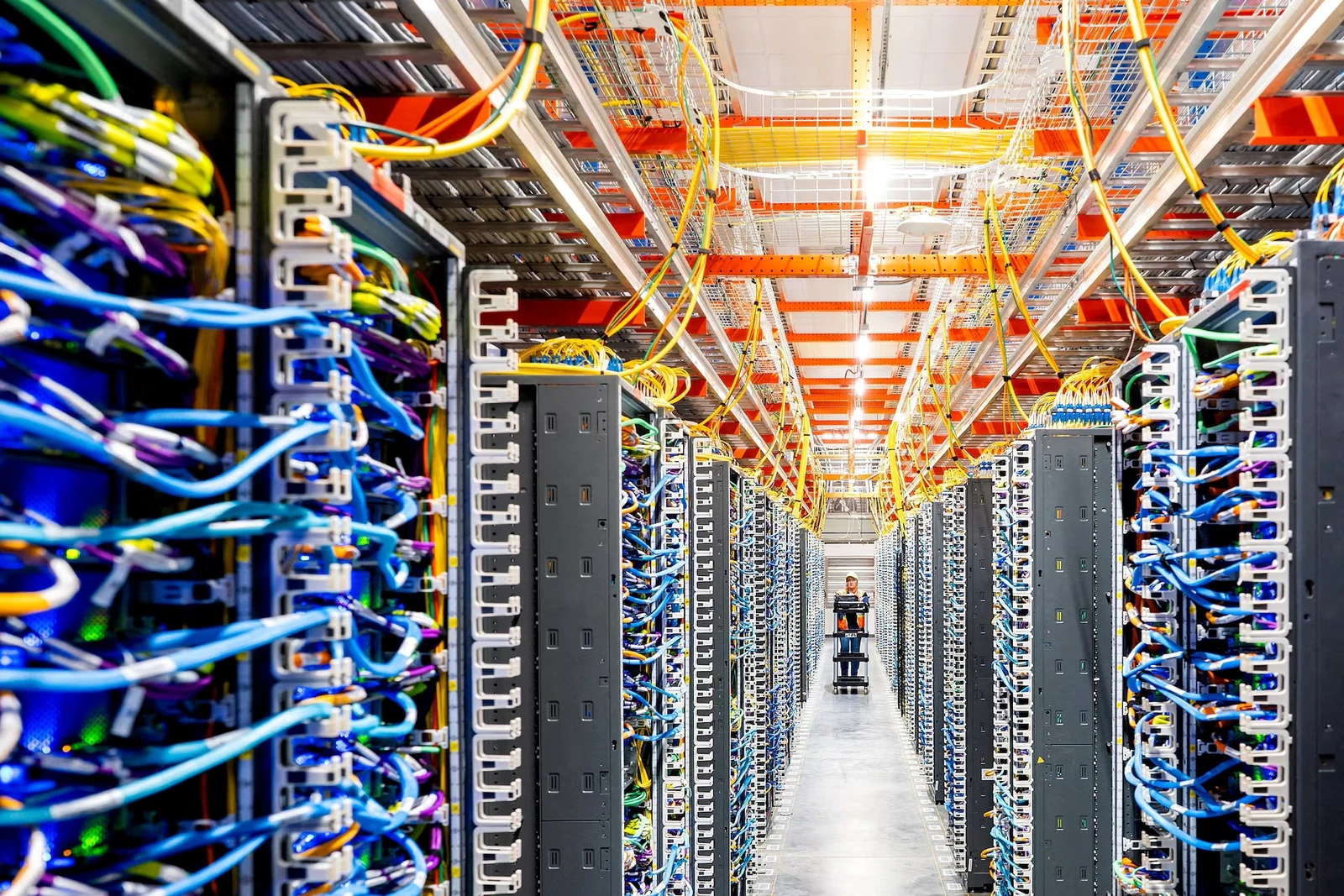

The race to build AI infrastructure has come under sustained public scrutiny, not only over the technology itself but also the facilities that house its computing power and the companies that control them.
The result has been moratoriums and projects delayed or cancelled around the world, with the most visible pushback in the US, the UK, Europe and, most recently, Australia.
The scrutiny has moved beyond a public-relations issue: markets and regulators are now pricing it in as an investment risk.
In the US, local opposition blocked or delayed close to $200 billion worth of data center projects in the first half of 2026. In July, Blackstone-owned QTS abandoned its Digital Gateway campus in Virginia, planned as the world’s largest, after years of opposition and litigation. In late September, Goodman withdrew a Sydney data center planned just meters from homes, days after conceding it had failed to secure a social license. Regulators are acting too: Wisconsin is requiring Oracle to post around $7 billion in collateral to protect household electricity customers.
It helps to be precise about which AI infrastructure is under scrutiny. Machine learning used to forecast grid faults or control industrial processes has run for years on modest computing resources. Analysts estimate that more than 70 percent of new capacity at the largest operators is now optimized for AI, increasingly to run models for users rather than train them. These large campuses are what communities are questioning.
Gulf funds led sovereign investment in AI and digital infrastructure in 2025. In July, a consortium including Abu Dhabi’s MGX completed the $40 billion acquisition of Aligned Data Centers, which has sites in several US markets where local opposition has been particularly active. These portfolios carry a risk that barely existed at this scale two years ago.
Recent insights from industry conversations suggest why the Gulf’s own position differs. Its sovereign AI strategies rest on available energy, land and connectivity, as well as state-led planning that the public largely trusts to anticipate constraints decades ahead. Even water is viewed differently: In a region reliant on desalination, operators trade cheap power for water, and practitioners rank cooling well above water as a risk. Where Western projects stall over local consent, the regional concern is physical security. Data centers are increasingly treated as national critical infrastructure, and resilience has become a factor in site selection and design, as conflicts in the region and in Ukraine have shown.
The two geographic markets are also converging. Gulf investors own assets in markets with stricter rules, and those requirements are filtering back through investors and tenants. The EU’s proposed AI facility rating scheme, for example, will require data centers above 500 kW to report their actual energy and water use. Regional practitioners increasingly describe sustainability as a responsibility shared by developers, contractors, operators and tenants, none of whom can pass it on to another.
That suggests a due-diligence question worth adding to portfolio reviews: How is portfolio company leadership managing this exposure? Are new facilities engaging communities early or reacting only once challenges emerge? What workloads is the capacity actually designed to support? And does the company disclose energy and water use facility by facility?
An investor in an AI data center developer or operator is also invested in that company's relationship with the communities and regulators around its sites.
Western markets have shown, with real financial consequences, what happens when that relationship is left until last. Gulf investors, as some of the largest long-term holders of this asset class, are well placed to make it part of the conversation.
Lina Tayara is a consultant in the digital infrastructure industry, driving business development, market research and thought leadership through her platform, Let’s Talk Tech.


