
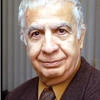

Is Iran’s “Supreme Guide” Ali Khamenei worried that the forthcoming elections for Majlis (Parliament) and the Assembly of Experts might cause a split within the Islamic Revolutionary Guard Corps (IRGC)?
The question is not academic.
Over the past year, various IRGC active or retired commanders have been making almost daily media appearances to promote diverse positions on a range of political issues, notably President Hassan Rouhani’s efforts for rapprochement with the US. Theoretically, the IRGC should not intervene in politics, a position stressed by the late Ayatollah Khomeini, the founder of the Islamic Republic.
However, the IRGC has always been a political rather than military arm of the regime. The Constitution of Iran defines the IRGC’s role in defending the political system while “exporting” the Khomeinist revolution whenever possible. The regime has always used the IRGC to crush dissent, recruit terrorists abroad, and, when needed, “arrange” elections to produce results desired by the “Supreme Guide.”
For the first time, the IRGC is speaking in different and, at times, discordant voices. One reason may be Khamenei’s ambiguous position on some key issues. On the nuclear talks, for example, Khamenei has been clearly hedging his bets. He has set pale “red lines” but refused to pull the rug from under Rouhani’s feet when those are crossed.
In the Khomeinist system, politics has never proceeded in the chiaroscuro of nuances. This is an “either/or” system, a win-or-lose game, with a black-and-white vision of existence. For Khomeinist rulers nurtured on a sick ideology, the so-called “win-win” game marketed by Rouhani and his “New York Group” is hard to understand let alone adopt. Thus the IRGC commanders are confused.
Some hope that Iran will close the chapter of revolution and become a normal state in which the military could focus on their essential role as guardians of the nation’s safety and security while gaining access to the latest weapons systems.
Others fear that normalization might lead to demands for the abolition of the IRGC or, at least, its merger with the regular armed forces. After all, if the revolution were absorbed into the machinery of state, there would be no need for a separate force to guard it. (Plans to merge the IRGC into the regular armed forces have been on and off the table since the 1980s.)
The IRGC has a vested interest in Iran remaining in a state of revolutionary hysteria. In such a state, the IRGC is able to claim special treatment, for example in the form of the recent 30 percent increase in its budget. It is also allowed to dabble in all sorts of businesses through over 400 companies with a combined turnover estimated at 10 per cent of the gross domestic product.
Membership of the IRGC provides a fast-track to upward mobility. Once an IRGC officer has retired, he could claim plum jobs in the civil and diplomatic service, become member of the ersatz parliament or a Cabinet minister, or secure positions as provincial governors and major city mayors, or seats on the board of directors of public corporations. IRGC commanders also have their eyes on one day capturing the presidency. (So far eight have been candidates without success.)
Another reason for the current cacophony is linked to persistent but often inexact reports regarding Khamenei’s declining health. If Khamenei lives as long as Khomeini, he would have another 14 years to go. Right now, there is no prospect of him being removed with a vote from the Assembly of Experts. Nevertheless, the rival factions are already looking for successors. The IRGC hopes to have a big say in choosing a successor or a collective leadership formula as some suggest.
The faction led by Akbar Hashemi Rafsanjani, and including Rouhani and his “New York Group,” is anxious to script the IRGC out of the equation before the next elections in March 2016.
“Intervention by government, the IRGC, the state-owned radio and television network, or the governor in favor of this or that candidate is poison for elections,” Rouhani said in a recent speech.
His critics, however, claim Rouhani himself was an IRGC member of long standing, and director of its principal business empire, and that his election was engineered by the force on Khamenei’s orders.
Clearly, Khamenei regards the IRGC as his chief instrument of power, and is determined to reaffirm his control over it. Last week, Ayatollah Ali Saeedi, Khamenei’s Special Representative in the IRGC, a kind of religious-political commissar, warned the generals not to “speak out of turn.”
Khamenei’s move to re-impose discipline on the IRGC has a political dimension. In an oblique warning against backing “questionable candidates” in next March elections, Saeedi called for “supporting genuine believers.”
“We do not want to intervene in elections,” he said. “All we say is: Vote for genuine believers. This does not mean intervening in elections. The others (factions) have a secret agenda to vote for those who are as far from the system as possible.”
The ayatollah went to accuse rival factions of seeking to undermine Khamenei’s position. “There are numerous efforts to transform our fundamentalist Majlis into something else,” he said. “And that would be a threat to the Imam’s ideals, to the Supreme Leader and the (vital) interests of the regime.”
Khamenei is worried. He has reason to be.


