
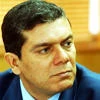
The race to the presidential palace in Egypt has officially kicked off this week with only two candidates in the race: Former Defense Minister Abdel-Fattah El-Sissi, considered by most as the favorite and veteran politician for more than 40 years Hamdeen Sabahi. There are stark differences between the two men and each represents certain interests in a country that has witnessed two popular uprisings in the space of three years and is increasingly polarized.
The presidential elections, slated for the end of this month, are an essential component of the road map for the future, which El-Sissi unveiled on the eve of the ouster of Muhammad Mursi. El-Sissi’s plan, supported by the majority of Egyptians, included the adoption of a new constitution approved earlier this year and the holding of presidential and legislative elections thus ending a one-year transitional phase.
Although El-Sissi has said he was not seeking the presidency, popular pressure and the interests of the military, which plays a fundamental role in Egyptian politics, have changed all that. In a carefully orchestrated set-up El-Sissi’s candidacy was seen as a major victory for the June 30 popular movement, which upset Mursi, and the political powers that supported it. El-Sissi is considered a national hero and a savior of Egyptians from the notorious rule of the Muslim Brotherhood. He has the support of the mainstream media, the army and most of the political powers, including the liberal Al- Wafd and the Salafist Al-Nour parties.
Opinion polls suggest that he would win a decisive 70 percent of the votes in the first round. But while his victory is almost certain there are some factors that should be taken into consideration.
Sabahi has the endorsement of many young Egyptians who played a central role in the January 25 revolution against former President Husni Mubarak. Sabahi was present in Al-Tahrir Square from the very beginning and his candidacy is regarded as a true extension of that revolution. On the other hand El-Sissi has the support of young Egyptians as well, especially the Tamarud movement, which was instrumental in organizing the June 30 anti-Mursi campaign. But Sabahi could still mobilize Egypt’s young.
Many of the figures associated with the Mubarak era have endorsed El-Sissi. No one really knows how the silent majority, or the so-called Al Kanaba (couch) Party, will react toward the coming elections. It was this large group of Egyptians, which took to the streets during the January 25 and June 30 uprisings. But when it came to voting for the new constitution, most stayed home. The position of millions of Egyptians, who are usually apathetic, will play a major role in the coming elections.
While the position of the anti-coup alliance of mostly Islamist groups and parties is to boycott the elections, there is the possibility that Muslim Brotherhood followers and supporters may still decide to vote for Sabahi. Although El-Sissi and Sabahi have made no conciliatory gestures toward the Muslim Brotherhood, there is a perception that the socialist candidate will try to mend fences with the Islamists. He is calling for a transitional justice that will bring anyone who had committed crimes against the Egyptian people to justice. And since the Salafists decided to vote for El-Sissi, it is possible the Muslim Brotherhood and their allies will go the other way.
Sabahi will use the fact that his rival cannot appear in public rallies across the country, for security reasons, to his benefit. He has nothing to fear and his campaign will be closer to the people than El-Sissi’s. In contrast to Sabahi’s popular image as a fiery orator, El-Sissi is soft spoken and reserved. So far, his campaign has centered on giving press interviews. But he will have to appear in public soon and address his supporters if he is to give credence to his image as a tough and determined leader.
In spite of all these factors El-Sissi remains the favorite to win the coming elections. Sabahi’s election program has been criticized as too ambitious and unrealistic. El- Sissi will reveal his own program soon. He has already said that he cannot promise much and that change will take time.
- Osama Al Sharif is a journalist and political commentator based in Amman.
Email: [email protected]


