
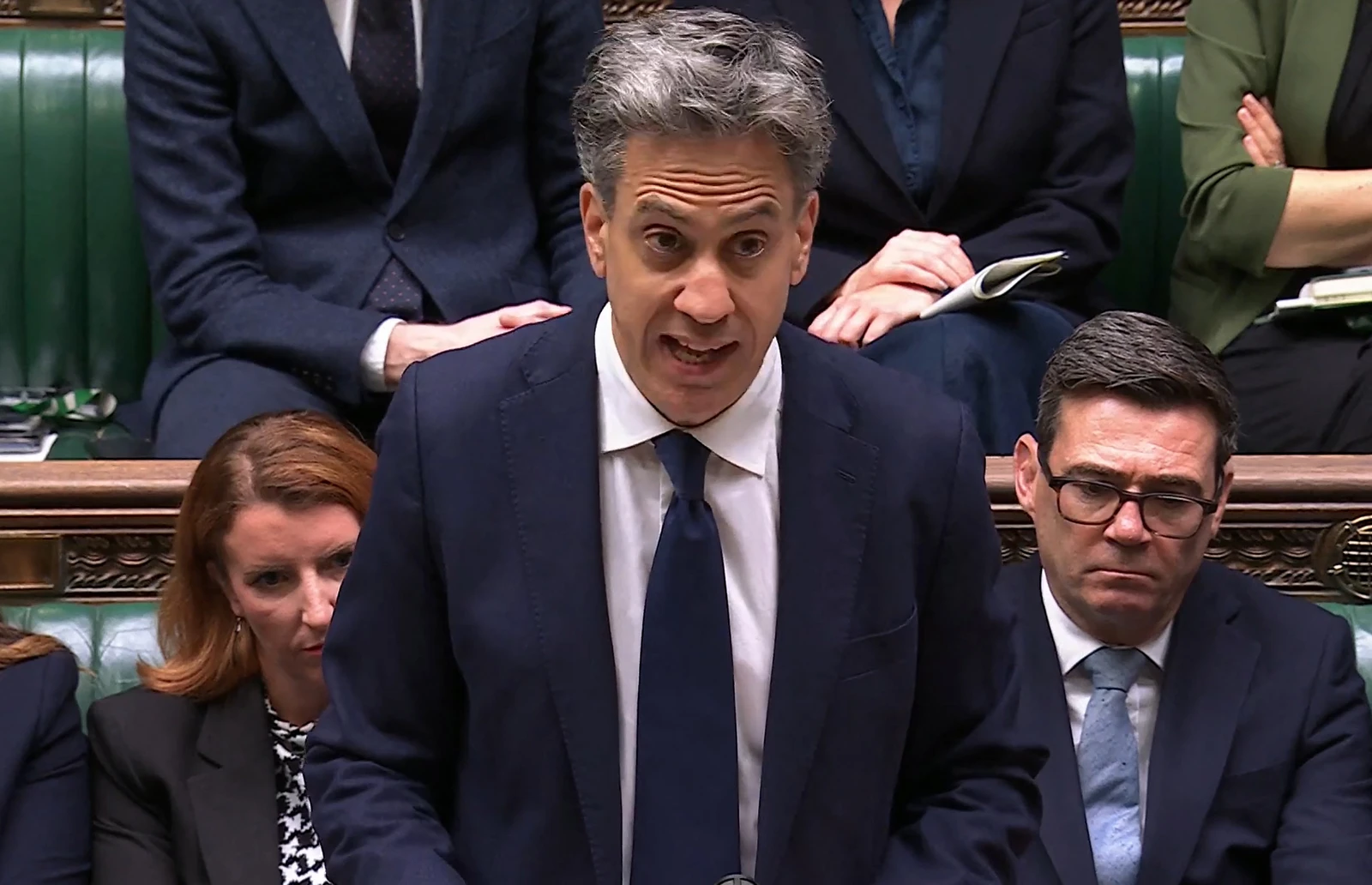

Ed Miliband, the UK foreign minister, this week posted on X a video of himself denouncing Israel’s activities and even issuing a threat. He said: “We will not be bystanders in the destruction of the two-state solution.” Hours later, Israeli Attorney General Gali Baharav-Miara halted the process of issuing tenders for construction in the E1 settlement in the West Bank until a new government is formed. The deadline for companies to submit tenders was set for Thursday but this has now been delayed.
The E1 settlement would be the last nail in the coffin of the idea of a two-state solution. If construction contracts are awarded, E1 will edge closer to the point of no return. So far, the UK and many other Western countries have been condemning the building of settlements, the settler terrorism and Israel’s actions, while at the same time appeasing Israel. The rhetoric has been getting harsher but, when it comes to action, no state has been firm enough to punish Israel and hinder its criminal behavior.
Too many statements have been mere theatrics. Western countries that claim to cherish human rights were embarrassed as the Gaza genocide unfolded. They made statements to show their constituencies that they did not approve of Israel’s behavior but they did nothing to stop it.
When it comes to action, no state has been firm enough to punish Israel and hinder its criminal behavior
Dr. Dania Koleilat Khatib
Gaza has driven the British public’s ire. New Prime Minister Andy Burnham has said he will take a different course on Israel. After banning trade with illegal West Bank settlements in September, the British government on Tuesday announced sanctions on eight Israeli construction companies involved in building settlements in order to protect the idea of a two-state solution. It also imposed sanctions on Tzav 9, an Israeli activist group which it said had regularly blocked humanitarian aid trucks delivering food, water and fuel to the Gaza Strip.
Yet Downing Street still has to prove itself. The British government has many tests ahead. Will it force Israel to allow aid into Gaza? Everyone has seen the images and footage of hungry people being swamped by floods in the Strip this month. Will Britain twist Israel’s arm and force it to allow the caravans of aid to enter? The other issue is the E1 settlement. If London does not do enough, it means it is not really serious about the two-state solution. Burnham will want to avoid making the same mistakes as his predecessor, Keir Starmer, who toed the line with Donald Trump on Israel and was cowed by Benjamin Netanyahu.
Israeli Foreign Minister Gideon Saar described this week’s sanctions as a “hostile act targeting private, law-abiding companies.” He also vowed to find new ways to strengthen settlements in the West Bank. The E1 project is still going ahead. What can be done? The UK should impose sanctions on any financial institution or contractor bidding for the project. This would force them to withdraw their bids and would show that London is serious.
However, Britain must also take the US into consideration. How would Trump react if the UK were to impose genuinely punitive sanctions? Will Burnham dare to impose crippling sanctions on the companies bidding for the E1 tenders. This is the minimum the UK government should do to show it is serious about peace, about the two-state solution and everything it has talked about in the past. But — and it is a big but — will they dare to confront the US? Or, like before, will it make some big statement with only a token action and no effective execution.
If the UK government does not act further, what credibility will it have, not with the Palestinians but its own citizens?
Dr. Dania Koleilat Khatib
One should not underestimate the influence of Israel on US politics. Many Republicans lost in this month’s midterms because of the war on Iran that was instigated by Israel. Trump himself said that his party lost because of voters’ “great dislike, incredibly, for Israel.” Nevertheless, we do not see Trump backing down on his support for Tel Aviv. It is unlikely that the US will change its behavior, even if the UK takes a tough stance on Israel.
Also, one should not underestimate the influence of the pro-Israel lobby, not only in the US but in other Western countries, including Britain. There are many issues we can see, such as the funding of election campaigns, the pro-Israel bias of the media and the pro-Israel influence in think tanks and academic institutions.
The British government has now raised the stakes. If it does not act further, what credibility will it have, not with the Palestinians but its own citizens? Burnham and Miliband will have many questions to answer in Parliament as well as in the street.
The UK government has some tough choices to make. Will it choose Trump or the British public? Will it choose its own credibility or pleasing Israel? People here in London are complaining about almost everything: the price of fuel, the NHS, expensive groceries. The Labour government should think it through and make some bold choices, even if it means confronting the US and facing down Israeli blackmail.
Dr. Dania Koleilat Khatib is a specialist in US-Arab relations with a focus on lobbying. She is co-founder of the Research Center for Cooperation and Peace Building, a Lebanese nongovernmental organization focused on Track II.


