
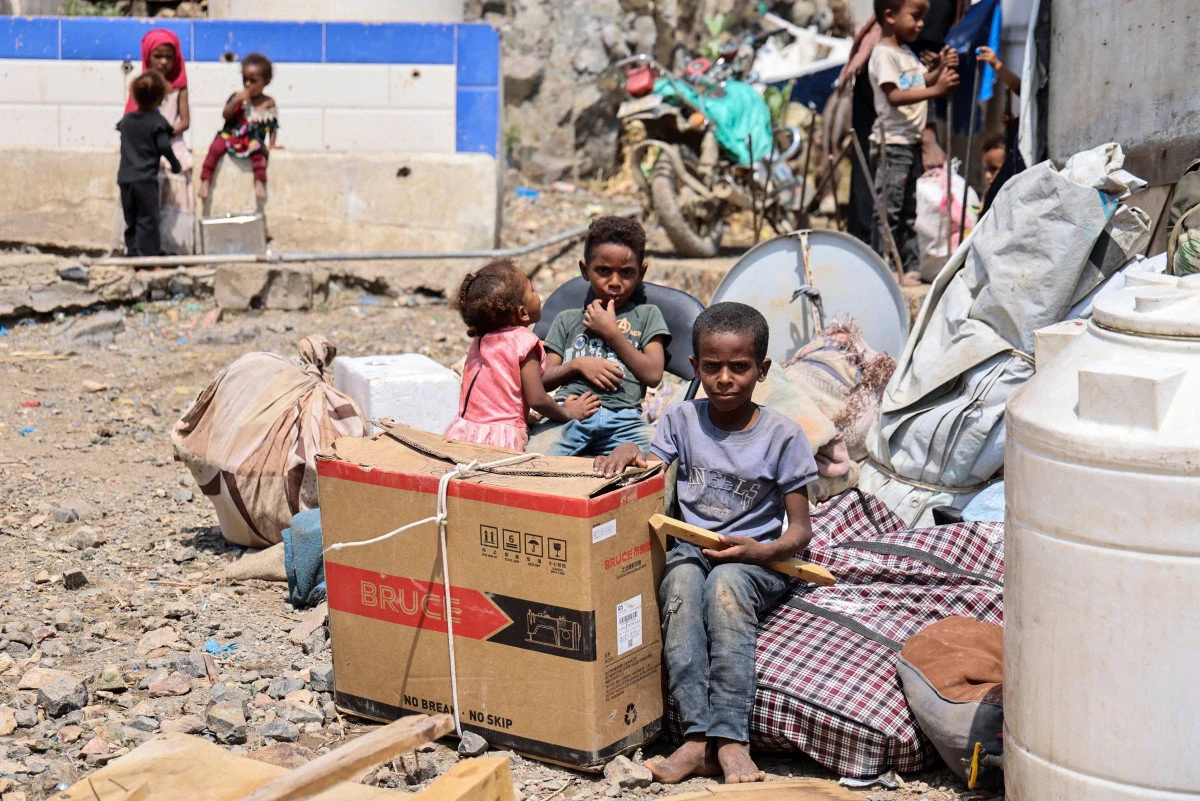

As the world on Thursday observes UN World Children’s Day under the theme “My day. My rights. My future,” the reality for millions of children trapped in armed conflict is very different from this hopeful message. In many places, such as Sudan and Yemen, children are not merely bystanders to adult wars — they are the ones who suffer the deepest and most lasting harm.
Killed by drones and landmines, recruited as fighters, driven from their homes, starved by the blocking of aid and denied schooling and medical care, they carry problems and wounds that shape the rest of their lives.
These are not the unavoidable side effects of conflict. They are the predictable result of choices made by aggressive armed groups and governments and an international community that has too often failed to prioritize the protection of children.
The scale of the crisis is unprecedented. The latest Report of the UN Secretary-General on Children and Armed Conflict verified 38,558 grave violations against children in armed conflict in 2025, affecting 24,174 children — the highest number recorded since the Children and Armed Conflict mandate began 30 years earlier.
Land mines and explosive remnants continue to kill and maim children gathering firewood or simply playing
Dr. Majid Rafizadeh
Killing and maiming accounted for the largest share, followed by denial of humanitarian access, the recruitment and use of children, and abduction. Explosive weapons caused about 70 percent of child casualties. These figures capture only verified cases; the true number is most likely higher.
The Houthis’ renewed aggression in Yemen this year illustrates how quickly progress can reverse. More than 12 million children there already require lifesaving assistance. The intensified fighting initiated by the Houthis in September displaced at least 300,000 people, including an estimated 110,000 children, in the opening weeks alone. Families have fled shelling around Taiz and other front lines only to confront overcrowded shelters, collapsing services and restricted humanitarian access.
Child recruitment remains especially grave. The UN verified 262 cases of recruitment and the use of children in Yemen in 2025 — 127 of which were attributed to the Houthis. Investigations have documented abductions of children as young as 11, ideological summer camps that channel youth into military pipelines and boys who left home on ordinary errands only to appear on the front lines.
Land mines and explosive remnants continue to kill and maim children gathering firewood or simply playing. Schools have been damaged or closed and health services disrupted. An entire generation is growing up without the basic security, nutrition, education and care that childhood demands.
Sudan presents an equally devastating picture. Between January and September, UNICEF recorded 410 children killed or injured, with about two-thirds of those casualties resulting from armed drone strikes.
Drones bring the war to places once considered relatively safe, destroying power stations that pump water, disrupting vaccine cold chains and forcing families to use unsafe water sources that spread disease.
Hunger has increased the damage. An estimated 825,000 Sudanese children under five are expected to suffer severe acute malnutrition in 2026 — the form that kills. Nearly 19.5 million people face high levels of acute food insecurity. Millions have been displaced. At least 8 million children are out of school in key regions. Health facilities have been destroyed or rendered nonfunctional.
A protected childhood is not a luxury, it is the foundation of healthy individuals and stable societies
Dr. Majid Rafizadeh
The combination of drones, drought and blocked aid has created a lethal cycle from which children cannot escape on their own.
A protected childhood is not a luxury, it is the foundation of healthy individuals and stable societies. The early years shape brain architecture, emotional regulation and the capacity for trust and learning.
When children are recruited into fighting forces, they lose not only their present but also the skills and relationships needed for later civilian life. Survivors often face stigma, trauma and limited economic options, raising the risk of re-recruitment or further violence.
In addition, chronic malnutrition permanently impairs cognitive development. Displacement severs social networks and access to education. The long-term costs — mental health crises, lost productivity, intergenerational poverty and cycles of violence — fall on entire communities and impact future generations.
We know that international law is unambiguous: the recruitment and use of children under 15 in hostilities is a war crime. Broader obligations under the Convention on the Rights of the Child and the Additional Protocols to the Geneva Conventions require parties to conflict to protect children, facilitate humanitarian access and refrain from attacks on schools and hospitals.
Statements of concern are no longer sufficient. Concrete measures are required. Existing action plans must be fully implemented. The Houthis signed a UN action plan in 2022 to end child recruitment — they must immediately release children associated with their forces, cease new recruitment, allow independent age verification and grant the UN unimpeded access to detention and training sites. Accountability must be strengthened.
The UN Security Council should maintain and expand lists of parties that recruit or kill children and support mechanisms that document evidence for potential prosecutions. Targeted measures against commanders responsible for child recruitment and the use of explosive weapons in populated areas can raise the cost of violations.
Humanitarian space must be protected. Attacks on water systems, power infrastructure, schools and health facilities must be investigated and condemned without double standards.
Sustained and flexible funding for child protection, nutrition, education in emergencies and mine action is essential. Children’s specific needs and rights must be elevated in every peace process. Any settlement that ignores the harms done to them will plant the seeds of future instability.
In summary, children bear the most pain in any conflict. They are the ones who lose the most — their safety, their health, their education, their future — and they are the ones we have the clearest duty to protect. Childhood is the most formative period of human life; damage inflicted then echoes for decades. International organizations, governments and communities must therefore do everything in their power to shield children from the violence of adults.
Conflicts that place this intolerable burden on the youngest must be brought to an end. Children must not be used as instruments of war and instead be allowed to live as children.
Dr. Majid Rafizadeh is a Harvard-educated Iranian-American political scientist. X: @Dr_Rafizadeh


