
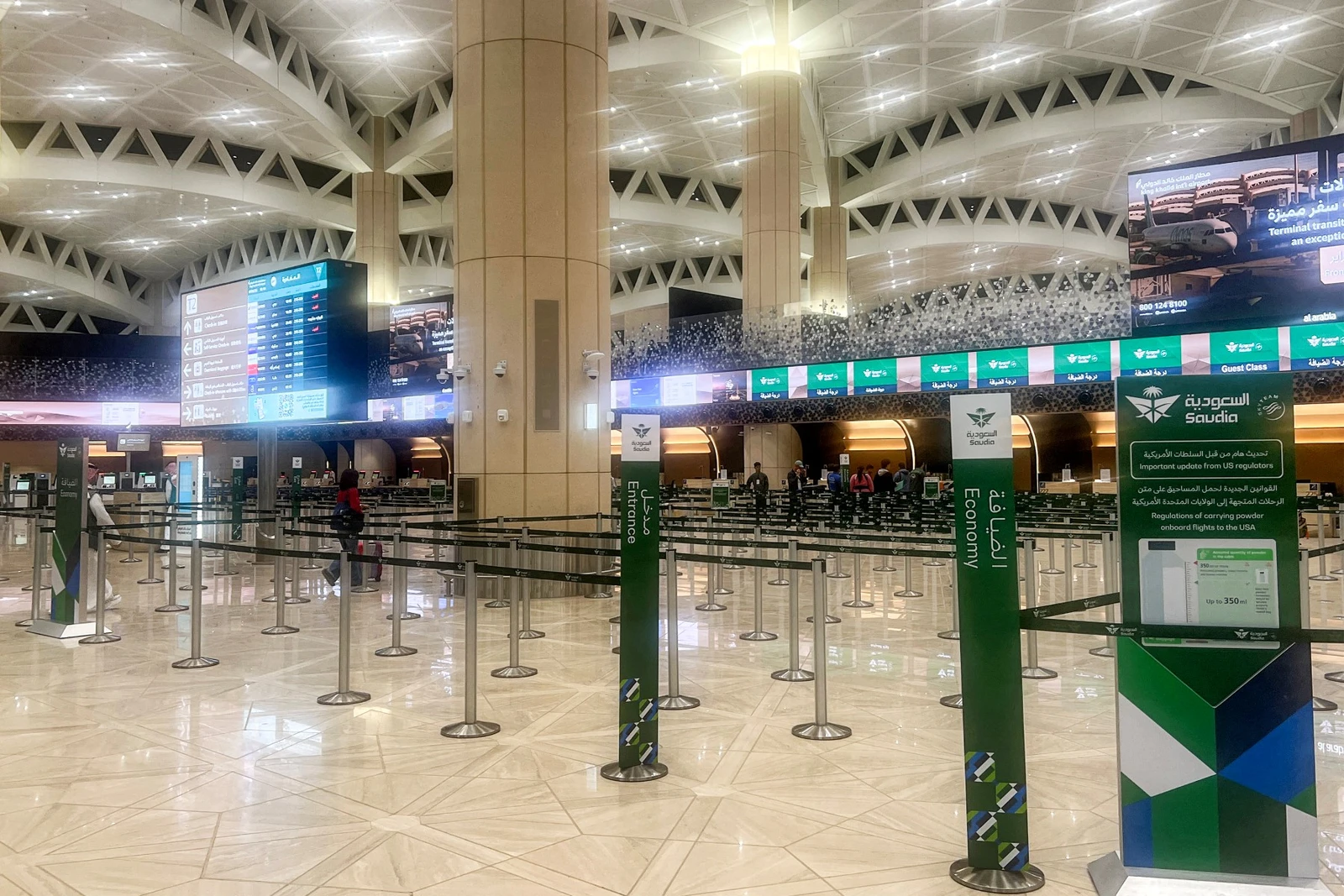

Saturday’s attack on King Khalid International Airport in Riyadh is a painful reminder that the Houthi threat extends beyond Yemen’s borders. An attack on an international airport endangers civilians of different nationalities, disrupts connectivity and undermines confidence in infrastructure serving the wider global economy. Its implications demand sustained international attention beyond immediate condemnation.
The incident also exposes a long-standing gap between Gulf and international assessments of the movement. For Saudi Arabia, Houthi missile and drone capabilities have represented a direct national security concern for years. International responses, however, have often viewed the Houthis primarily through the lens of Yemen’s internal conflict or particular episodes of maritime disruption. These perspectives capture important aspects of the problem but they can underestimate the relationship between the movement’s domestic position, external support and capacity to threaten neighboring countries.
It would be inaccurate to suggest that international partners have taken no action. Sanctions, maritime interceptions, diplomatic initiatives and military operations demonstrate recognition of the danger. Nevertheless, these measures have not produced a durable framework capable of preventing renewed attacks. The central concern is therefore the consistency of international engagement and whether it addresses the capabilities sustaining the threat.
Iranian support remains an essential part of this assessment. The UN Security Council’s targeted arms embargo, introduced through Resolution 2216 in 2015 and subsequently extended to the Houthis as an entity under Resolution 2624 in 2022, provides an established framework for restricting weapons transfers. Yet the persistence of advanced capabilities raises serious questions about enforcement.
Addressing this problem requires sustained cooperation against procurement networks, illicit financing, weapons trafficking and the transfer of components used in missile and drone production. Diplomatic engagement with Iran should also place clear emphasis on preventing support that enables attacks on neighboring states. Such efforts should protect humanitarian access and avoid imposing further hardship on Yemen’s population. Effective enforcement and a political settlement must support one another.
The US has an especially consequential role. Its military operations against the Houthis have demonstrated its ability to respond when maritime threats became an immediate priority. The May 2025 Oman-mediated ceasefire established that the US and the Houthis would cease targeting one another, including American vessels. Neither development, by itself, established comprehensive protection for Saudi territory or resolved the wider regional threat. Saudi Arabia’s shared border with Yemen makes Houthi missile and drone capabilities a direct and persistent threat to its national security, civilian population and critical infrastructure.
For Saudi Arabia, Houthi missile and drone capabilities have represented a direct national security concern for years.
Dr. Abdulaziz Sager
This creates a difficult question for Gulf partners: How can security assurances translate into predictable support when their own civilians and infrastructure are targeted? Gulf governments continue to strengthen the protection of their populations while supporting efforts to prevent wider regional escalation. Building on substantial investments in national capabilities, closer regional and international cooperation can further enhance their ability to address interconnected missile threats, maritime security challenges and illicit weapons supply networks.
Several forms of deeper Saudi-US cooperation merit consideration. Renewed American operations would require clearly defined objectives and careful assessment of escalation risks. More coordinated action could strengthen deterrence and distribute responsibilities. Expanded defensive assistance could improve early warning systems, interception capacity, intelligence sharing and logistical readiness. These options should be assessed against their ability to sustainably reduce attacks, alongside their immediate operational effects.
The Makkah Joint Defense Agreement between Saudi Arabia, Turkiye and Pakistan introduces another dimension. Its practical contribution will depend on how its commitments are implemented. The relevant questions concern deployable capabilities, response arrangements and the extent to which cooperation can improve protection and alter an attacker’s calculations. The agreement’s mutual defense commitment provides a foundation for cooperation, with its practical implementation and the respective roles of each partner yet to be fully clarified.
Saudi Arabia’s security is closely connected to international interests in reliable energy supplies and secure maritime navigation. Protecting these shared interests requires sustained cooperation that combines credible deterrence, stronger defensive capabilities, the effective enforcement of weapons restrictions and a clear diplomatic path toward a durable settlement in Yemen. Saturday’s Riyadh attack should serve as a turning point in translating shared concern into practical commitments. The measure of a security partnership is its ability to protect lives, prevent renewed aggression and uphold regional stability when those commitments are put to the test.
Dr. Abdulaziz Sager is founder and chairman of the Gulf Research Center.


