
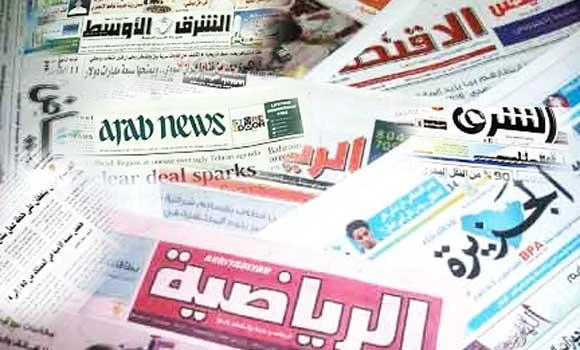
King Salman and citizens
DESPITE the launch of Operation Decisive Storm and Operation Restoring Hope, Custodian of the Two Holy Mosques King Salman’s attention remained focused on citizens’ welfare and prosperity. He has given top priority to education, training, health, housing, security and employment of citizens.
King Salman’s administration also focuses on diversification of revenue sources, as a result of a major decline in oil prices. He wanted to strengthen the industrial sector and transform the Kingdom into a knowledge-based economy. We have learned his futuristic vision from his recent address to the nation, which also highlighted his ambitious economic development programs.
In his keynote speech, King Salman stressed the importance of expanding cooperation between the public and private sectors in order to ensure sustainable development. He described the private sector as partners in progress. “We will extend every support to the private sector to accelerate the growth of national economy,” the king said.
King Salman has called upon private companies to make effective contributions toward employment of Saudis and improvement of social and economic services. He stressed the importance of building a strong economy on solid foundation. “Our government is making effective steps to boost progress,” the king said. This means King Salman would introduce more economic reforms and step up diversification programs to realize comprehensive and balanced development covering all parts of the country.
King Salman has presented a strategic vision that has taken into consideration the present reality and new developments. He has categorically stated that he would not show any leniency on ensuring a decent living for citizens. He understands that the future economic challenge would be in developing high-tech industries. I believe that investment in modern science and technology, by allocating part of the sovereign funds to the sector, would have a big impact on the economy and would benefit the country’s future generations.
— By Sami Saeed Habib, Al-Madinah
Camp David talks
LEADERS from the Gulf Cooperation Council states are expected to meet the US president at Camp David on May 11 in order to discuss a number of hot issues concerning the GCC in particular and Arab and Muslim countries in general. The (ambiguous) US-Iran nuclear deal and Yemen crisis will top the agenda.
We know Iran’s ambition to expand its dominance in the region. It has been planning for this since the Khomeini revolution in 1979. It has been spending large amounts of money to realize this objective with the support of influential countries and organizations.
Iran is waging a proxy war by giving orders to organizations and agents lenient toward it to carry out its plots in Arab countries. We can see examples in Lebanon and Yemen. Gulf countries have understood this factor.
When the US and other western powers reached a nuclear deal with Tehran, the GCC feared the US would sell them to Iran through this deal. We have seen Washington abandoning its Arab allies hit by the Arab Spring.
In Camp David, GCC leaders will demand US assurances from President Barack Obama to prevent Tehran from misusing its nuclear agreement. We expect there would be heated discussions on the issue. The GCC leaders will also ask the US to be transparent on its stand toward the two sides: Iran and the GCC. The meeting will also discuss the Saudi-led coalition that was formed to restore legitimacy in Yemen and prevent the Houthi threat to Kingdom’s security. The two sides will discuss the impact of the US-Iran deal on the coalition. Iran is likely to exploit the nuclear deal as a trump card against Saudi Arabia and other coalition members to win partial success for the Houthis and avoid an all-out war against the militia. If the US agrees to this Tehran move, it would antagonize the GCC countries. Here comes the difficult equation.
The Camp David talks will also cover other important regional issues such as Syria and Iraq in addition to Egypt. In short, Camp David talks will not be an easy one because of hot issues and conflicts of interests. Both sides have to make compromises to maintain their strategic relations.
— By Ali Al-Khubty, Al-Watan
Yemen crisis
IT pains me when think about the worsening situation in Yemen. I cannot understand the reason for the present madness of Houthis that led to deaths and destruction. I wish the Yemenis would soon overcome the present difficult situation.
I fail to understand the reason behind the crimes being committed by the Houthis and Ali Abdullah Saleh’s allies against the Yemenis. They could have realized their objectives through dialogue and understanding without resorting to killings, destruction and overthrow of the legitimate government. Of course, Iran has its interest in Yemen and has been looking for an opportunity to establish its foothold in the country. It intends to create chaos and destabilize Arab countries through its machinations. The Yemeni people will not allow Iran’s interference in their country.
The Houthis and Saleh’s allies do not represent the cross section of Yemeni people. They work as agents of Iran to destabilize the country as well as GCC states. Iran might have received the message through the Saudi-led Operation Decisive Storm, which has given the Houthis the option to either stop the war and agree to the Kingdom’s conditions or continue the destructive war. The stand of Houthis and Saleh forces looks vague as they continue their attacks despite the alliance’s truce offer, which leads to dialogue and heralds a new chapter of progress and prosperity in the war-ravaged country.
— By Khaled Al-Malik, Al-Jazira
Chief diplomat
A friend of mine, who was a government employee, told me about his visit to the residence of Prince Saud Al-Faisal to deliver a letter. Prince Saud was not present at home but the prince’s son received him and took him to a beautiful room in the palace to wait until the arrival of the Kingdom’s chief diplomat.
Prince Saud came after sometime and received the man with a broad smile and thanked him for waiting until his arrival. After handing over the letter, he wanted to leave the palace when his son came with an envelope. The man realized later that the prince had gifted him a good amount of money.
I remembered the story of my friend when the royal decree was issued to replace Prince Saud Al-Faisal, who has been at the helm of the Foreign Ministry for 40 years, because of health reasons. The last years of Prince Saud Al-Faisal in office were full of events.
Prince Saud’s astounding personality enabled the Kingdom to strengthen its international reputation and credibility. He had given his opinion frankly while discussing Putin’s message to the Arab summit in Sharm El-Sheikh.
He is the son of King Faisal who held the foreign ministry portfolio when he was 16 and attended the meeting for the formation of the United Nations. Prince Saud must have learned his diplomatic lessons from his erudite and well-experienced father.
Prince Saud will be remembered for his great contributions to the Kingdom, adopting courageous policies in defense of the truth and its interests.
— By Ali Al-Jahli, Al-Eqtisadiah
Health services
HEALTH Ministry is considered one of the important service providers in the country. It requires a lot of changes and improvement to meet the hopes and aspirations of citizens. The royal decree appointing Khalid Al-Falih, former president of Saudi Aramco, as the new health minister reflects the government’s desire to develop the ministry. Al-Falih, who has achieved a lot of experience in managing big Aramco projects, is the right person to take up this vital mission.
In most countries, the government plays a monitoring role on the health sector rather than directly providing healthcare. The government’s responsibility is to set out standards for quality and set up monitoring regimes.
The positive aspect is that any profitable venture would be able to remain in market by providing high quality services.
Citizens face a lot of problems at government hospitals. The government allocates huge amounts in the national budget for the health sector — the largest in the world compared to population — but the quality of service does not match that huge spending. Manpower providing health service does not meet the requirements of the population. As a result, patients have to wait for a long time to meet a consultant or a specialist.
In my opinion, the gradual privatization of health sector within a specific timeframe and provision of government employees and retirees health insurance services would reduce pressure on government hospitals. According to statistics, there are more than two million government employees and retirees. If we add their families the number would double.
The transfer of part of these government employees to the private sector would not only reduce pressure on government hospitals but also help them to improve their services. Privatization of the service sector will bring about qualitative improvement in public services.
— By Siraj Abu Al-Saud, Al-Sharq
Higher education
RASHOUD Al-Khorayef, dean of scientific research at King Saud University, stated that some Saudi university staff members lift information from previously published research works inside and outside the Kingdom. It was not surprising as it was expected from our universities that are already marred by administrative and financial corruption.
Stealing of information from research and administrative and financial excesses are not a new development. It has been occurring in our institutions for the past several years due to a lack of conscience and deterrent punishment. But the surprise was that the scientific corruption was revealed after years of silence.
Such corrupt practices are taking place in many universities in the country in one way or another. Some universities do not follow the rules and regulations while making staff appointments. I know that 23 teaching staff in a university belonged to a single family. One university appointed four assistant lecturers to fill a single vacancy.
We should have a system to find out stealing of information from previously published research works and punish those plagiarists.
— By Mohammed Al-Aufi, Makkah Newspaper


